
Self-described ‘race realist’ who kickstarted plagiarism allegations against Jason Arday suspended from post at European university

In a social media post, Nathan Cofnas says that he feels he will likely get fired by Ghent University in Belgium.
The man who first claimed that late Cambridge professor Jason Arday, en route to becoming the school’s youngest Black professor, plagiarized has been suspended from his post at a Belgian university.
Nathan Cofnas, who, according to the BBC, described himself as a “race realist,” wrote on X on Friday that he would “certainly” be fired from his post, before later acknowledging who made the decision to temporarily remove him from his position.
“I was just suspended by Ghent University,” Confas wrote. “They will almost certainly fire me. The decision was made by rector Petra De Sutter, a former leader of the Green Party.”
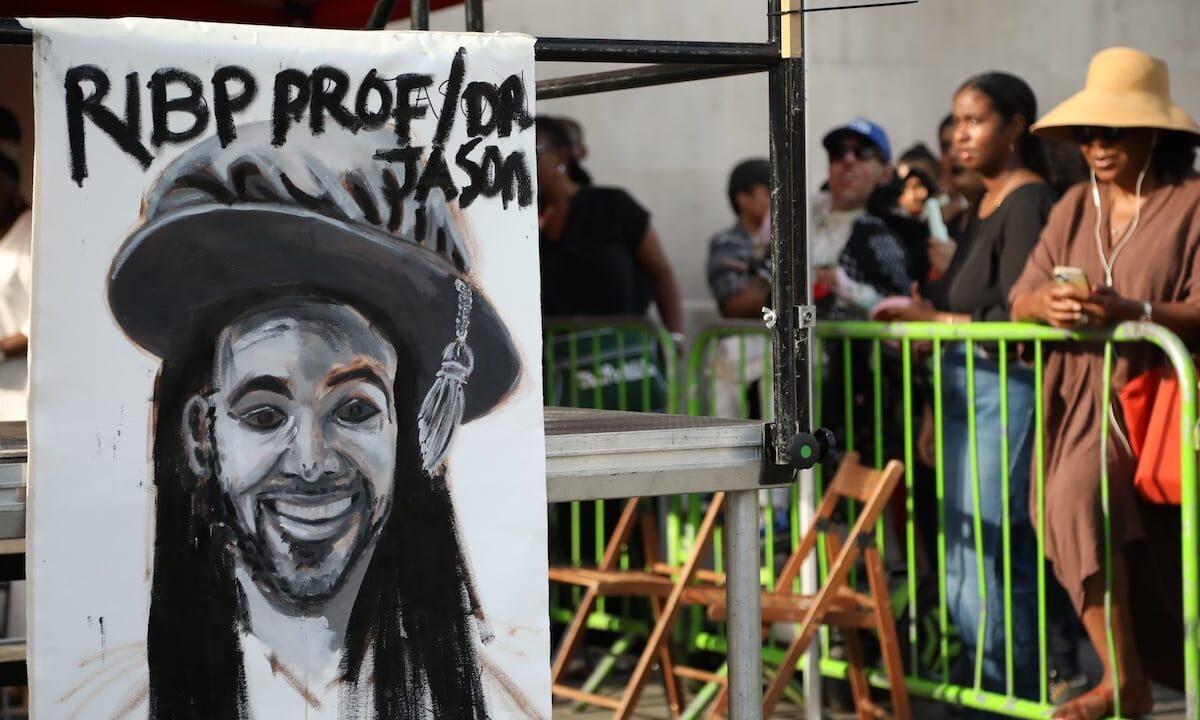
Cofnas said he was under investigation by the university “for discriminating against Arday”. He was among the early voices who called into question Arday’s credentials, ultimately leading to Arday resigning from his position at Cambridge. He was later found dead at the age of 41, though the cause of death has not been determined.
In a statement, De Sutter and other university staffers stated they took “recent public statements made by a postdoctoral researcher at Ghent University regarding this matter very seriously”, and had taken “appropriate action”.
“We attach great importance to academic freedom and to open academic debate, even when views are controversial. However, that freedom is not unlimited,” their statement continued. “It goes hand in hand with responsibility and may be restricted in order to protect the rights of others.”
Confas stated he ran Arday’s work through anti-plagiarism software, which determined that “many passages are lifted with minimal editing, sometimes retaining copy-editing mistakes from the original source.” Confas, who previously worked at Cambridge, saw his role eliminated in 2024 after comments he made regarding Black people in higher education.
In a 2024 Substack post, Confras wrote that, under a true meritocracy, Black people would “disappear from almost all high-profile positions outside of sports and entertainment.” The essay prompted swift backlash on campus, leading to his exit.
Last month, his essay on Arday helped, in part, spark the tabloid and media frenzy that followed the late professor in the United Kingdom. Almost immediately after Arday’s death, the British Prime Minister called it a “tragedy.”
“It’s not a moment for any rushing to judgment. It’s a moment for reflection, I would say, reflecting on how things came to this,” Andy Burnham said.