
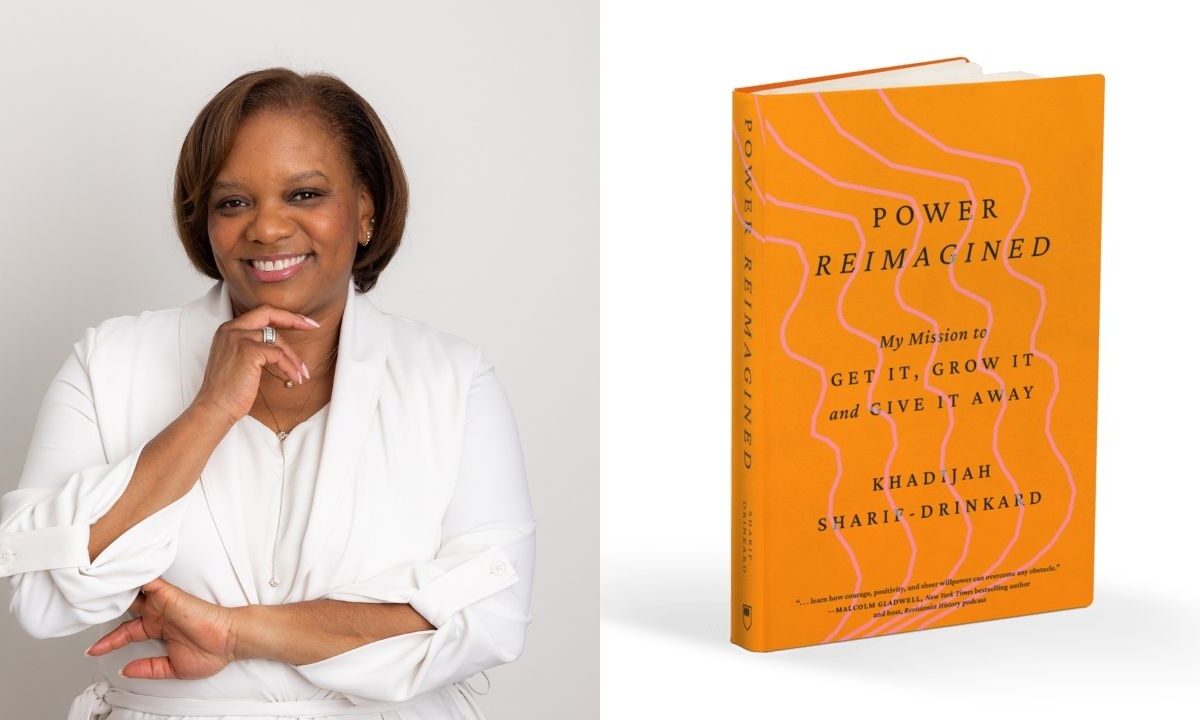
Khadijah Sharif-Drinkard says Black women need to reclaim their power in her book ‘Power Reminagined’
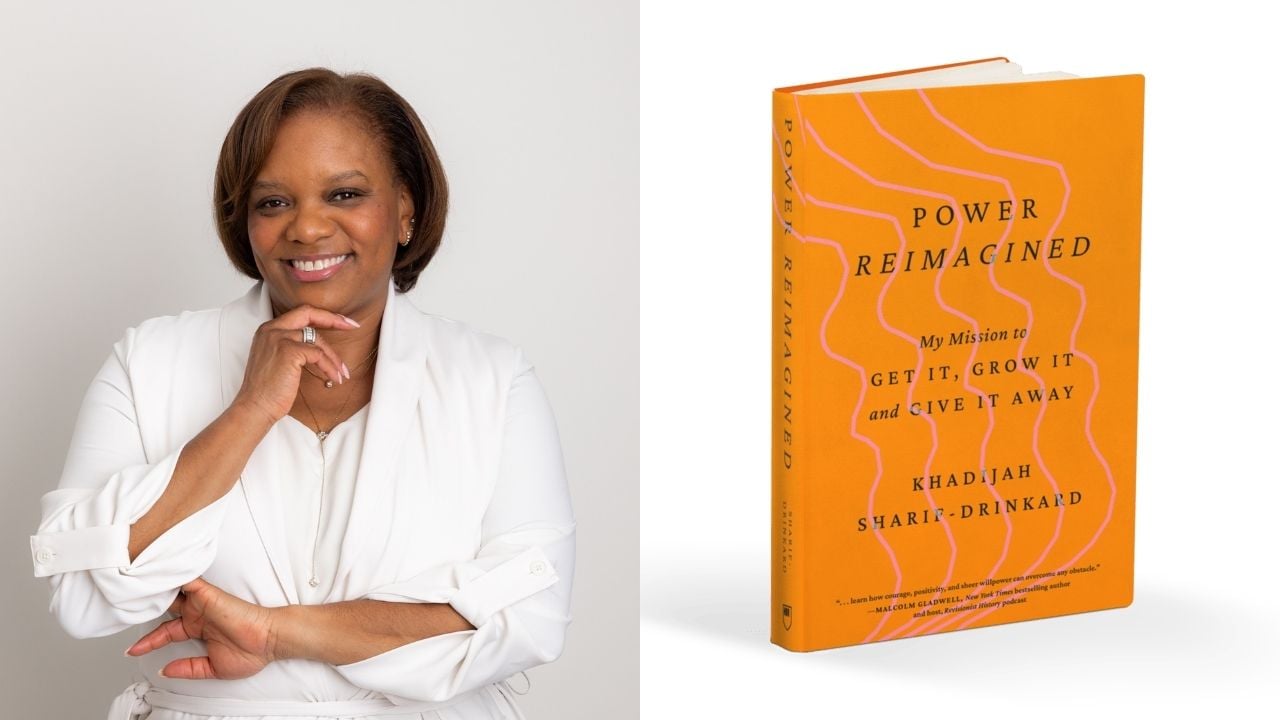
The author says reclaiming power starts with knowing your value and being intentional about who and what you allow into your life.
Khadijah Sharif-Drinkard, senior vice president of affairs at ABC News, can recall the first time she realized she had any power. She was a middle schooler growing up in Harlem in the 1980s, watching her community that once ushered Black cultural icons into the zeitgeist begin to give way to struggle and serious disenfranchisement.
“It was this whole sense of like, wait, how is this the same place that Langston Hughes was in, the same place that Madam C.J. Walker was in, the same place that James Baldwin walked, the same place that Marcus Garvey fought?” Sharif-Drinkaed told theGrio by phone on Wednesday, May 20. “How did we come to this place?”
Watching others lose their grip on their own power like that ironically pushed her to find hers. From organizing “stay in school” rallies to securing vital resources for her neighborhood, Sharif-Drinkard found her strength in uplifting others.
“I said to myself, ‘Either you’re going to cry about this or you’re going to do something that’s going to bring some solutions.’”
She added, “I got to feel my power early because I started to make a decision.”
Flash forward to 2026 when around the country Americans and Black women in particular are struggling to feel the strength of their own power and losing out on hope and Sharif-Drinkard realized that overwhelmingly, more and more people need to reimagine the concept of power.
“There’s something that happened over the last three years or so, right, where I started to see a lot of folks sound really despondent and powerless in their speech and their voices,” she explained, adding that she started to wonder, “How do we articulate that all of us have power despite what we’ve been taught to believe, what people want us to believe?”
The answer to that question arrives in her new book, “Power Reimagined: My Mission to Get It, Grow It, and Give It Away.” Part memoir and part leadership guide, the book draws on the experiences of the wife, mother of two adult daughters, and former executive at BET, MTV, and Nickelodeon to offer a roadmap for anyone trying to reclaim their sense of power in uncertain times. Along the way, she also reflects candidly on how power has shaped her own life, including a marriage that famously began with an application process.
“I really wanted to just give a sense of hope to people to say we’re not out the game, but let’s stay in the game, y’all. Stay focused and get serious about what it is that we think we really need to be doing,” she told theGrio as she discussed the book.
That discussion has been edited for clarity.
theGrio: Your book, “Power Reimagined,” is arriving at a time when many people — Black women in particular — feel powerless or hopeless about impacting their lives. What do you hope Black women take away from this book at a time like this?
Khadijah Sharif-Drinkard: I’m hoping that people take away a couple of things. Black women in particular, our resilience is so important to understand that it is our superpower in many ways, but it can also be our downfall at times.
I want us to take away that we have to do two things at the same time. We have to stay engaged in the work that we know that we’re going to need to help ourselves as Black women, and we’re going to have to save each other. So there is this balance …
Black women are going to save Black women. Let me be clear: that’s what’s going to happen. We’re going to help each other. We’re going to save ourselves and save each other. Doesn’t mean we don’t need other people. It just means that we are going to rely on the fact that we have a community in a way that you know, perhaps we’ve forgotten that we’ve had.
theGrio: Why do people need to reimagine how they think about power? What exactly is power?
KSD: Power is simply the ability to effect change in your life or in someone else’s life. The problem with our understanding of power, and why we have to unlearn how power has been taught in our lives, is because we’ve been taught that power looks a certain way, power sounds a certain way, and it looks like somebody who has a lot of money, a lot of fame, maybe a lot of social capital.
But power can be quiet, power can be steady, power can sometimes look like it’s static and not even moving, but in fact it is, right? Power can be a lot of things that we sometimes don’t associate with it. Power can look small sometimes, as opposed to really, really big and grandiose. We have given a definition to power that makes people think that either they don’t want it because people have abused it or people who have it are the only ones who are entitled to it. And so I’ve been on a mission to tell people that power actually belongs to all of us.
theGrio: What are some areas in our lives where we can wield our power better that people often overlook?
KSD: I’m always saying to people, ‘Get out there and be in community.’ Talk to people, articulate what it is that you’re trying to do, ask for help.
We have to be able to ask people for help and say, ‘Look, you know, I’m raising my hand because I’m looking for this kind of opportunity, but I can’t find it.’ Being in community is a really big part of what we have to do. The other thing is to help other people, because let me tell you, that’s the part of it where I say ‘get it, grow it, and give it away’ in the title. We can get so focused on our own challenges that we don’t see other people’s challenges. So I believe that a big part of power is elevating others.
Power really is understanding your purpose, owning your value, and that means knowing your self-worth. It means winning strategically and courageously. It means elevating others, and then it is resilience-based leadership, that’s power to me.
theGrio: I’m glad you included the chapter about your marriage. The idea of “applying” to date each other, checking in with three references, and putting him through three rounds of interviews is refreshing.
KSD: First of all, my editor didn’t want that chapter in the book because Harvard Business Review Press had never had a business book that had basically, as he put it, a “love story” in it before. But what I’m saying is that the application of the conversation of creating this relationship was actually not just about love, it was about understanding the business of love in some way and understanding the business of a relationship.
Too often women are taught to focus on chemistry and butterflies but what about the bread and the butter girl?
theGrio: Do you think women today should be collecting applications? What advice do you have for Black women looking for their partner?
KSD: I think everyone, including Black women, needs some kind of vetting process. It doesn’t have to literally be an application, but we absolutely need to ask better questions and be more intentional about who we allow into our lives. The more we know ourselves, the more we get confident with being able to articulate and advocate for ourselves, right, and we can’t be afraid to be alone for a minute. Sometimes we get so worried about what is passing by. Whatever the case, it’s done now, do the work, so that we know who we are, what we want, and how to identify what we need.
I also just want Black women, in particular, to love themselves, to value who they are, to bring to bear all these different conversations with everybody they’re talking to or whoever they hope to talk to, that their value is more important. Most importantly, Black women need to know they don’t have to fold themselves up to fit into someone else’s life. Your dreams, goals, and values matter just as much as anyone else’s.
theGrio: When did you realize this was the book you needed to write?
KSD: You know, I feel like I’ve been writing this book my entire life. But there’s something that happened over the last three years or so, where I started to see a lot of folks sound really despondent and powerless in their speech and their voice.
I really wanted to just give a sense of hope to people to say we’re not out the game. Let’s stay in the game, y’all—like stay focused and get serious about what it is that we think we really need to be doing, and so, and that really starts internally. That’s the internal work we have to do, right, to say I have power, I can change some things, I’m still in the game. We still have power. We still have the ability to shape our lives and futures. For Black people, especially, dreaming as adults is a revolutionary act in this country.
This sense of power, this sense of hope, for some people, it scares them. Power reimagined means that I’m not going to lose my power. I’m not going to forget who I am. I’m not going to give up my own dreams. I’m not going to think that I don’t have the ability to change things, even when you tell me that I don’t.
theGrio: What’s your number one piece of advice for someone trying to get their power back?
KSD: Be still long enough to figure out what it is [you] should be doing. A lot of times we’re exhausted because we’re doing too much and not doing the things actually meant for us. If you want your power to come back, let’s first figure out where the power sits. Ask yourself what fuels you. What brings you joy? What drains you? Sometimes we become our own power suck. We have to remove the things that pull us away from ourselves and pour more energy into the things that give us life.
And the other thing I would just say about power is that power is supposed to be shared; If we are sharing power, we’re going to get power back. People will pour into us as we pour into them.