
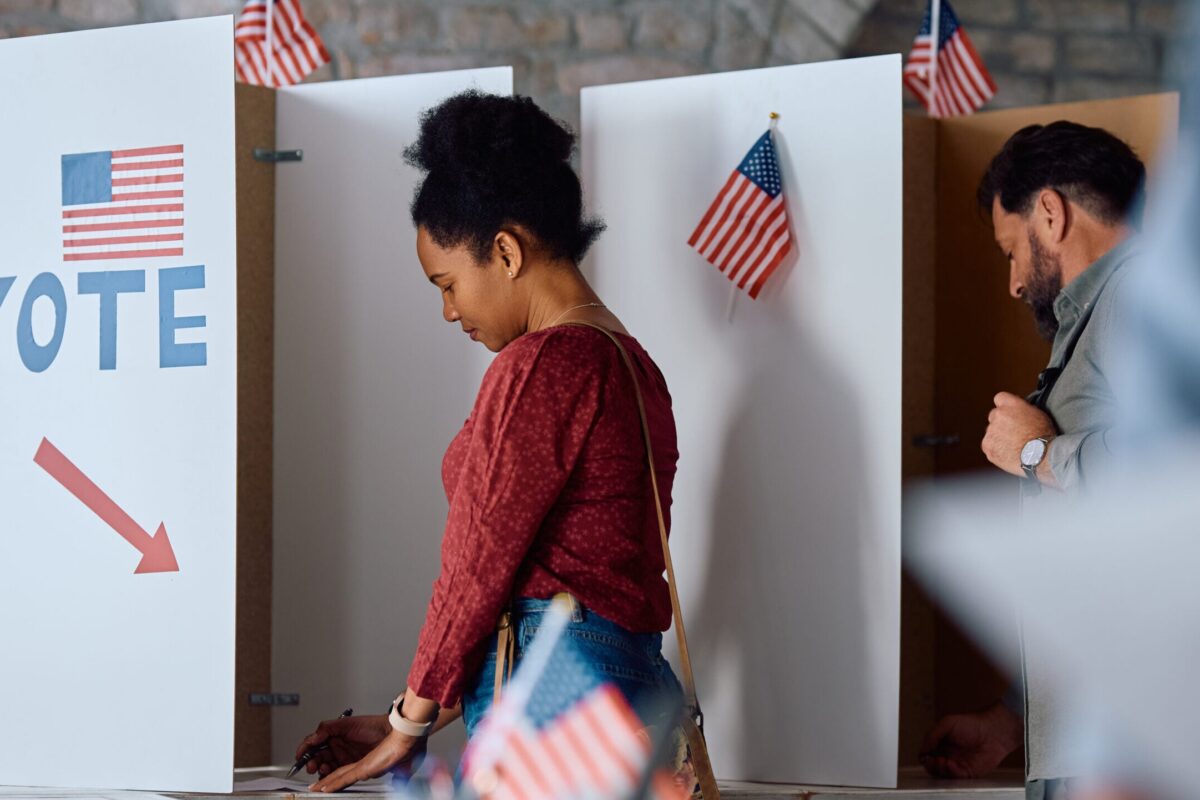
Voting in the 2026 midterms? Here’s what you need to know before Nov. 3

Before heading to the polls Nov. 3, make sure you know where to vote, what you need and what’s actually on your ballot.
Eight years ago, when Stacey Abrams was running for Governor of Georgia and a chance at making history as the first Black woman Governor in this country, it brought out a historic level of voting, including one young man who went viral after voting and revealing on Twitter that, beyond the governor’s race, he really didn’t know what to do with the rest of his ballot. The thing is, he’s far from alone.
For all the attention we pay to the big races, there are plenty of people who get into the voting booth and suddenly realize there are judges, school board members, ballot questions, and people running for offices they have never heard of staring back at them. What the heck is a comptroller?
Well, it’s almost that time again. The 2026 midterm general elections are happening on Tuesday, Nov. 3, when voters across the country will decide who represents them in the U.S. House and Senate, elect governors, and all the state and local races that come with them.
With just 43 days to go, we don’t want anyone entering the voting booth feeling like they’ve suddenly been handed a test they didn’t study for. (Seriously, what the heck is a comptroller?) So, whether this is your first time voting or you just need a refresher, here’s how to vote in 2026.

Who can vote in U.S. elections?
You are eligible to vote in this country if you are a U.S. citizen of at least 18 years of age or older, including those living outside of the United States, U.S. citizens who were born abroad and have never lived in the United States, or dual citizens living in the United States or abroad; meet your state’s residency requirements; and are, of course, registered to vote by your state’s deadline.
Check your registration
If you ask yourself whether you’re registered and can’t give yourself an honest answer, please go and check. Even if you stay on top of these things, it never hurts to double-check before every election. Make sure your registration is active and that your name and address are correct now, while you still have time to fix anything that isn’t. You can find out within seconds by heading to Vote America or Vote.gov, which will direct you to your state’s official registration information.
Deadlines vary depending on where you live, so don’t wait until Nov. 2 to figure this one out.
Know what identification you need
This is another one that varies greatly depending on where you live, so don’t assume you know.
Some states require photo identification to vote, while others accept different forms of ID or generally do not require most registered voters to show one at all. The rules have also changed in some states since the last federal election.
The National Conference of State Legislatures keeps an updated state-by-state breakdown, and your state election office can tell you exactly what you need. Just check before you leave the house. That’s much easier than finding out when you get there.
Know how you’re voting
You can vote in a few different ways in this country. There is in-person voting on Election Day, early voting in some states, and absentee or mail-in voting.
Once you decide which makes the most sense for you, get your ducks in a row. If you’re voting by mail, know when you need to request your ballot and when you need to return it. If you’re voting early, check the dates, times, and locations because your early-voting location may not be the same place you usually vote on Election Day.

Know where you’re going
Don’t wait until you’re in the car to actually figure out where you’re going. Even if you’ve voted at the same school or community center for years, polling locations can change. USA.gov can direct you to your state’s official polling-place lookup. Check the hours while you’re at it. Nobody needs to be driving around at 7:45 p.m. trying to figure out which elementary school they were supposed to be at.
Know what’s actually on your ballot
Now here’s the big part. This is not a presidential election, but there’s still a lot going on. All 435 House seats are up for election, 35 Senate seats, and governors in 36 states plus three territories. Then there are myriad state legislative races, local offices, and ballot measures happening around the country. Depending on where you live, you could also be voting for judges, prosecutors, sheriffs, county executives, school board members, and, yes, perhaps a comptroller. So look at your ballot before you get there.
Your state or local elections office will typically make sample ballots available ahead of the election. VOTE411 also allows you to enter your address and see information about what will be on your ballot. Then do your own research. Look up the candidates. Read what they actually say they want to do. Watch debates and interviews if they’re available. Don’t sleep on your local news either. Those reporters have likely been following the people running your city, county and state long before their names landed in front of you.
There may also be organizations you trust putting out voter guides highlighting candidates, ballot measures or issues they believe their communities should know about. Read those too, while keeping in mind who produced them and where they’re coming from.
Talk about it with your people. Your friends, family and coworkers may know something about a race you missed, and you may know something they didn’t. Basically, don’t let Election Day be the first time you meet your ballot.

Know what to do if something goes wrong
In a perfect world, you show up, vote, and slap that sticker validating your democracy across your chest before going on about your day. But we don’t live in a perfect world. If you arrive to vote and run into complications from your name not being on the list to intimidation of any kind, there are courses of action you can take.
If it’s administrative, first check in with poll workers. If they can’t resolve the issue, ask about a provisional ballot. Federal law requires voters in federal elections who say they are registered and eligible but whose names don’t appear on the rolls to be offered one, although whether it ultimately counts depends on officials confirming their eligibility.
Now, if you experience intimidation, problems accessing your polling place, or anything else, like god forbid violence, that is getting between you and your ability to vote, there are people you can absolutely call.
The nonpartisan Election Protection coalition runs the 866-OUR-VOTE hotline, which is offered in several languages, including ASL. Call or text 866-687-8683 for help.
You have a right to vote. Know that before you walk in.
A criminal record does not automatically mean you can’t vote
Many people operate under the belief that a felony conviction automatically means they can never vote again. That is not true nationwide, as the rules vary by state. In many states, voting rights are restored after someone is released from incarceration or completes parole, probation, or other portions of a sentence, while some have additional requirements.
If you have a record and don’t know where you stand, it’s worth checking. Don’t sit out of an election unnecessarily because of something told you years ago.
If you’re in line when the polls close, stay there
No, seriously, stay in line.
If you get there before the polls close and you are already in line, do not let the clock hit the closing time and have yourself turned away. If someone tells you that you cannot vote even though you were in line on time, ask for an election official and call 866-OUR-VOTE if you need further help.
Keep some resources handy
Thankfully, you do not have to figure all of this out by yourself. Your state and local election offices should be your first stop for official rules, deadlines, and polling information.
In addition to your state’s local election offices, there are also organizations such as Black Girls Vote, Black Men Vote, and the NAACP that provide voter education and outreach specifically for Black communities. Pick a few resources you trust and check in between now and Election Day.

So, what’s at stake?
Listen, it has been a rough couple of years.
There has been a record number of job losses at a time when the cost of living is also rising. Federal diversity, equity, and inclusion programs have been dismantled. Immigrants have been caught up in an aggressive ICE crackdown. Voting rights protections have been gutted. Data centers are moving in. Our schools are failing. We are seeing in real time how decisions made by the people we elect can become matters of life and death.
While we cannot control everything that happens in this country, we do get some say. On Nov. 3, speak up.