
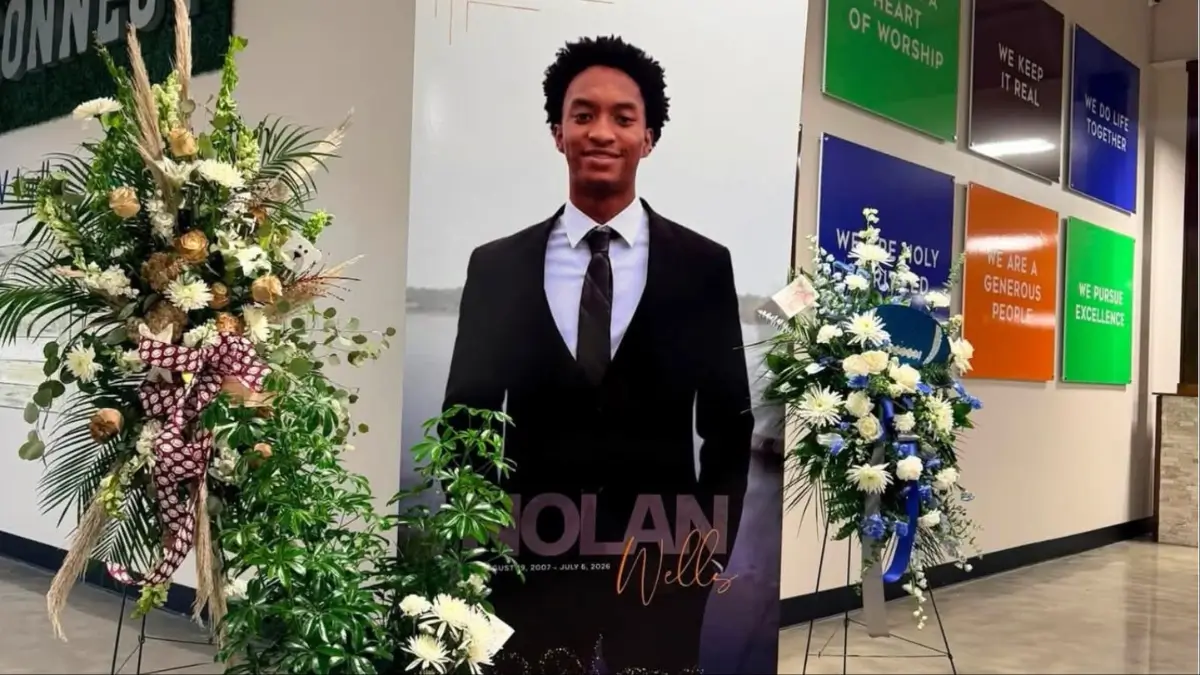
‘Not Racially Motivated’: Mississippi Grand Jury Won’t Charge Anyone in Nolan Wells’ Death After Finding No Evidence of Foul Play
A Mississippi grand jury has returned a no-true-bill in the death investigation of Nolan Wells.
Jackson County District Attorney Angel McIllrath announced Monday that no criminal charges or indictments will be issued. The DA also released a redacted report from the grand jury.
The jury, made up of 23 members, reviewed GPS logs, security camera footage, phone forensic reports, testimony from 43 witnesses, and 132 subpoenas.

Their decision comes two months after the teen went missing on Horn Island while celebrating Independence Day with friends. Two days later, searchers found his body on the northern tip of the island.
The grand jury found that Wells went to the island on The Triton, one of three boats used by the group of friends.
One of the other vessels later had to tow the boat after a failed bilge pump and motor caused it to take on water.
Wells’ friends maintained that Wells chose to stay on the island while they went back to shore. The jury believes Wells’ friends that he chose to stay behind to continue socializing.
“The narrative that three white boys and a black boy went to an island, and only the white friends returned, spread like wildfire. This was false,” McIllrath said in a video posted on Facebook. “There is absolutely no evidence to support the allegations that Nolan’s disappearance and death were racially motivated.”
McIllrath also addressed the rumors that she refused a mutual examination of Wells’ phone with the family’s legal team.
Wells left his phone on The Triton, and the boat carried it back to shore. The jury justified the teen’s phone returning to the mainland without him, adding that other passengers also had phones return on different boats.
The DA claims the state had no legal avenue to seize or search the teen’s phone, leaving Wells’ family in control of when investigators could examine it.
Regarding her letter to the family asking for an examination, McIllrath says she did it because the investigation could not wait.
She says eventually the family agreed to a mutual examination. However, on the day of the extraction, a private company contacted law enforcement and said the family had conducted an incomplete examination the day before.
“I respected the family’s decision for a private examination and requested that they share those results with my office.”
McIllrath says Crump’s team promised to provide her with the extraction data. It wasn’t until after the grand jury convened that she received a 282-page selection of reports from Wells’ cell phone which she says the grand jury considered.
The grand jury report also addressed Wells’ autopsy results. Both the Mississippi State Chief Medical Examiner and the independent forensic pathologist determined that Wells’ cause and manner of death remained undetermined.
Court documents said the evidence remained consistent with accidental drowning, which investigators had not ruled out.
Both officials found non-fatal bruising on the back of Wells’ head. A witness testified under oath that Wells slipped awkwardly off the side of the boat but continued socializing and showed no signs of injury. Neither official found evidence of fatal physical trauma.
The toxicology report found no evidence that Wells had used cocaine. Wells used a fake ID to buy his own alcohol, and no adults over 21 provided alcohol to him or his friends.
Regarding the family’s independent pathologist not having some of Well’s body parts, McIllrath says she extended an invitation to Dr. Roger Mitchell to come to Mississippi to examine and review whatever he needed to.
Mitchell accepted the invitation and spent August 30 through September 1 in Mississippi examining Well’s internal throat structures, according to McIllrath.
McIllrath says Dr. Mitchell also met with the State Medical Examiner and testified before the grand jury.
The grand jury report also addressed other viral speculation.
According to court documents, the grand jury reviewed online speculation about Wells’ alleged involvement in a fight and found the allegations false.
The grand jury also found that a viral post sharing audio from the call to SeaTow after The Triton began taking on water did not match the original recording.
In a statement regarding the grand jury’s decision, Crump says, “No true bill does not resolve how Nolan Wells died.”
”The public still deserves a clear account supported by records, evidence, and independent scrutiny.”
Mississippi has no statute of limitations on homicide, and credible new evidence of foul play could reopen the case and send it before another grand jury.