
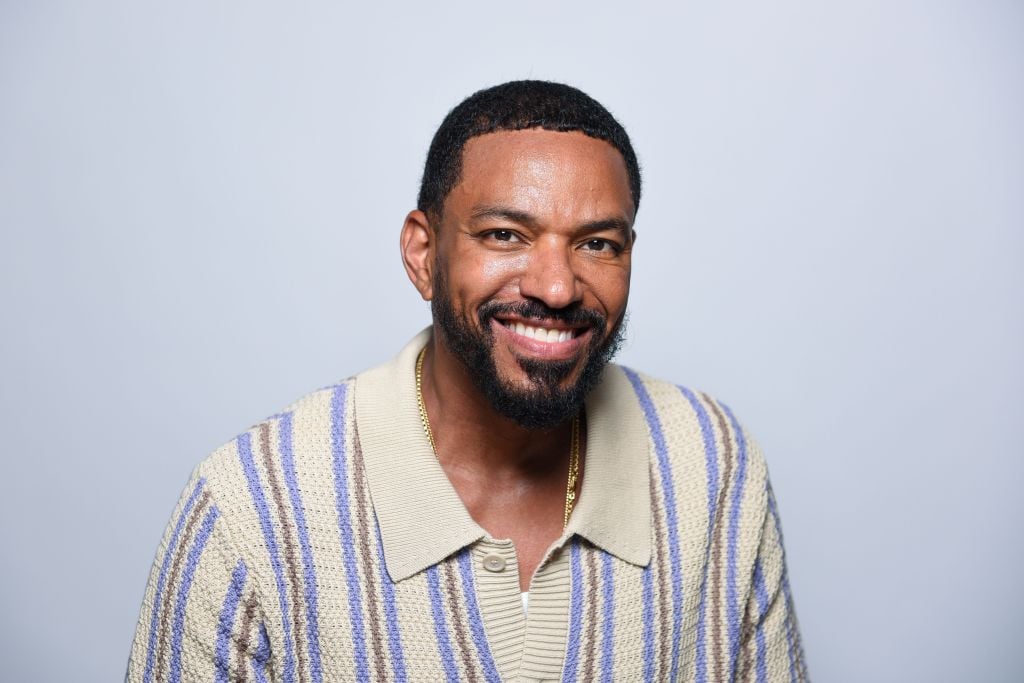
Laz Alonso on ‘The Boys’ season 5: ‘Every day ain’t a good day’
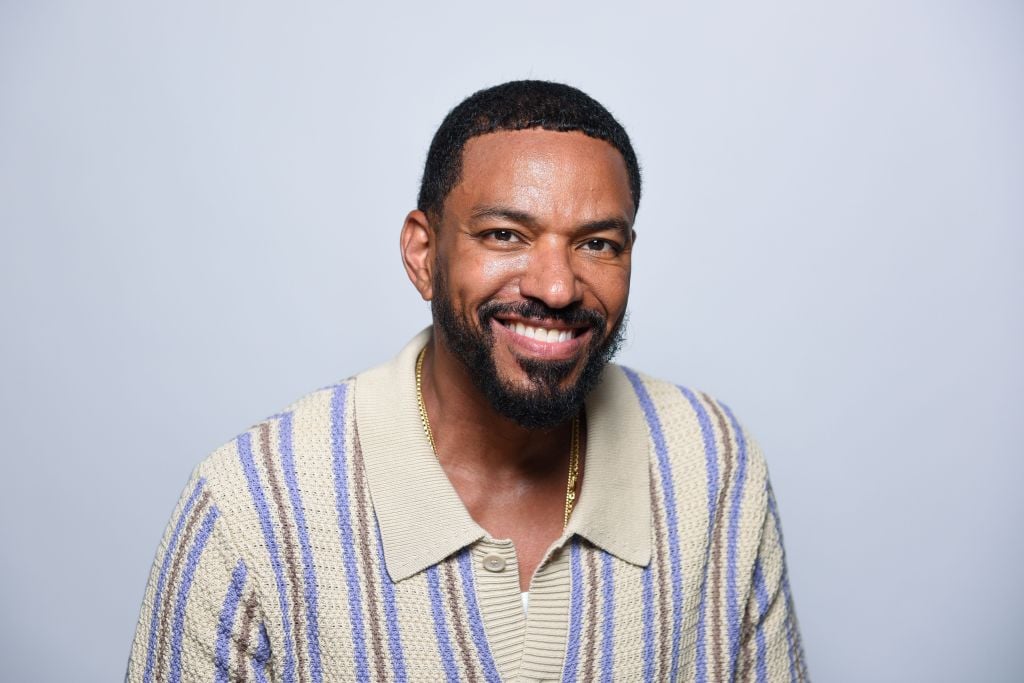
As Prime Video’s hit series heads into its explosive final chapter, Alonso unpacks a darker, freer version of Mother’s Milk and says the show feels closer to reality than ever.
As Prime Video’s hit series “The Boys” arrives at its fifth and final season, the show’s signature blend of satire and spectacle continues to blur the line between exaggeration and reality.
What once felt like a sharp critique of power now lands with an unsettling sense of familiarity.
Season 5 of “The Boys” is wrought with fractured alliances and unchecked authority amid a rapidly unraveling world. For Laz Alonso’s character, Mother’s Milk—the emotional center of the series—that unraveling hits closer than ever.
When asked how he would describe where the character stands mentally and emotionally heading into the final season, Alonso shared how much things have shifted for MM.
“We’ve become used to seeing MM be the heart and the optimism, the strong dad figure, talking people off the ledge for four seasons,” Alonso said. “This season he’s on the ledge.”
It’s a striking shift for a character who, for four seasons, has served as the group’s moral compass and steady hand. In Season 5, that role begins to fracture.
“He’s given up this optimism, this hope that everything can turn out great,” Alonso explained. “I believe that he has become more cynical.”
To understand that shift, Alonso says he prepared by thinking deeply about activism and the resilience required to survive being a change agent.
“I thought a lot about how freedom fighters wake up every day and get up to fight this never-ending cycle of oppression,” he said.
That perspective reframes MM’s journey, grounding it in the reality that perseverance doesn’t always feel powerful.
“Every day ain’t a good day,” Alonso added. “There are days when you feel defeated.”
That exhaustion and the slow erosion of hope drive MM’s character forward this season. Ironically, the unexpected benefit of losing that sense of optimism is that he lets go of much of the trauma that was a constant in the past.
“There’s a freedom that he has this season,” Alonso said. “It was almost creating a new version of MM. And it was liberating.”
That freedom shows up in ways audiences haven’t seen before. For the first time, we see MM laugh more openly, smoke cigars, and drink. In letting go of fear, MM also loosens his grip on the things that previously grounded him, like his need to survive, to protect his family, and to make it home. That evolution becomes even more pronounced in moments like his encounters with Soldier Boy.
“In the past, he was jailed by the trauma,” Alonso said. “This time, he has a different reaction… He’s not held hostage by that trauma.”
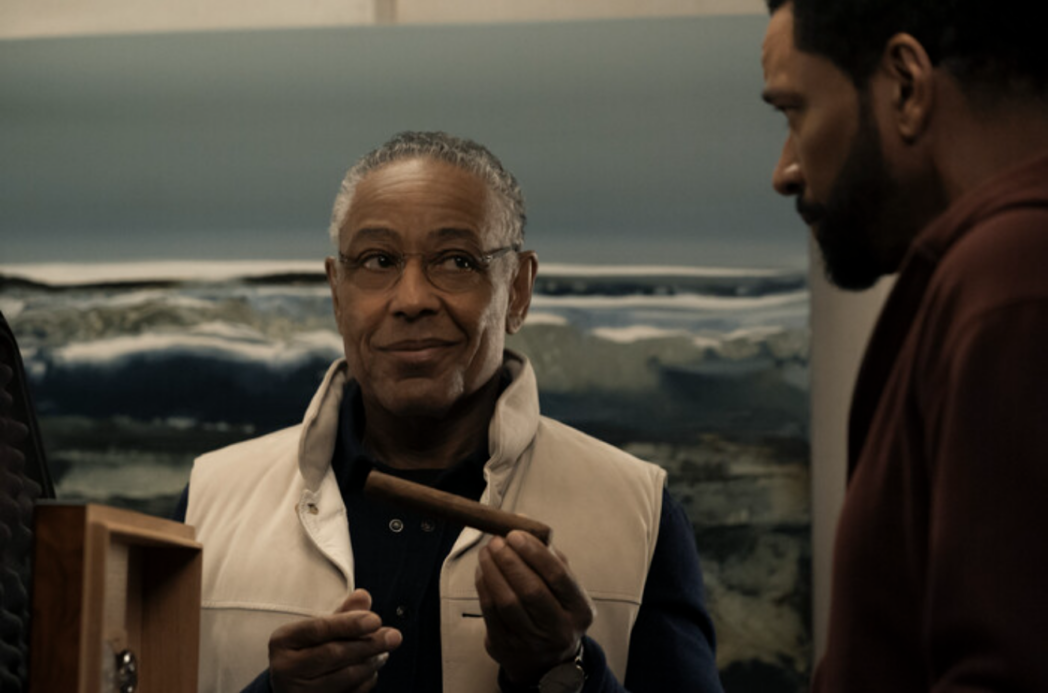
Alonso’s scenes opposite Stan Edgar, portrayed by Giancarlo Esposito, also make for an incredible watch. There’s a moment in episode 3 that stands out as one of the season’s most dynamic exchanges.
“They’re having a mano a mano moment, and he can rationalize and talk and think about his past,” Alonso said of the scene.
Asked about working opposite Esposito, Alonso described the experience as both collaborative and competitive in the best way.
“It was like balling tennis back and forth,” he said. “I watched him during rehearsals. We had never worked in that space before. We didn’t know what it was going to look like or anything. So he’s trying to figure out when he’s gonna pull the cutter out, when he’s gonna pull the ashtray out…”
“He’s so elegant, the way he moves with everything. And I’m watching him, like, okay, the CEO of Vought would have a humidor, a cutter, a special lighter… MM probably buys his cigars at the local bodega,” Alonso joked. “Swisher Sweets. He probably doesn’t have a cigar cutter. He probably just bites the tip off. I didn’t tell him I was gonna bring those elements to it. I just started doing it.”
Those moments of improvisation result in a subtle but elevated onscreen dynamic that promises to leave audiences giddy.
“His reactions to me spitting the cigar on the ground, or him trying to catch it — there are a few times that he caught it with the ashtray and just gave me the look like, ‘how dare you spit in my bunker?’” Alonso laughed. “Those moments that are unscripted are some of the funniest things to play with when you’re working with an actor on the level of Giancarlo. You can throw things at them, and you know they’re gonna throw them back. And add more on top of it. It was so much fun.”
Beyond the character work, the series continues to resonate in ways that feel increasingly difficult to ignore. Reflecting on the show’s real-world parallels, Alonso acknowledged how closely “The Boys” now mirrors the world outside the screen.
“It’s sad that we can shoot something two years earlier and here we are living it,” he said.
From the beginning, showrunner Eric Kripke’s goal was never to instruct, but to reflect.
“One thing Eric always reminded us of was that he didn’t want ‘The Boys’ to preach or try to teach anything—he wanted it to hold a mirror up to society,” Alonso explained. “And just remind us not to become that,”
What makes Season 5 land differently is how that reflection now feels less like a warning and more like a recognition.
“What we’re actually seeing is what’s happening,” Alonso added.
Still, this is “The Boys,” and even at its most introspective, the series doesn’t abandon the chaos that has defined it. As the series heads toward its final episodes, that balance between spectacle and reflection remains intact. But for Mother’s Milk, the journey inward may prove just as consequential as the battle unfolding around him.
Season 5 of “The Boys” is currently streaming on Prime Video.