
From Mofongo to Acarajé: 8 Latin American foods shaped by African influence

These eight dishes highlight the African influence woven into Latin American and Caribbean food traditions.
Latin American cuisine is known for bold flavors, colorful ingredients and dishes that have become staples far beyond the region. But many of those foods also carry the history and influence of the African diaspora.
African people and their descendants have played a major role in shaping the food traditions of Latin America and the Caribbean, from the ingredients used in everyday dishes to the techniques passed down through generations. The food traditions of the Americas reflect a mix of European, Indigenous and African influences, a history explored in a Library of Congress interview about Latin American and Hispanic foodways.
That influence shows up in everything from plantains and beans to the techniques used to pound, fry and slow-cook food. African culinary traditions are reflected in these dishes through their ingredients, preparation methods and the traditions passed down through generations.
Hispanic Heritage Month begins Sept. 15, offering an opportunity to celebrate the cultures and traditions of Hispanic and Latino communities, including the African influences woven into Latin American and Caribbean cuisine. Here are eight foods that reflect that history.
1. Acarajé — Brazil
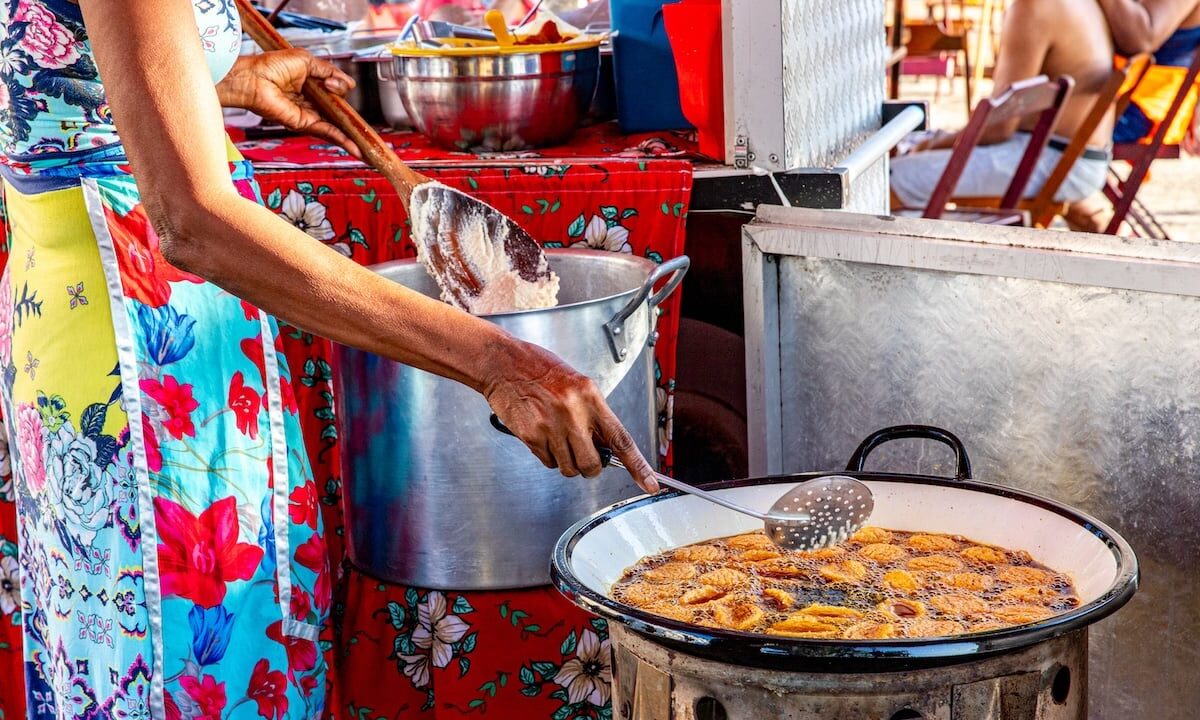
Acarajé is a deep-fried fritter made from black-eyed peas and traditionally cooked in dendê, or palm oil. The dish originated in the Gulf of Benin in West Africa, and enslaved Black people brought it to Brazil. It is also closely connected to Candomblé and the worship of orixás. Brazil’s National Institute of Historic and Artistic Heritage recognizes the traditional practice of making and selling acarajé as an element of intangible cultural heritage.
2. Mofongo — Puerto Rico
Mofongo is a Puerto Rican dish made with fried green plantains, garlic and other ingredients mashed together using a wooden mortar and pestle. The recipe combines Taíno, African, Spanish and North American culinary traditions. West Africans brought fufu, a dish made from starchy foods such as plantains, cassava or yams that are boiled and pounded with a mortar and pestle. Over time, Taíno and Spanish flavors were incorporated into fufu, helping give rise to mofongo, according to Smithsonian Magazine’s feature on the dish’s history.
3. Mangú — Dominican Republic
Mangú is a Dominican dish made by boiling and mashing green plantains, typically served with pickled red onions. Fried cheese, salami and eggs turn it into the iconic Dominican breakfast known as mangú con los tres golpes. Plantains arrived in Hispaniola from the Canary Islands in the early 1500s, about a decade after the first Africans arrived on the island, according to Dominican Cooking. The arrival of enslaved Africans also brought culinary traditions to the Caribbean, including techniques for boiling and mashing starchy foods, creating a connection between African cooking traditions and ingredients used in Dominican cuisine.
4. Tacu Tacu — Peru
Tacu Tacu combines cooked rice and beans, which are fried together in a pan and often served with meat or seafood. The dish dates to Peru’s colonial period, when it developed as a fusion of Peruvian cuisine and culinary traditions brought by enslaved Africans and their descendants who lived on coastal farms. Researcher Jorge Yeshayahu traces tacu tacu’s origins and heritage to the African diaspora in Peru’s Chincha and Cañete valleys, according to Peru.info, Peru’s official tourism website.
5. Sancocho – Pan-Caribbean and Latin America
Sancocho is a hearty stew popular throughout the Caribbean and Latin America. Recipes vary by region but commonly include meat, plantains and other vegetables or starchy ingredients. The dish reflects the region’s blend of culinary traditions, including African influences. In Panama, for example, African roots appear in some of the techniques and ingredients used to prepare sancocho, according to Britannica and Smithsonian Magazine.
6. Feijoada — Brazil
Feijoada is a black bean stew traditionally made with pork and served with rice, greens, farofa and orange slices. The dish is often described as a creation of enslaved Africans who used leftover cuts of meat, but Brazilian scholars have challenged that popular origin story. Feijoada developed within a Brazilian food culture shaped by Portuguese, Indigenous and African culinary traditions, according to Smithsonian Magazine and theJoaquim Nabuco Foundation.
7. Tapado — Central America
Tapado is a coconut-based seafood stew made with fish, shrimp, crab, plantains and yuca. The dish is a traditional part of Garífuna cuisine, which developed from the mixing of African and Caribbean peoples and traditions. It is particularly associated with Garífuna communities in Guatemala, Honduras, Belize and Nicaragua, according to Si Cultura and Prensa Libre.
8. Plantains — Latin America, the Caribbean and Africa
Plantains are found throughout Latin American and Caribbean cuisine. The starchy vegetable has many names, including plátano verde, plátano manduro, patcones, tostones and more. Green plantains are sliced, fried, flattened and fried again, while ripe plantains can be fried until caramelized. Although plantains originated in Southeast Asia, they became an important staple in African foodways long before reaching the Americas. Spanish explorers later brought plantains from Africa to Latin America, where the fruit became a staple in many communities, including Afro-Latin and Afro-Caribbean communities, according to Smithsonian Magazine and the Royal Botanic Gardens, Kew.