
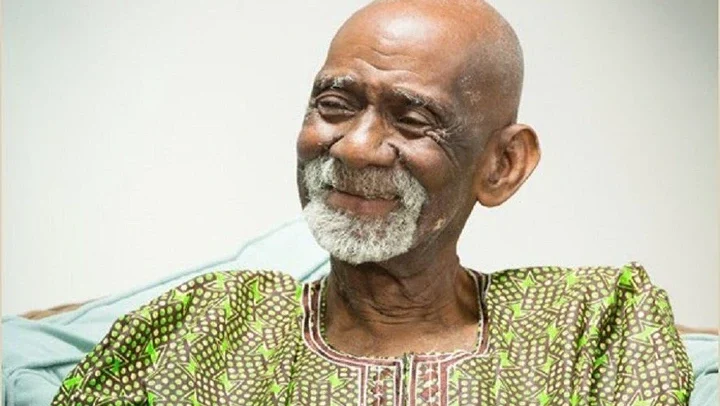
Dr. Sebi’s daughter Saama Bowman wants you to know the man behind the legend

Saama Bowman discusses her late father, Dr. Sebi, and his posthumous memoir, “The Cure: The Official Autobiography of Dr. Sebi.”
When Saama Bowman was born in Usha Village in Honduras, her father was out of the country giving a lecture. Still, Alfredo Bowman had very specific instructions for the birth workers delivering his daughter.
After Bowman was born in a water birth, her father instructed her mother and the woman assisting with the delivery not to cut the baby’s umbilical cord. He believed doing so would create unnecessary trauma for the newborn and insisted that, if left alone, it would fall off naturally within seven days. Her family was, of course, terrified.
“They were saying that I was gonna die, that I was gonna catch an infection,” Bowman recalled to theGrio over Zoom on Thursday.
Instead, she said, the cord fell away just as her father predicted. And with a laugh, she confirmed her navel is perfectly “normal.”
Her placenta was buried on the grounds of Usha Village, and a tree was planted above it. The tree remains there today, the same age as Bowman. She grew up alongside it, learning her father’s holistic approach to caring for the body. By the time she was about four years old, he was walking her around those same grounds, pointing out plants and flowers and teaching her their names and what he believed they could do.
“He would walk me around the village, and there would be different types of healing plants and also flowers,” she shared. “He would just walk me around and teach me about the names of them and what they were good for.”
Nearly 10 years after his death, Bowman is now among those carrying on what her father planted.
In February, “The Cure: The Official Autobiography of Dr. Sebi” was released from a manuscript Bowman says her father spent years writing before his death in 2016. The 162-page book is credited to Alfredo D. Bowman, though most of the world knew him simply as Dr. Sebi.
For the less familiar, Dr. Sebi was a Honduran-born herbalist who developed what he dubbed the “African Bio-Mineral Balance,” promoting an alkaline, plant-based diet and herbal compounds as a path to better health. He had no medical degree, and his claims that his methods could cure serious diseases lacked scientific evidence and made him at times a controversial figure. That all did very little to stop him from amassing a global devoted following, particularly throughout the Black diaspora, that included everyone from everyday people to celebrities like TLC’s Lisa “Left Eye” Lopes, and an influence that outlasted him.
Spend enough time in certain corners of Black wellness culture, and you will eventually hear something attributed to Dr. Sebi, whether it’s eating alkaline, avoiding certain foods, or turning to herbs first. However, much of what people know about him has been passed down through other people.
“The Cure” gives him the chance to speak for himself.
“I would hope for readers to actually learn, especially people that are in need of healing,” Bowman said, adding that she hopes readers understand “it’s never too late to start” exploring a holistic lifestyle.
It also gives Bowman a chance to introduce people to the man she knew beyond the larger-than-life figure he became.
“One thing I would like for people to learn about him was the fact that besides seeing him like an herbalist or just like a holistic healer, he was a very humanitarian person,” she noted, with a smile you could hear through a no-screen Zoom call. “He was the type of person that you would feel like you wasn’t just talking to a doctor. He was like if you were talking to your best friend, or you were talking to an elder with a lot of experience, trying to guide the youth.”
That chance to hear from Sebi directly was also what interested Jeff Colby, who spearheaded the title to publication through his company, 40a3 Studios.
“There’s only so much you can learn from interviews and podcasts and the little amounts that we did get to listen to Dr. Sebi speak,” Colby told theGrio. “This was like a firsthand approach of really getting to know the man behind the legend.”
The book begins with Sebi’s life in Honduras and follows him to the United States and around the world, including the health problems he said led him to begin researching herbs and developing his own ideas about health. Readers also get more than the lists of approved foods and herbs. Colby said the book spends considerable time on Sebi’s ideas about mental health and the connection he believed existed between the mind and body.
“He was always evolving,” Colby said. “He was always furthering his knowledge, his wisdom, his practices, his expertise.”
Of course, the book also gets into the court case.
If you have heard anything about Dr. Sebi over the years, you may have heard some version of the story that Sebi claimed he could cure AIDS, was taken to court and won after proving that his treatments worked. That isn’t exactly what happened.
After advertisements in New York claimed Sebi, who practiced and was based in New York for periods of time in the 1980s, could cure AIDS and other diseases, he was charged in 1987 with practicing medicine without a license. He was acquitted the following year, but the question before that jury was whether Sebi had practiced medicine without a license. There was a separate case brought by the New York attorney general over the claims being made in his advertisements. That case ended in a consent judgment barring Sebi and his businesses from claiming their products or services could cure or alter the course of AIDS, herpes, leukemia, sickle cell anemia, lupus, and other diseases.
In “The Cure,” he tells readers what happened from his point of view.
“When you reach that part of the book, you won’t want to put it down,” Colby said.
Bowman also wants people to hear from another group that has always been central to her father’s story, the people who went to him. She highlighted former clients who supported Sebi during his legal battles, some of whom said his methods had healed them. For Bowman, those testimonies are evidence that her father’s work did what he said it could.
“One of the things that I would like for the public to get clear is the fact that he actually did cure with his healing methodologies,” she said.
While those claims have not been confirmed through scientific evidence beyond anecdotal accounts from Sebi’s clients, what is much harder to dispute is the reach of his influence. Nearly a decade after his death, his name remains synonymous with alkaline eating and herbal wellness, particularly in Black communities, and his work empowered generations of people, especially people of color, to ask more questions about their food, their bodies, and take more control over their health using the natural resources available to them.
Colby doesn’t think that curiosity has to mean rejecting conventional medicine either. He believes holistic and conventional approaches can work together, something that may surprise people whose understanding of Sebi begins and ends with lists of foods they have been told not to eat.
It also helps explain why a book about his life would be called “The Cure.”
“When it comes to the cure, it’s really not a one-size-fits-all,” Colby explained. “It’s everybody’s mission to figure out their version of the cure.”
The “cure,” as Colby describes it, isn’t one herb, diet or answer that everyone should follow. It’s the knowledge, resources, and practices people gather as they learn what works for their own bodies. Sebi’s life becomes one example of that process, beginning with his own dissatisfaction with his health and the questions that led him toward herbs in the first place.
Ten years after his death, the community that grew around those ideas hasn’t gone anywhere. His Cell Food company and website continue to operate, while in Los Angeles, where Sebi spent years building a following, people who learned from him continue to gather around his teachings and keep his name alive.
Meanwhile, at Usha Village, many of the people he taught are also carrying on his work. Bowman said most of the team working at the village today worked alongside her father and were personally trained in his methods. Colby has visited several times and said he can see “portions of Dr. Sebi being echoed throughout” the staff and the way they care for the people who travel there.
“The majority of the team here at Usha Village are the same people that have been here ever since he opened this place,” Bowman said.
While they have continued researching herbs in the years since his death, she added, “we’re still keeping it just like he left it.”