
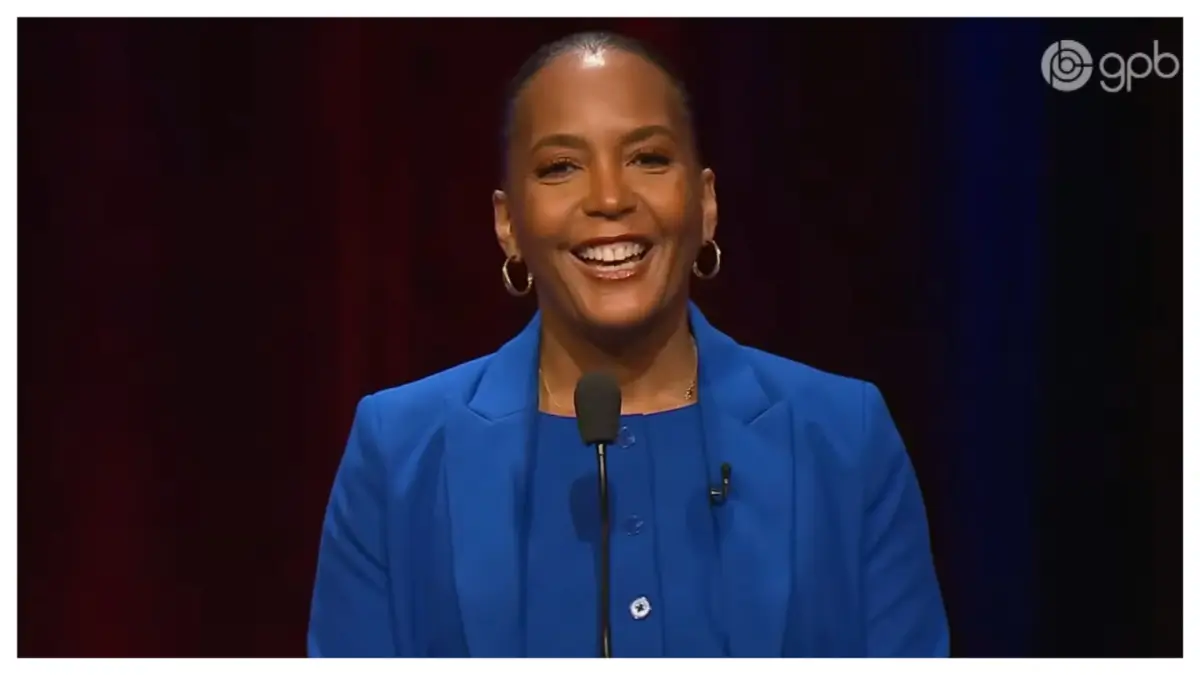
‘Does She Have That Dog In Her?’: Keisha Lance Bottoms’ Push to Become Georgia’s First Black Female Governor Turns Into a Brutal Fight Over the Past — and If She Can Beat the GOP in the South
As early voting nears its end in Georgia, former Atlanta Mayor Keisha Lance Bottoms appears headed for a first-place finish in the crowded Democratic primary, but not without a fight, as polls suggest the race is still likely to spill into a high-stakes runoff.
Recent polls show her winning the support of about 40% of likely Democratic voters in a field of seven candidates, and indicate she’d be strongly competitive in the general election in November, when she could become the first Black and the first female governor in state history.
But as both her Democratic and deep-pocketed Republican rivals attack her performance as mayor, it is sure to be a bruising battle until then.
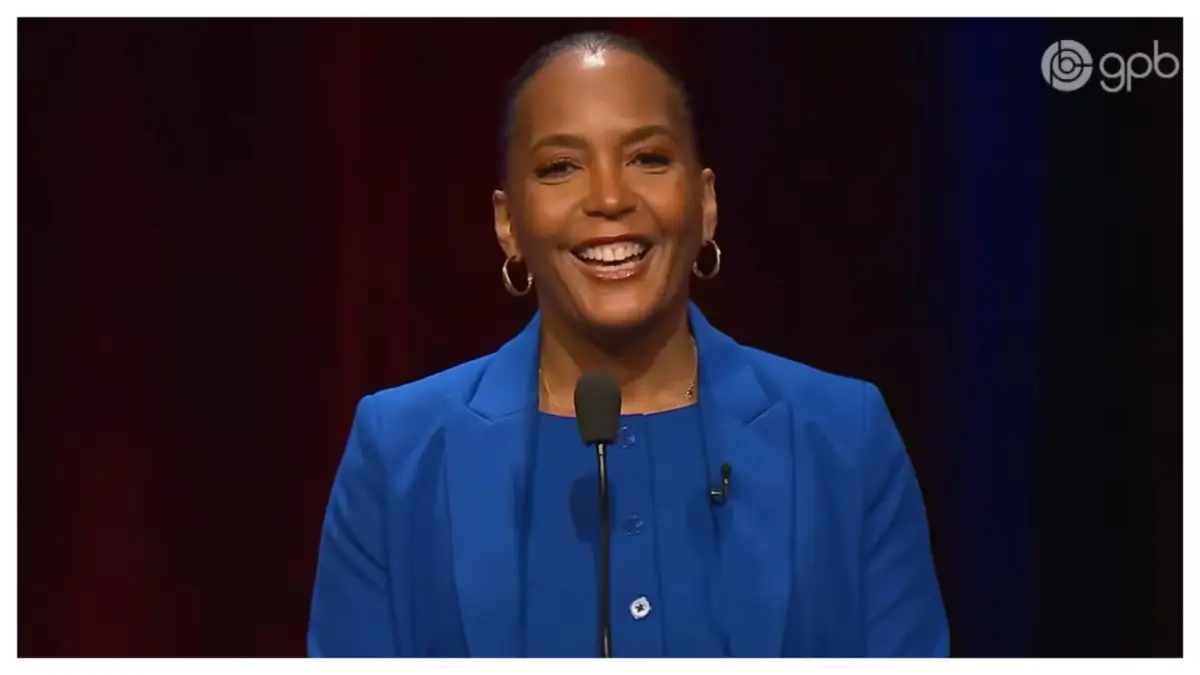
In recent candidate debates, Bottoms aligns with most Democrats on policy positions — expanding Medicaid and pre-K education, addressing housing affordability, protecting abortion rights, and implementing gun safety measures.
She explains how she closed Atlanta jails to ICE during her time as mayor, and pledges to hold that line as governor when facing demands from Trump’s Homeland Security department, while still conforming with the law.
Bottoms describes herself as a fifth-generation Georgian and a seasoned, “battle-tested” leader who has served as a magistrate court judge, an Atlanta City Council member, as the mayor of Georgia’s largest, most diverse city, and as an effective public engagement advisor to former President Joe Biden, who recently endorsed her campaign for governor.
But several of her competitors in the governor’s race are now going after Bottoms for how she governed as mayor during the coronavirus pandemic, when violent crime in Atlanta spiked and mass social protests in response to the killing of Black people turned confrontational.
Who Is She Up Against in the Primary
Former Democratic state Sen. Jason Esteves, a lawyer and small business owner, has faulted Bottoms for leaving office after one term “at a time when Atlanta was in crisis, one of its darkest hours.”
In televised debates and in an interview with 11Alive, Esteves, a former teacher and Atlanta school board chair, homed in on the death of 8-year-old Secoriea Turner, “who was murdered by gang members who had taken over blocks of the city of Atlanta because the former mayor told police not to intervene,” noting Bottoms is a defendant in a pending wrongful death lawsuit filed by the girl’s family.
A Wendy’s in southwest Atlanta became a flashpoint after Rayshard Brooks was shot and killed by police in its parking lot. Protesters set the restaurant afire and occupied the charred remains of the restaurant for weeks until it was torn down by the city. Police later testified they were ordered to stay away at night as armed groups converged on the site, the AJC reported.
Turner, a third grader, was shot in the back seat of a Jeep on July 4, 2020, as her family tried to traverse a nearby intersection that had been taken over by armed vigilantes.
Bottoms called Esteves’ account of that tumultuous time and her interactions with police “a lie” during the debate.
Her campaign staff points to statements by former interim police Chief Rodney Bryant that disputed claims that officers were told to abandon the area to demonstrators. She has previously explained that she planned to shut down the Wendy’s site weeks before the shooting, but wanted to give a city councilwoman in that district more time to negotiate with demonstrators to create a community gathering spot in Brooks’ honor.
In her recently released memoir, Bottoms expressed regret for her handling of the protests in the wake of Brooks’ shooting by police.
“We will never know if tearing down the Wendy’s would have made a difference,” Bottoms wrote. “Hindsight gives us the illusion of second chances that life doesn’t. The death of precious Secoriea Turner will always break my heart.”
Pressure to Sharpen Message
While multiple polls indicate Bottoms is the clear frontrunner in the Democratic primary, political observers say she’ll need to strengthen her messaging for the likely June 16 runoff with a second-place finisher, as well as for the general election.
“She needs a counterpunch strategy,” Andra Gillespie, a political science professor at Emory University, told Atlanta Black Star. “She must answer why she chose not to run for reelection in 2021, and why she’s now coming back for an even bigger job. She has to have some hard-hitting messages that rely on more than platitudes.”
Unlike Democratic stalwart Stacey Abrams, who lost by seven points to Republican Gov. Brian Kemp in 2022 (after more strongly challenging him in 2018, with nearly 49% of the vote), Bottoms is not facing a popular incumbent. The Republican field is wide open, and the GOP primary on May 19 will likely result in a runoff between two Trump- and MAGA-aligned candidates who are currently duking it out in debates and in vicious attack ads denigrating each other’s integrity.
Lt. Gov. Burt Jones, currently polling at 25 percent among likely GOP voters, has the endorsement of President Donald Trump and champions cutting income taxes, banning abortion and transgender women in sports. Jones was one of 16 Republican fake Trump electors who tried to subvert the electoral college vote count in the 2020 presidential election. He was indicted by Fulton County District Attorney Fani Willis, but those charges were later dropped by a state-appointed special prosecutor after Willis was dismissed from the case.
In recent TV ads, Jones has called wealthy health care executive Rick Jackson, who has surpassed him in the polls at 29 percent, “a fraud who got filthy rich off Georgia’s taxpayers and seniors,” pointing to the business that his company Jackson Healthcare has done with the Georgia state government in recent years. That included a $930 million no-bid contract to provide extra health care staffing during the COVID-19 pandemic, The Associated Press reported.
Jackson said he acted at Gov. Kemp’s request to help with the pandemic response and was only putting Georgia’s interests first.
He tells Georgia voters at campaign events that he supports Trump’s One Big Beautiful Bill, including the work requirements for people receiving Medicaid.
“People relying on government where they have no incentive to work,” Jackson said. “It’s the most dehumanizing thing that you can do. … God made us to be productive.”
Jackson is also running MAGA-baiting ads that threaten to round up “criminal illegals,” who he ominously warns will be “deported or departed.”
With his spot in the Republican primary runoff all but assured, Jackson is now releasing inflammatory ads that depict Bottoms as a “woke,” soft-on-crime mayor.
Over images of police cars on fire, Jackson’s voice intones, “When the city needed her, she let Atlanta burn.”
In a Facebook post by Bottoms on April 22 that included a sample of Bone Crusher’s defiant rap song “Never Scared” featuring Killer Mike and T.I., she responded:
“Gazillionaire MAGA Republican Rick Jackson says he will do whatever it takes to defeat me in November. He may have the money, but we have the power. VOTE!”
Bottoms’ message subtly alluded to one of her prouder moments as mayor when, after demonstrations against police-involved killings turned violent and destructive, she appeared at a late-night press conference with local rappers Killer Mike and T.I., urging protesters to calm down and “go home,” and said, “This is not the legacy of civil rights in America. This is chaos.”
An emotional Killer Mike also urged residents to stop destroying the city and instead “organize and vote” for progress.
At the moment, Bottoms remains competitive with her top Republican rivals.
How She Fares Against Republican Candidates
In a poll released on April 21 by Republican-leaning Echelon Insights polling group, Bottoms bested both Jones and Jackson 49 percent to 43 percent in hypothetical head-to-head races, in a poll with a 6.5 percent margin of error.
She more narrowly led GOP contender Brad Raffensperger, the Georgia secretary of state who famously stood up to Trump’s baseless demands to find fraud in the 2020 election, 46 percent to 44 percent. But Raffensperger is trailing in the Republican primary, with other polls showing he would win only about 15 percent of likely GOP voters.
In a once reliably red state that turned more purple in 2020 with the narrow win of President Joe Biden over Trump, followed by the squeaker victories of Democratic Sens. Jon Ossoff and Raphael Warnock in the 2022 midterm elections, political observers say Bottoms can hope that the growing anti-Trump sentiment among the Georgia electorate might power her to the governor’s seat in the upcoming midterms.
It would be a historic feat in a state where all 83 governors have been white men, and no Democrat has been elected governor since 1998.
“Something which will help Bottoms and any other Democrat is this may be a Democratic wave election,” Charles Bullock, professor of political science at the University of Georgia, told Atlanta Black Star. “So many people are alienated by the war in Iran, the cost of groceries and gasoline, the chaos in the White House, and may just say, ‘I’ve had enough of this. I can’t vote against Donald Trump because he’s not on the ballot, but I can vote against his party,’ which tends to happen in the midterm.”
Bottoms’ first TV ad, released last week, seems to embrace this approach. In it, she says, “The problem is not that Donald Trump doesn’t like me. It’s that he doesn’t care about you. He’s rigging the system, trying to erase us, and thinks we won’t fight back.”
Democratic candidates, especially minority candidates like Bottoms, may also run against last week’s Supreme Court decision to “put the final stakes in the heart of the Voting Rights Act,” said Bullock.
“I can see that being used in the same way that Stacey Abrams was campaigning against Republicans and saying they’re trying to keep you from voting, which she leveled at Brian Kemp,” he said.
Unlike some other Southern governors, Kemp has already said it is too late for Georgia to begin redistricting before the November elections. Noting that a Democratic Georgia governor could veto a future redistricting plan proposed by lawmakers in Georgia’s Republican-controlled legislature, Bullock said that constitutional power gives Bottoms something to fire up voters who are distressed over the prospect of further race-based gerrymandering.
Bullock also noted that if Bottoms wins in November, the Georgia Legislature could hold a special redistricting session before she takes office in January, and vote to strip the governor of some powers, “essentially similar to what happened in North Carolina when Democrat Roy Cooper was elected governor there” in 2016, and “the legislature moved to severely restrict the governor’s powers.”
Abrams never led Kemp in polling, noted Bullock, who credits Bottoms’ early lead against both her Democratic and Republican rivals in part to her strong name recognition across the state as mayor of Atlanta, an advantage that could fade as other candidates better define themselves to voters.
And Bottoms will likely need to perform better than Abrams did in 2022 in winning the support of Black and minority voters, said Gillespie.
“Republicans did a better job of connecting with and mobilizing low propensity voters of color overall,” she observed.
Can the Black Vote Secure Keisha a Win?
A longstanding rule of thumb in statewide elections is that a Democratic candidate must get 30 percent of the white vote and that Black voters should make up 30% of all voters to win an election. One of the assumptions built into the rule is that almost all of the Black voters in the state —at least 90 percent—will vote for a Democrat.
For decades, Black women have served as a bedrock of votes for Georgia Democrats to build on. In 2022, Abrams won 90 percent of Black voters in Georgia, including 93 percent of Black women and 84 percent of Black men, according to a CNN exit poll, nearly identical to Warnock’s support among both groups in the state, the Washington Post reported.
But Black voters made up only 26 percent of the total vote share in 2022, Bullock noted, a factor contributing to Abrams’ loss.
As Black men in Georgia have drifted to voting Republican in recent years, Gillespie said, “a Democrat, expecting to get only 85 percent of the Black vote, might have to drive up higher Black turnout to get enough votes” to propel them to victory.
Black Atlanta resident Alexcius Branch, a real estate professional, seems to agree.
“We cannot rest on our laurels because of these early poll numbers,” she wrote on Facebook about Bottoms. “We know that she has to get over 50 percent in the election to win. So if we have a runoff, then all of those Republicans will come together. We need to make sure she wins in the initial election, and she gets at least 55 percent. So we gotta get out of here and grind for [Keisha].”
Cheron Pitchford, who leads a nonprofit providing affordable housing and services in Atlanta’s predominantly Black Summerhill neighborhood, posted on May 9 that “flat-out inaccurate” narratives about Bottoms are spiraling online, threatening to deny her a fair shake at the election.
“You can critique her leadership. I have criticisms too,” Pitchford continued. “But a lot of the revisionist framing happening right now completely ignores the reality of what Atlanta actually was during that period. … People are acting like she fits into the ‘all skinfolk ain’t kinfolk’ category, which is honestly an absurd leap. … There is absolutely a tendency in this country to look for any reason to disqualify or undermine Black women in leadership, and some of this discourse feels deeply connected to that reality because…what are y’all even talking about?”
Ebony Dames, an after-school tech program leader in Atlanta, replied, “All of that is valid but one thing I was looking for in the gubernatorial debate was grit. This administration plays dirty and breaks rules. It was too much for her the first time around. It’s only going to be worse for her this time around during the campaign. Has she developed thick skin?”
“I wouldn’t want her slinging mud with opponents but she’s going to need a level of fight in her to not just seal the deal going up against them during the campaign but absolutely if she got the job.”
“She needs that bite our Fulton District Attorney Fani Willis has. Stac[ey] has it. First Lady Obama would have it. … [Black Democratic gubernatorial candidates] Olu [Brown] and [Michael] Thurmond here seem to have it. Does Keisha? … I’m rooting for KLB and don’t knock her leadership but I’m just not confident she’s got ‘that dog’ in her. This is the time for an elephant in the china shop. We gotta knock ALL this sht over and stop letting the other side play with our lives.”
The Financial Battle Ahead
While benefiting from the boost that midterm elections usually offer the minority party, Bottoms and other Democrats in Georgia could face a David-and-Goliath challenge in financing their general election campaigns.
The campaign war chests of the top Republicans in the governor’s race presently far surpass those of the Democrats. Already, Republican candidates have so far outspent Democrats on television ads and media buys by a margin of $100 million to $2 million.
Jones, who has a family fortune from gas station and insurance businesses to draw on, has so far spent $24 million on ads in the governor’s race. Jackson, a billionaire, has spent at least $56 million and can keep on writing checks to fuel his campaign.
As of May 8, Bottoms had reported raising $2.8 million and had $257,336 left in her campaign coffer. Bottoms’ campaign manager has said they expect fundraising to accelerate after the primary, but that her campaign will continue to be “people-powered” with small donations and driven by campaign volunteers around the state.
Esteves has raised $3.5 million between his two fundraising committees for governor and state senator. (He can tap into the latter, a race he abandoned in September 2025 to run for governor).
By comparison, Abrams, whose campaign fundraising was driven by a grassroots mobilization of young and Black voters and a vast network of donors across the country, raised almost $12 million during March and April of 2022.
“Abrams had a phenomenal national network which raised money for her, and Bottoms is going to have to raise tremendous amounts of money to stay competitive,” said Bullock. “Otherwise, she’s going to be buried, especially if she’s running against Jackson in the general election.”
Kentucky Gov. Andy Beshear, who leads the Democratic Governors Association, said Georgia is “in play” and that Bottoms will benefit from national Democratic donors if she emerges as the nominee.
“We’re going to make sure the Democratic candidate in Georgia has the funding they need to compete,” Beshear told The Associated Press last month as he visited Atlanta to keynote a party dinner.
The Race Ahead
First Bottoms has to prevail in a likely Democratic primary runoff, where she would face one of three Democrats who have statewide governing experience — former Republican Lt. Gov. Geoff Duncan (who switched parties last year), Esteves, and former state insurance commissioner Michael Thurmond. They were polling at 7 percent, 8 percent, and 10 percent, respectively, in a May 4 AJC/University of Georgia poll.
But with about a third of Georgia Democrats still indicating they are undecided, who will be the likely runner-up in the primary remains murky.
Some Democrats campaigning for Duncan, a vocal Trump critic who backed Kamala Harris for president and now embraces Democratic priorities, including Medicaid expansion and voting rights protection, buy into his argument that he has the best shot at attracting the support of independents, moderate swing voters and disaffected Republicans who will be needed to win the general election.
“He’s a good executive, a solid leader who will be able to implement sound policy for the state,” said Polly Sattler, 59, a sustainability consultant who held a meet-and-greet event for Duncan in her Atlanta home this week. She likes Duncan’s drive to expand Georgia’s skilled workforce and to support emerging technology initiatives. And she respects that Duncan, who is white, successfully pushed Republicans to pass a hate crimes bill inspired by the 2020 murder of Ahmaud Arbery in Brunswick, Georgia.
“I also don’t think the rest of the state is ready for other Democratic candidates,” she said, meaning those who are Black. “I hate to say that.”
Her thoughts were echoed by Sheila Meshanko, an Atlanta business consultant who wrote on Facebook that Duncan “is the only candidate that can win in all of Georgia not just Atlanta, Savannah and Columbus. Folks just don’t understand Republicans hope and pray you put KLB or Jason Esteves as your candidate they know they can beat them. … I’m from South GA there is no way anyone but Geoff can win those areas or put up a fight. It’s naïve to think otherwise. … I will support the Democratic nominee regardless.”
So will Sattler, who perceives Rick Jackson as “like Donald Trump with a southern accent. He’s a billionaire who won’t be beholden to anybody and I fear he will run the state like his own fiefdom. Of course if Keisha is the Democratic nominee I’m going to support her.”
Other die-hard Democrats vow to coalesce around the primary winner.
Tamara Stevens, a Democratic activist who lives in north Georgia, wrote on Facebook after Bottoms appeared at a Forsyth County Democrats meeting that she found her to be “affable … competent, kind” and an excellent candidate “who will do a good job if elected.” She and her husband grabbed a Keisha for Georgia yard sign “in anticipation of the very high possibility that she will need our votes and support this year.”
But Stevens was still undecided, finding the top Democratic candidates for governor “are all qualified and capable” and “would support and defend legislation that the majority of Democrats want moved forward under the Gold dome.”
Who she’ll vote for “changes hourly,” she said. “And I think a lot of folks feel the same way. … We don’t have one candidate that stands out as a star. They all have their weaknesses and their baggage.”
She concludes that after a divisive primary, voters who have sparred over who’s the best Democratic nominee will need to “come back together once we have our general election slate of candidates and the majority of us will be voting for candidates who weren’t our first choice.”
Advance voting is underway in both the Democratic and Republican primaries in Georgia, where elections will be held on May 19.