
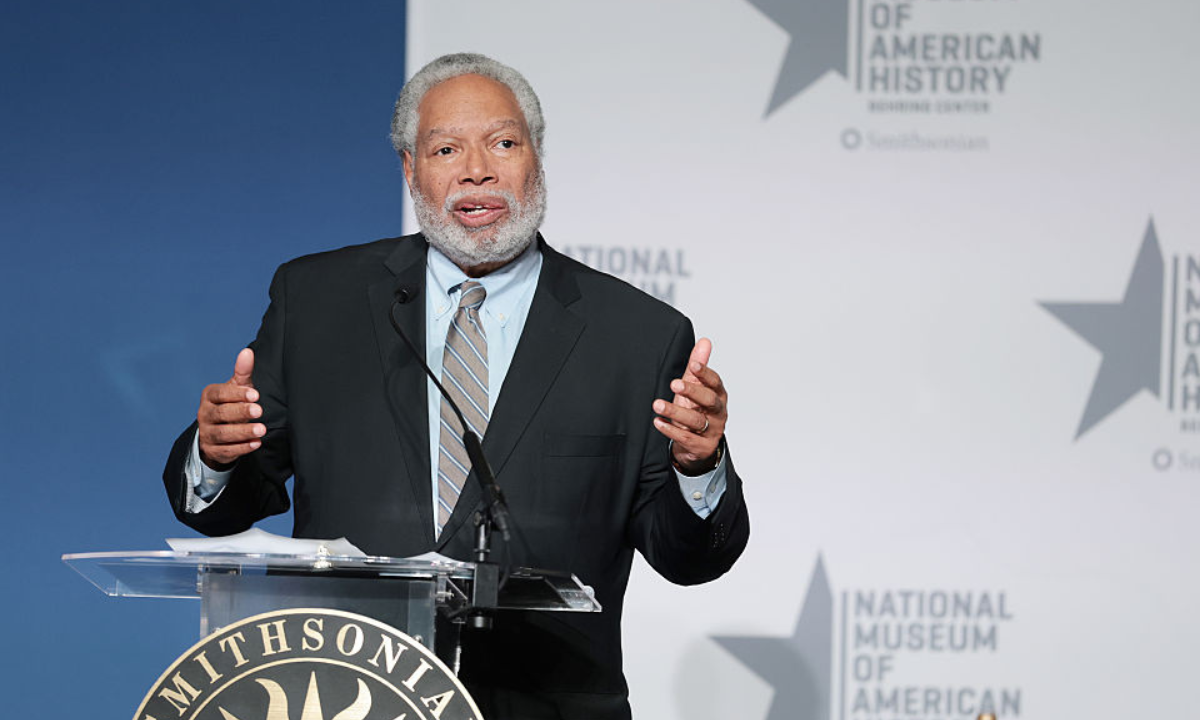
Black Smithsonian chief disputes Trump White House’s claim of ‘extreme political activism’
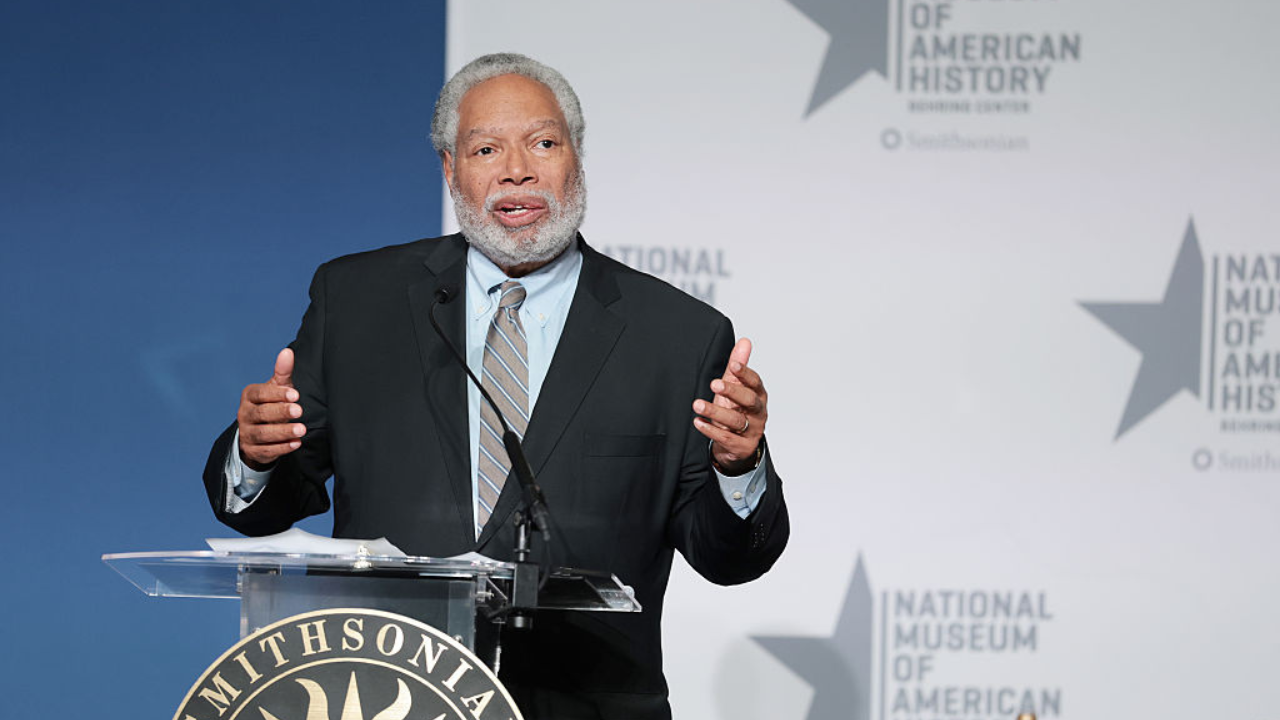
Lonnie Bunch, the Secretary of the Smithsonian, wrote in an email, “Our work is driven by scholarship, accuracy, and an uncompromising commitment to tell the fullness of America’s story.”
After the Trump White House issued a July 4 report accusing the Smithsonian’s National Museum of American History of “extreme political activism,” Lonnie Bunch, the first Black secretary of the Smithsonian, is speaking out against those claims.
In an email to staffers, Bunch, who has headed the Smithsonian since 2019, defended the institution’s work and pushed back against the White House Domestic Policy Council report titled, “Saving America’s Story: How Ideological Capture at the Smithsonian Institution’s National Museum of American History Erases Our History.”
“[It] is not a fair characterization of the work and totality of the National Museum of American History,” Bunch wrote in the email obtained by The Washington Post. “At the Smithsonian, our work is driven by scholarship, accuracy, and an uncompromising commitment to tell the fullness of America’s story.”
However, Bunch said, “We continue to review the report and its findings carefully,” and added, “There will always be room for improvement.”
In its 162-page report released on the Fourth of July holiday, the White House targets the National Museum of American History and accuses its leadership of having “explicitly adopted an ideological framework that no longer treats the American story as a shared national inheritance to be taught or celebrated, but as a political instrument to divide, dispirit, and discourage our citizens.”
The White House report specifically takes issue with the Museum’s depiction of slavery–which is mentioned more than 70 times throughout the report.
As an example, one excerpt reads: “In the Museum’s current telling, the country is, above all, defined by white supremacy, slavery, conquest, exclusion, hierarchy, racism, xenophobia, misogyny, and systemic injustice.”
The White House argues that instead, “It should tell the story of how the colonies inherited slavery from both global and European slaving practices, but also how the words, actions, and ideas of America’s Founders helped spark a worldwide movement that ultimately ended slavery.”
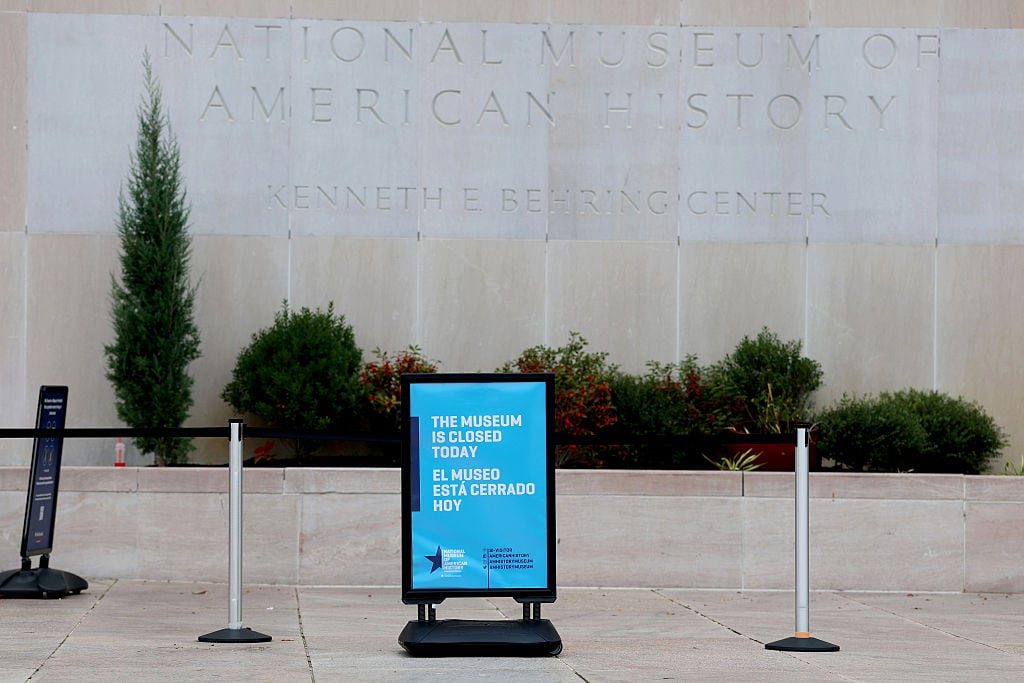
The report aligns with President Donald Trump’s March 27 executive order, “Restoring Truth and Sanity to American History,” which calls on agencies to review how history is told in the nation’s museums and public institutions. The president has also sought to censor how history, notably Black history, is taught in schools and displayed in national parks.
Civil rights advocates, historians, and Black political leaders sharply rebuked Trump’s order, which they argued downplays how race, racism, and Black Americans themselves have shaped the nation’s story.
“The culture that was underlying slavery continued very healthily all the way to the present,” said Jeffery Robinson, CEO and founder of The Who We Are Project. He told theGrio, “Why do they not want kids to learn this information? Because if they learn it, their minds will be changed. They will view the world through different eyes, and they will make decisions that are different than the ones their parents make.”
Despite Secretary Bunch’s email to staff, the Smithsonian has not publicly said much about the report’s challenge to its legitimacy. A spokesperson told The Washington Post, “For more than 180 years, the Smithsonian has served the American public with nonpartisan and independent scholarship, and we remain committed to doing so.”
In his correspondence with staff, Bunch said, “As public servants and the keepers of this institution, we are charged with helping a nation find understanding, hope, and clarity and as part of that duty, we are dedicated to excellence, reflection, and growth.” He added that the history-preserving institution remains committed to “scholarship, nonpartisanship, independence, accuracy, and integrity.”
The White House report was also condemned by the Organization of American Historians, which slammed it as “part of an ongoing and multi-pronged assault by the Trump administration against accurate and evidence-based history in American public life.”
“Established by Congress in 1846 as a unique and independent agency, the Smithsonian Institution is not, and has never been, under the authority of the Executive Branch. It is an independent statutory agency, led by the Secretary and governed by a bipartisan Board of Regents as established by law,” the organization explains. “That structure exists precisely so that interpretation across the Smithsonian’s museums is not subject to the whims of whoever occupies the Oval Office.”
The group of historians continued, “The question this report forces us to confront is simple: who has the authority to determine how American history is told? The President, or the historians, archivists, educators, curators, and museum professionals whose training and evidence-based methods have always governed that work? The answer, as a matter of law and professional practice, has never been the former.”