
Black Middle Schooler Called the N-Word and ‘Slave Monkey’ by White Students, Then Told to Kill Himself Even After Suicide Attempt, Lawsuit Says
A Black high school student and his father are suing a Cape Cod school district, alleging school leaders spent years minimizing racial bullying by white peers that drove the boy to attempt suicide.
Damion Walker and his son, A.W., claim classmates racially tormented the student after he moved to Massachusetts from Jamaica in 2021, calling him “the N-word” and “slave monkey” and making whipping gestures, while school officials treated him as the problem.
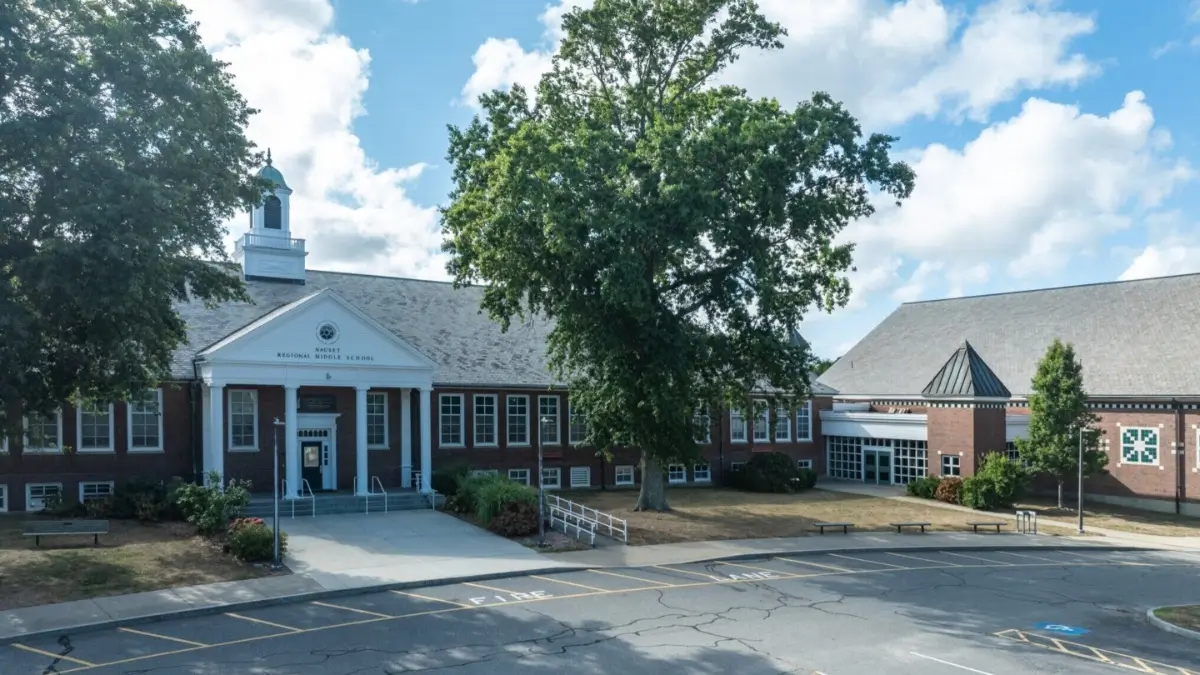
The lawsuit, filed on Sept. 8 by Lawyers for Civil Rights, a Boston-based legal nonprofit, in U.S. District Court in Massachusetts (and obtained by Atlanta Black Star) alleges that A.W. endured months of racial slurs and physical assaults at Nauset Regional Middle School (NRMS) that the school district documented but did nothing meaningful to stop.

A.W. was born in Jamaica and lived with his mother before moving to Massachusetts with his two younger siblings to live with his father and to attend middle school. He began the 2021-22 school year as a sixth grader at NRMS, where he was from the start persistently and severely bullied by white students, who made up 82% of the student population, while Black students comprised about 5%.
In one early incident, a white classmate allegedly told A.W. to “go kill yourself,” the Black student claims.
Extreme race-based harassment at the middle school drove A.W. to suicidal ideation, the lawsuit asserts. In December 2021 he wrote a poem about committing suicide and expressed suicidal thoughts online and with his peers.
Rather than supporting him, the district “scrutinized” what it called A.W.’s “problematic” and “disruptive” behavior to determine whether he qualified for special education services or a behavioral health program.
After a psychological evaluation ordered by the school, a doctor diagnosed A.W. with Attention Deficit Hyperactivity Disorder (ADHD) and found that A.W.’s problematic behavior was frequently in reaction to his classmates’ harassment and bullying.
Due to his diagnosis, the school began providing special education services to the middle schooler and developed an Individualized Education Program (IEP) plan including specialized instruction and accommodations.
While those services supported A.W.’s academic and psychological development, they did not address the hostile environment he continued to face in school, the complaint contends.
“The District treated A.W. as a scapegoat while it allowed racism to go unchecked,” the lawsuit says.
The racial harassment worsened during the 2023-24 school year, culminating in a mental health crisis for A.W., the plaintiffs claim.
In October 2023, when A.W. was in eighth grade, white students allegedly called him the N-word in his physical education class.
In January 2024, A.W. “was the victim of five separate attacks by white peers,” the complaint says, including: a classmate who took his glasses, “rendering him sightless and helpless, and initially refused to return them;” a classmate who called him “a slave monkey;” a classmate who described him as “Black Black Black;” and a classmate who made a whipping motion toward him in a hallway.
While his class watched the film “Hidden Figures,”’ a classmate allegedly told A.W. he was “as Black as the spaceship.”
The following month, a white classmate allegedly touched A.W.’s buttocks without his consent while standing in the lunch line. A.W. pushed the aggressor away, and another classmate jumped in and started pushing A.W., saying, “Don’t mess with my [N-word].” Then the aggressor “threw A.W. to the ground and got on top of him.”
A behavioral counselor at NRMS pulled the aggressor off of A.W., and that student later admitted to physically attacking him, the lawsuit says.
A special education teacher, Stacey Clark, and an adjustment counselor, Jessica Newell, both told NRMS administrators that A.W. “was being pervasively targeted with racialized and inappropriate comments” from multiple classmates.
Clark noted that several students “deliberately provoked A.W. to trigger him and incite a reaction.”
Newell said A.W. told her he felt harassed every day, did not belong at NRMS or want to be there, and believed the school was doing nothing to help. He also told her he did not feel safe at school but kept going because he wanted to learn.
Despite “the pervasive and insidious bullying” as well as documented insight from faculty, the district did not take adequate action to support or protect A.W., the lawsuit argues, instead providing “perfunctory and procedural” responses.
School officials gave A.W. a Google document to report incidents, but knew that A.W. was not using the document, didn’t check to see if he understood how to use it, and didn’t provide him with another more accessible reporting option, the lawsuit says. They also failed to make Walker, his father, aware of the Google document.
After some racial harassment incidents, school officials forced A.W. to participate in mediation with his aggressors, who offered insincere apologies. NRMS officials didn’t “require any further reparatory or reconciliatory process to restore A.W.’s sense of safety and support him moving forward.”
Despite numerous reported incidents spanning months, the district did not implement any safety plan to mitigate the bullying or otherwise protect him, the complaint says.
At times, Peter Cohen, the school principal, accused A.W. of inaccurate reporting. When his classmates told school staff that A.W. was the instigator, NRMS would take those white students’ sides instead of conducting a neutral assessment, the plaintiffs claim.
In January 2024 NRMS ordered a behavioral assessment of A.W. to investigate what it deemed his “problematic” behaviors. Then the school staff documented 13 incidents of such problematic conduct by A.W. over the following month.
The lawsuit says negative comments from peers triggered all of the incidents except one, when a student touched his buttocks.
By March 2024, A.W.’s bullying reached crisis level. After returning home from school on March 11, A.W. attempted suicide by taking thirty 200 mg tablets of ibuprofen. He spent seven days in the hospital after doctors admitted him for treatment.
Hospital staff who evaluated A.W. documented that he reported symptoms of helplessness, hopelessness and low self-esteem. He told staff that bullying at school drove him to attempt suicide, calling it “100% of the reason.”
In his discharge plan, hospital staff wrote that A.W. said classmates bullied him every day and that “the school knows and is not doing much about it… He states he was hoping to take the pills and not wake up.”
Nauset Regional Middle School officials did not contact a school resource officer, the staff member tasked with working with school administrators and counselors to develop a student support and safety plan, about the frequent bullying of A.W. until March 14, 2024 — three days after his attempted suicide, the lawsuit says.
School officials conducted A.W.’s behavioral assessment on March 19, 2024, the day after he left the hospital. It found that A.W.’s behavioral incidents were related to bad behavior from his peers, nothing that his intense responses “have placed the focus of the ‘problem’ squarely on [A.W.] while overshading the more covert actions … of his peers.”
The behavioral analyst said reducing or eliminating the peer behavior should be the primary focus of any intervention by the district.
But the school district made no meaningful changes and allowed white students “to continue to spew racial slurs at A.W.,” the complaint says, including an incident on April 11, 2024, when a white classmate called him the “N-word.” A.W. told his therapist about the incident, who in turn informed NRMS administrators.
By late April NMRS made a finding of harassment and implemented a safety plan for A.W., noting that he “does not feel safe at school.”
The safety plan recommended moving A.W. from two study skills classes and a civics class to separate him from the students who had harassed and bullied him. The lawsuit says these actions “functioned as punishments and negative consequences for A.W. rather than as supportive measures,” as he did not like being pulled out of classes and it ostracized him even more, while the students who bullied him were not removed from any classes.
In June of 2024, a classmate allegedly said to A.W. in front of a group of people, “Raise your hand if you want [A.W.] to kill himself,” and then another student raised her hand and said, “I do, I do.”
Upset and “on the brink of tears,” A.W. told a staff member and a friend about the incident. The female student initially denied making the harassing comments but later admitted she had made them, saying she wanted A.W. completely separated from her.
After staff completed another bullying or harassment incident form, the updated safety plan recommended changing A.W.’s schedule so he and the aggressor would not share any classes.
Later that month, A.W. told his father that white classmates held a mock slave auction at school, pretending to auction him off as a slave.
School administrators were notified but did not respond with any concrete action plan to ameliorate the school’s hostile environment, minimize race-based bullying or otherwise protect A.W., the lawsuit claims.
Because of the ongoing racial bullying and harassment, A.W. did not want to be at school and his grades plummeted throughout the 2023-24 school year, the plaintiffs say.
Things changed dramatically when A.W. got to Nauset Regional High School as a ninth grader, the lawsuit says. He remained on an IEP for his ADHD, and his health, academic performance and socialization improved throughout the year.
His ninth-grade teachers described him as enthusiastic about school, and he participated in several sports, including football, wrestling and track, as well as culinary arts and woodworking classes. He told school administrators he hoped to attend college and participate in college wrestling.
Despite those improvements, the racial bullying he experienced in middle school continued to affect him. His 2025 IEP assessment found that the experience had compromised his sense of trust, belonging, and safety at school.
A.W. broke down crying during a multi-day psychological assessment pursued by his father, saying he didn’t want to talk about his bullying experiences anymore and wanted the session to end. The doctor found A.W. had suffered significant psychological trauma from the bullying and that his desire to “move on” and avoid discussion of it was “a normal protective response consistent with continued, unresolved harm.”
A.W. started the current school year as an eleventh grader at Nauset Regional High School, where the student population is 78 percent white and 7 percent Black, continuing to be “cautious and distrustful around certain people, particularly white adults in positions of power and many of his white classmates,” the lawsuit says.
He doesn’t talk about the bullying he suffered with his siblings, as he doesn’t want to scare them, the complaint contends, while he “continues to work towards a happier and more hopeful future.”
The lawsuit asserts that A.W.’s experience is not unique and that the district has a widespread practice of failing to adequately address identity-based bullying and harassment, including racial bullying, which the district significantly underreports to the state education department.
It alleges that the school district’s written Bullying Prevention and Intervention Plan did not comply with state law. The plan failed to provide clear procedures for students, staff, parents and others to report bullying or retaliation, and also for “restoring a sense of safety for a victim and assessing that victim’s need for protection,” as mandated, the plaintiffs claim.
Overall, the district failed to train teachers and staff to identify, report and respond to identity-based bullying, the lawsuit says. While bullying incidents at NRMS generally led to disciplinary actions against the aggressor, racial bias in the district’s response to student conflict and other issues produced unequal disciplinary outcomes.
Massachusetts Department of Education data shows that Black students at NRMS faced disciplinary action at nearly three times the rate of white students during the 2023-24 school year.
The lawsuit alleges that the school district and the middle school’s administrators violated federal civil rights law and a state anti-discrimination law by knowingly maintaining a hostile education environment that deprived A.W. of educational opportunities and failing to appropriately intervene.
The district, its principal and two assistant principals also violated the Equal Protection Clause of the Fourteenth Amendment by minimizing the race-based harassment of students of color and disciplining them at a higher rate than white students, the plaintiffs assert. They further violated A.W.’s right to due process by discounting his reports of harassment and implementing inadequate safety plans.
The plaintiffs seek a jury trial to determine “an amount of money that will fairly compensate them for the physical, emotional, and dignitary pain and suffering” caused by defendants, punitive damages, and for the court to issue an order requiring Nauset Regional School District to implement systemic changes to its policies, practices and procedures to remedy the racially hostile environment.
“No parent should have to watch their child go through what my son went through,” said Damion Walker in a statement. “When we send our kids to school, we should have confidence they are being cared for. But my son nearly died because of Nauset’s failure to protect him from extreme racism, and they must be held accountable.”
“Students are walking the same halls where A.W. was tormented — and Nauset still hasn’t fixed what enabled that injustice to happen. This case isn’t about one bad year or about a few bad bullies. It’s about a district that receives reports of Black students being harassed, and then looks the other way,” said Brooke Simone, an attorney at Lawyers for Civil Rights.
“We filed this lawsuit on the first day of school because families deserve to know their kids will be safe as the year starts,” she said. “No other child should be pushed to the edge. Nauset needs to be held accountable and fundamentally change how it responds to racial harassment.”
Glenn Brand, the superintendent of the Nauset Public Schools, said the system is committed to a “setting that is free from all forms of harassment and discrimination.” But he told reporters he could not comment on specific allegations, citing laws on student confidentiality.
The defendants have until Nov. 13 to file their responses to the complaint in U.S. District Court.
If you or someone you know is experiencing a mental health crisis, call or text 988 to reach the Suicide and Crisis Lifeline.