
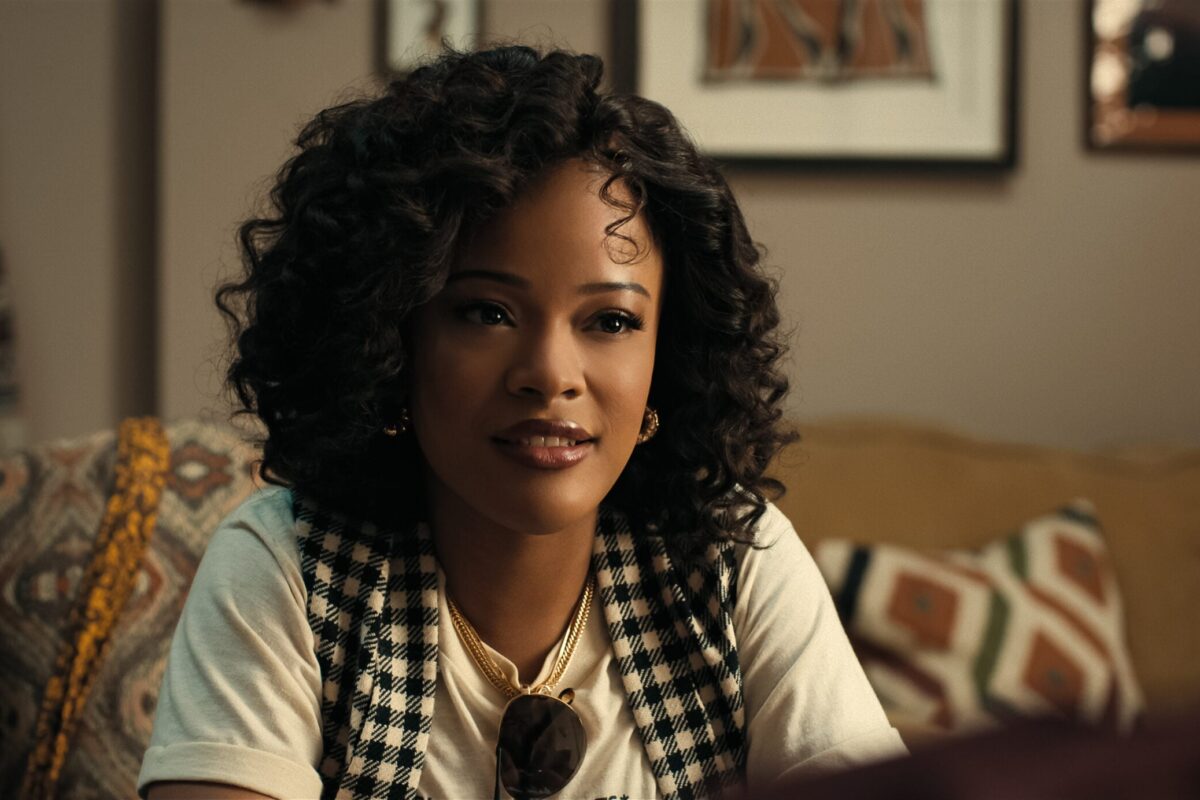
‘A Different World’ returns as HBCU enrollment is booming all over again

When ‘A Different World’ premiered, it coincided with a boom in HBCU enrollment, and the reboot arrives during a similar wave.
When “A Different World” first aired from 1987 through 1993, bringing the sight of vibrant and complex Black college student life to living rooms around the country for the first time, Black student enrollment in colleges rose right alongside it.
Enrollment in Historically Black Colleges and Universities (HBCUs), on which the show’s fictional school, Hillman, is famously based, rose by roughly 25%, while enrollment across the board for Black students rose by nearly 40% during that six-year stretch, according to the National Center for Education Statistics.
Given that legacy, among the many things folks are anticipating about the reboot, which lands on Netflix on Thursday, Sept. 24, starring Maleah Joi Moon as Deborah Wayne, the daughter of Dwayne Wayne and Whitley Gilbert-Wayne, is whether a similar boom in Black student enrollment, particularly at HBCUs, will occur.
Well, as it turns out, it’s already happening.
As major predominantly white institutions struggle with declining admissions, it appears that a steady boom in enrollment at HBCUs has been building for several years. While there has been growing conversation around this since 2022, the Institute of Higher Ed reported last week that, across the country from 2019 to 2024, 42 of 101 HBCUs saw their enrollment grow.
At some schools, that growth has been dramatic, including Howard University, which grew by 50%, Morgan State University by 42%, Virginia State University by 27%, and Elizabeth City State University by 23%.
There are several things happening at once. College enrollment is still recovering from the pandemic, while HBCUs have enjoyed growing visibility and awareness in recent years. In some ways, what “A Different World” helped start more than 30 years ago never really stopped. The show expanded what a generation of Black kids could imagine for themselves, and in the decades since, a growing sense of pride in Black identity, Black brands, and institutions created by and for Black people has inspired many to seek out Black spaces in nearly every part of their lives, including higher education.
There’s also a generation of college-age students who grew up during the height of the Black Lives Matter movement and amid increasingly public conversations about racism on college campuses and within American institutions. For some of those students, HBCUs offer the opportunity to learn and come of age somewhere their Blackness can be on full display, with a sense of belonging and safety they may not feel at a predominantly white institution.
It makes the timing of the new “A Different World” strikingly familiar. Black college enrollment was rising when the original arrived, and more than three decades later, as a new generation prepares to meet Hillman, HBCU enrollment is on the rise again.
“The time right now, it couldn’t be better than right now to hear and see where young Black America is,” the original series’ creative director from the second season on and frequent director as well as the reboot’s executive producer, Debbie Allen, said in May during the American Black Film Festival.
“We got a Supreme Court turning laws around. We have a president that is starting wars, fighting at the gas pump, we’re fighting [for] education, what books our kids can read,” the legendary choreographer and procedure continued. “We’re still in battle, and we were in battle then. We thought we kind of moved the needle, and now it’s kind of trying to roll back, but in the middle of all of that is a different world.”
The boom that coincided with the original show didn’t last forever. HBCU enrollment peaked at 282,856 students in 1993, the same year “A Different World” ended. By 1997, enrollment had fallen to 269,167, a decline of nearly 5%.
Enrollment numbers, however, are only part of what made the original show matter. For six seasons, viewers got to see Black students actually living the experience behind those numbers, complete with friendships, romances, ambitions, mistakes, and all the messiness of figuring yourself out in college. For its star Moon, bringing that kind of representation to another generation is part of what makes stepping into Hillman feel significant.
“It’s amazing that people who look like me will get a chance to see themselves reflected in three dimensionality,” she said at ABFF.
Honestly, that may be where “A Different World” can leave its mark this time around. HBCUs don’t need Hillman to introduce them to a new generation. What the show can do is give the rest of us a window into who those students are now.
Or, as showrunner Felicia Pride put it back in May, “What does it mean to be young and Black and gifted in this moment?”