
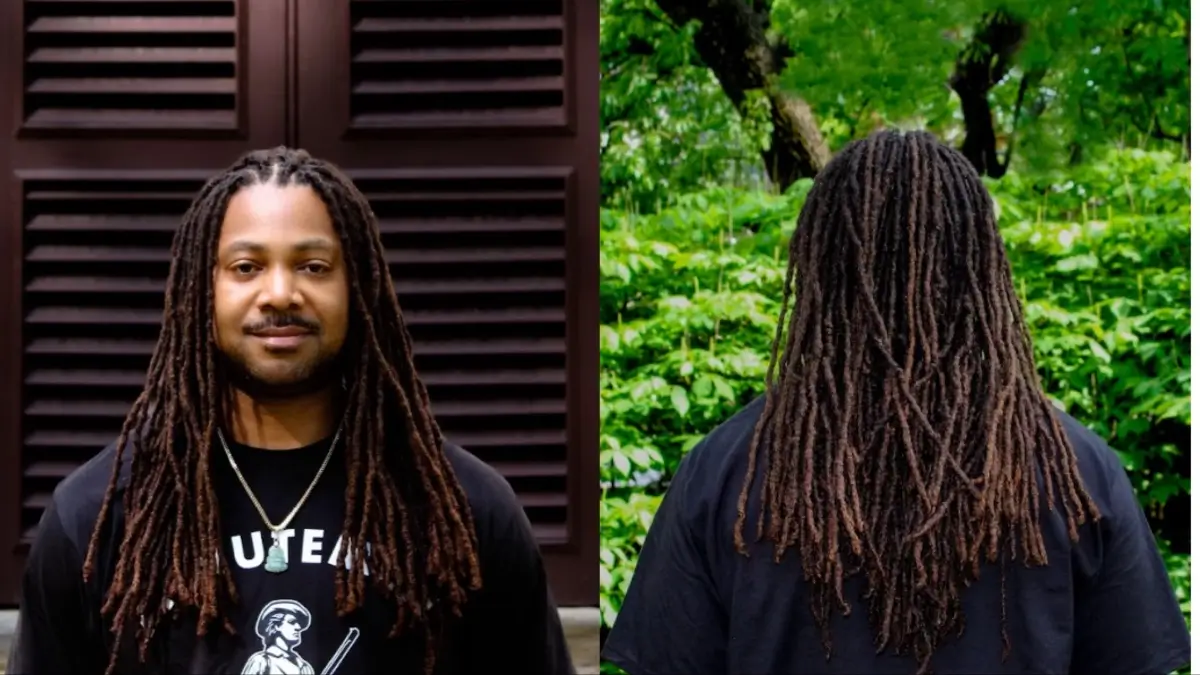
‘You’ll Have to Cut Your Hair’: Black Philadelphia Firefighter’s Supervisor Threatened to Cut Off His Locs ‘While He Slept,’ Discrimination Complaint Says
A 12-year veteran of the Philadelphia Fire Department has filed a formal complaint accusing the city of racial discrimination.
Bariq Fluellen, who has served since 2013 and wears his hair in locs as part of his cultural and religious identity as a Black man and Rastafarian, alleges that the department’s grooming policy unfairly targets Black firefighters and has led to harassment, threats, and a hostile work environment
The complaint was filed Wednesday with the Pennsylvania Human Relations Commission (PHRC). Brought by the Public Interest Law Center, the action claims the department’s policy violates the Pennsylvania Human Relations Act by prohibiting protective and culturally significant hairstyles without any legitimate safety justification.

“This is about more than hair, it is about dignity and the right to exist in a public institution without being targeted for one’s identity,” said Olivia Mania, attorney and Penn Carey Law Catalyst Fellow at the Public Interest Law Center. “We are proud to support Mr. Fluellen’s fight for fairness and accountability.”
The fire department’s grooming standards prohibit hair from extending below the shirt collar or exceeding two inches in bulk on the top and 1.5 inches on the sides. Though these guidelines are written as safety requirements—particularly for proper fitting of the Self-Contained Breathing Apparatus (SCBA) — Fluellen says he has passed every respirator fit test since joining the department, including the most recent one in 2025.
“This policy, by PFD’s own admission, serves no legitimate safety purpose. We cannot allow it to be used as a tool of racial discrimination,” said Mimi McKenzie, legal director of the Public Interest Law Center. “When an employee meets every performance and safety standard but is still targeted because of their hair, it is clear the policy is not about safety—it is about exclusion and control.”
In his complaint, Fluellen recounts years of derogatory remarks and threats from co-workers and supervisors. He says fellow firefighters mocked him with nicknames like “Rapunzel” and “Hairy,” booed him at the firehouse, and claimed he was “too busy putting his hair in a bun” to respond to calls. During an exam for promotion to lieutenant, Fluellen claims he was told, “Part of the exam is appearance, and they’ll definitely give you a zero,” suggesting that Fluellen’s hair length posed a safety concern.
On one occasion, Fluellen says the captain at his Ladder 8, Engine 19 station in Germantown threatened to “cut his hair while he slept.” He says that same supervisor frequently berated him in front of colleagues about his hair, at one point stating, “It’s a foot long in the back … do I have to get a ruler out?” and warning, “I’ll give you a month and then you’ll have to cut your hair.”
Fluellen says white firefighters — both women and men — have worn their hair loose or in long ponytails at fire scenes without consequence, while he has faced near-daily threats of disciplinary action.
“My hair is a reflection of my authentic self — as a Black man, as a firefighter, and as someone who’s proud of my culture,” Fluellen said. “Being told that I don’t belong or that I’m unsafe simply because of how I wear my hair is deeply painful. I’ve earned my place in this department, and I shouldn’t have to choose between my profession and my identity.”
Despite receiving consistently positive performance reviews, Fluellen said the persistent harassment has taken a toll on his mental health and sense of safety. He describes experiencing insomnia, nightmares, and emotional distress — particularly given the trust firefighters must place in one another on the job.
He also recounted a conversation this spring with a deputy chief’s aide about the department’s forthcoming new uniform policy, set to take effect July 1. “So what will you do with your hair, now? We’re going to take it from you,” the aide allegedly said.
In April 2022, Fluellen reported the harassment to the department’s human resources director, who allegedly advised him not to cut his hair. But according to the complaint, no further action was taken to stop the ongoing abuse.
The PHRC defines racial discrimination to include policies that disproportionately impact traits associated with race, including hair texture and protective styles like locs, braids, twists, and Afros. Fluellen’s legal team argues that pinning or fastening his hair, as he has done, satisfies both departmental safety requirements and professional standards.
The Philadelphia Fire Department declined to comment on the matter. Attempts to reach representatives at Fluellen’s station were unsuccessful.
The complaint seeks to halt enforcement of the current grooming policy, implement reforms to allow for cultural and protective hairstyles, and award compensatory damages for the pain, suffering, and professional harm Fluellen says he has endured.
“This is about creating space for people to be who they are without fear of punishment,” said McKenzie. “No one should have to sacrifice their identity to serve their community.”