
‘What Now?’: Gavin Newsom Drops F-Bombs at Fox News Host Over Racism Claims — Then Black Pundits Step in and Blow the Whole Thing Wide Open
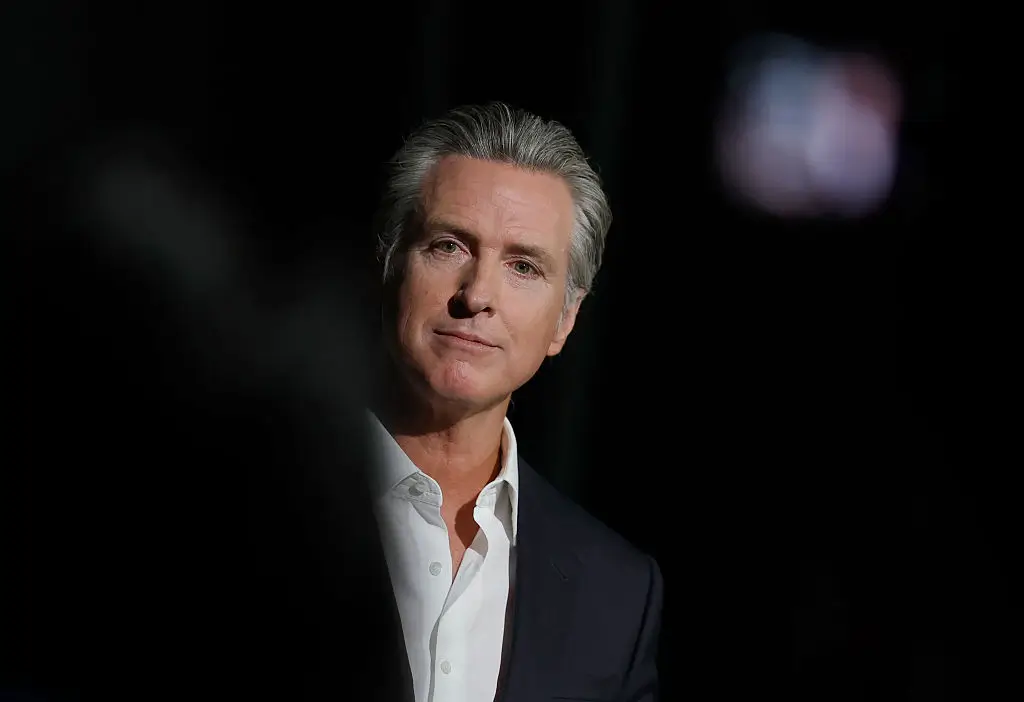
California Gov. Gavin Newsom fired back at Fox News host Sean Hannity after Hannity accused him of making racist remarks.
But instead of putting the controversy to rest, the governor’s profanity-laced response has deepened debate among Black political figures about accountability and presidential ambition.
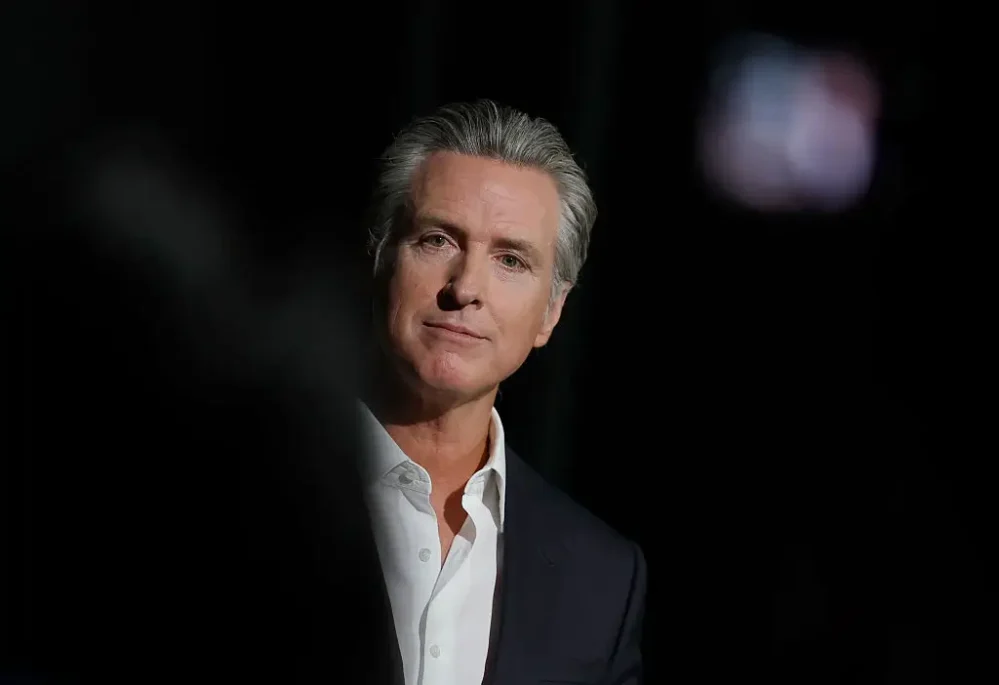
The clash comes at a pivotal moment for Newsom, who is widely viewed as a leading Democratic contender for 2028. It also revives scrutiny over racial controversies that have placed him in uncomfortable territory before.
While Newsom framed Hannity’s criticism as conservative hypocrisy — pointing to former President Donald Trump’s long record of racially inflammatory rhetoric — some Black voices argue that invoking Trump sidesteps the core issue. In politically charged moments like this, they say, accountability should not require comparison.
The uproar began during a fireside chat Sunday at the Rialto Center for the Arts alongside Atlanta Mayor Andre Dickens, part of Newsom’s promotional tour for his new memoir, “Young Man in a Hurry: A Memoir of Discovery.” Speaking about his lifelong struggle with dyslexia, Newsom attempted to underscore humility and perseverance.
“I’m not trying to impress you,” the Golden State governor told the audience. “I’m just trying to impress upon you, I’m like you. I’m no better than you. You know, I’m a 960 SAT guy. And I’m not trying to offend anyone. Literally a 960 SAT guy. You’ve never seen me read a speech, because I cannot read a speech.”
Critics interpreted the remark as racially tone-deaf, suggesting it clumsily invoked comparison rather than centering his disability. Hannity seized on it, posting on X that Newsom “Thinks a 960 SAT Makes Him ‘Like’ Black Americans” and telling followers to “let that sink in.”
Newsom did not retreat. He accused Hannity and conservatives of remaining silent when Trump posted an ape video depicting Barack Obama or referred to African nations as “s—tholes,” but now calling him racist for talking about dyslexia. “Spare me your fake f—king outrage, Sean,” he wrote.
That argument resonated with some Democrats — but not all.
Former Ohio state senator Nina Turner responded bluntly: “A lot of us care about both. What now?” Others accused the governor of deflection. “Whataboutism much, Governor?” one critic wrote. Another added, “This is one of those instances where everybody is wrong.”
Some were more sarcastic: “Dyslexia was minding its business,” one X user said. Others even issued the governor a warning: “Keep digging,” another user added.
The argument was clear: condemning Trump and demanding better from Democrats are not mutually exclusive.
At the same time, not every Black commentator accepted the viral disapproval. Scholar and political analyst Marc Lamont Hill urged observers to separate legitimate criticism from misinformation.
“There are so many legitimate reasons to dislike Gavin Newsom,” Hill wrote on X. “But don’t fall for fake news. Newsom was talking to a room full of white people. He never mentioned Black people. He was talking about his dyslexia. And he made the same exact comment to a white interviewer.”
Mayor Andre Dickens also pushed back on the backlash in an Instagram post, emphasizing the importance of context over headlines.
“Take it from someone who was actually in the chair asking the questions: context matters more than a headline,” Dickens wrote. He explained that the conversation, part of Newsom’s promotional tour for his memoir Young Man in a Hurry: A Memoir of Discovery, centered on the governor’s academic struggles, including not performing well on the SAT. “That wasn’t an attack on anyone. It was a moment of vulnerability about his own journey.”
Dickens added that modern political culture often distorts such moments. “We’ve gotten so used to loud, chest-pounding politics that when someone speaks about shortcomings, people try to twist it into something else.”
Still, he struck a note of caution: “Let me be clear, though. This is Atlanta. We don’t need anyone to tell us when to be offended. And history has shown… when we are, you’ll know.”
Hill’s intervention reframed the debate, suggesting the controversy may have been amplified beyond what was actually said. Combined with Dickens’ firsthand account, it complicates a narrative that initially spread far faster than the full context.
Other Black Democratic allies united behind Newsom. Political commentator Bakari Sellers acknowledged the remarks were “inartful” but insisted Newsom is “the furthest thing from a racist,” adding, “Donald Trump is racist. Gavin is not.” Former Democratic National Committee Chair Jaime Harrison went further, accusing Hannity and “MAGA hypocrites” of twisting Newsom’s words while historically staying silent when Trump dehumanized Black leaders and communities.
Still, the episode underscores the scrutiny facing a governor widely seen as auditioning for the White House. Newsom has previously faced criticism over persistent racial wealth gaps in California, disproportionate homelessness among Black residents, and inequities in education and policing. None of those controversies branded him personally racist, but they contributed to heightened sensitivity around racial optics.
In a political climate fueled by viral clips and instant outrage, context can collapse under a headline within hours. For some, the governor’s words warranted scrutiny. For others, they were distorted beyond recognition.
As Dickens suggested, not every awkward moment is an offense, and not every backlash tells the full story. But for a potential presidential candidate, even vulnerability can become a political flashpoint.