
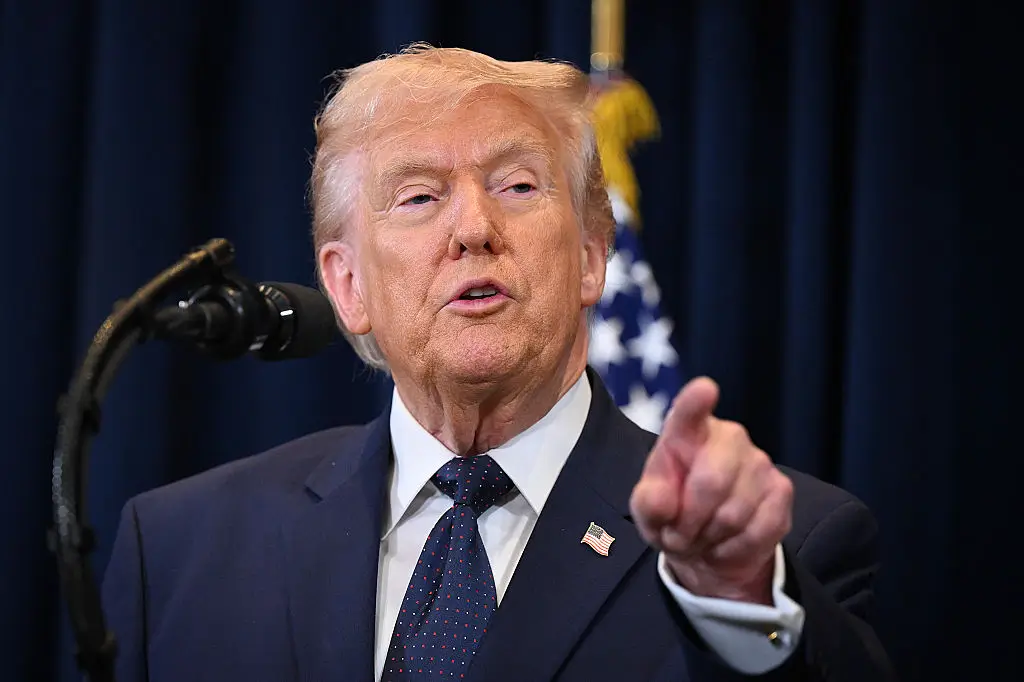
‘Weak, Weak Man’: Trump Snaps at Female Reporter, Cuts Her Off Mid-Question — Then a Question He Couldn’t Handle Strikes a Nerve He Tried to Hide
President Donald Trump has long criticized past U.S. interventions aimed at toppling foreign governments, even as his current rhetoric suggests he’s taking the same path.
Now entangled in a war of his own making, his claims of absolute victory in Iran, whose regime continues to wreak havoc in the region, have left the administration trying to balance competing messages while stopping short of the deeper commitment a true regime-change effort would demand.
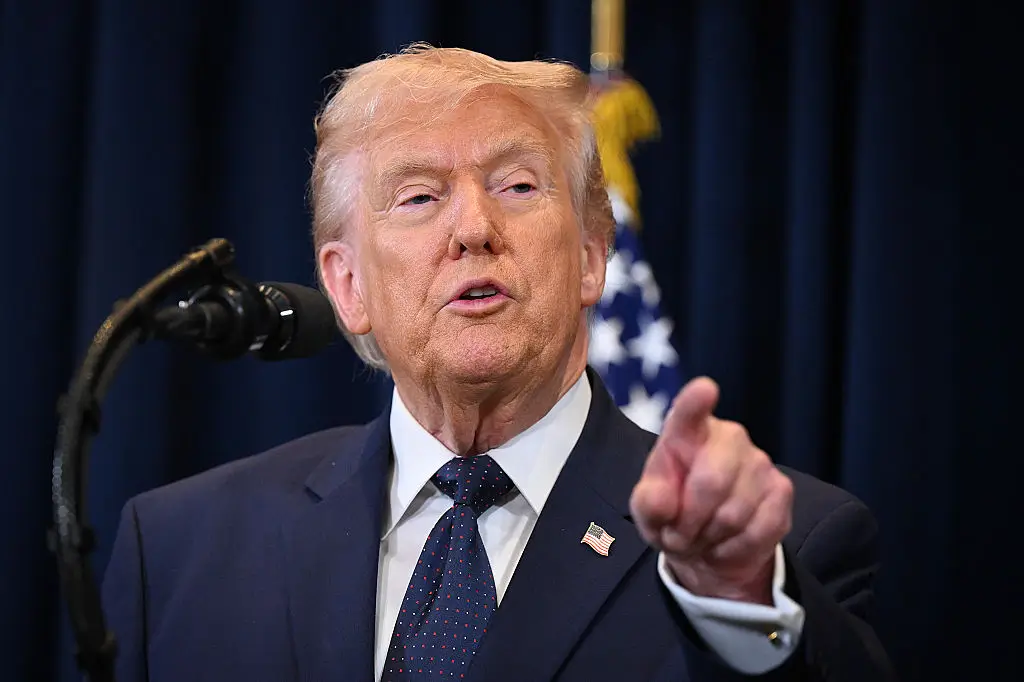
The result is a president eager to claim victory on his own terms, but quick to lash out when pressed to explain how those claims hold up.
White House reporters often run into that pattern, answers that drift, then harden into irritation under follow-up. That dynamic surfaced again on Tuesday at the White House, when a straightforward request for clarity unraveled anyway.
As ABC correspondent Mary Bruce tried to press Trump on whether Iran needed to make a deal to end U.S. military operations, and whether he had actually spoken to anyone inside the country, he cut her off before she could land the point.
What followed was less an answer than a detour, one that drifted into vague claims about a “new regime” and a supposed gesture of goodwill from Tehran. When Bruce tried to pull him back, the exchange snapped, exposing a tension that had been building as Trump’s shifting story on Iran collides with basic scrutiny.
At its core, the clash underscored a larger problem: the administration’s muddled and often contradictory claims about Iran, especially around the idea of “regime change.”
Trump has insisted that the U.S. has effectively reshaped Iran’s leadership through military force, even as his own officials and outside analysts say the government remains firmly in control. When pressed to explain that gap, the president bristled, turning a routine question into a personal jab that only sharpened concerns about how he handles challenges on a policy already marked by confusion.
The March 31 exchange with Bruce in the Oval Office began as Trump took questions from reporters following his signing of an executive order to create a federal database of eligible U.S. voters. Bruce began by asking: “Does Iran have to make a deal for the U.S. to end its operation in Iran? And have you spoken directly to anyone in Iran?”
Trump didn’t wait: “No, no. Iran doesn’t have to … Iran doesn’t have to make a deal, no. Yeah, I’ve spoken to a lot of people. It’s a new regime. They are much more accessible. They are right, you know, they said, ‘we have a present for you, Mr. President, out of respect.’ And they said —”
Before he could continue, Bruce stepped in with a follow-up, attempting to keep him on track. The overlap in voices was brief but telling. Trump quickly turned defensive.
“Wait a minute, you won’t even let me answer the question. You’re a fresh person, you know, we’ve had a lot of problems with you,” Trump said, then mumbled slightly before returning to his babbling. “You asked me a question, no, they don’t have to make a deal with me. When we feel that they are, for a long period of time, put into the stone ages …”
The moment landed poorly online, where reactions blasted Trump’s obvious deflection.
One response took aim at Trump’s chauvinism toward women: “What a weak, weak man!”
Others focused on Trump’s claim that Iranian leaders had offered him a “present,” questioning its credibility given the ongoing aggressions by Tehran.
“What sane and rational-minded person really believes the new leaders in Iran actually said, ‘We have a present for you, Mr. President, out of respect,’ to Donald Trump after his administration just decimated their country? Trump is a narcissistic, pathological liar who makes stuff up on the fly to try and validate his argument. This is why a vast majority of Americans don’t believe what he says is factual or honest.”
Some reactions zoomed out, arguing that the outburst fit a broader pattern in Trump’s dealings with reporters.
“Not Weak but definitely Insecure,” one person said before listing Trump’s insults toward female journalists over the past year. “1. Quiet piggy 2. Nasty 3. Obnoxious 4. Third Rate Reporter 5.Ugly – both inside and out 6. Terrible 7. Unhinged 8. Scum These are the words he used for Reporters.”
Another summed up: “Everyone knows you cannot dare question the king!”
The latest rancor from the White House comes as the administration struggles to present a consistent account of what, exactly, has changed inside Iran after weeks of U.S. and Israeli strikes. Trump has repeatedly declared that “regime change” has already taken place, pointing to the deaths of top Iranian leaders as proof. But that definition is far looser than the traditional understanding, which involves a fundamental shift in power and ideology.
On the ground, there is little evidence of that kind of transformation. Iran’s ruling structure remains intact, with hard-line figures stepping into roles left vacant by those killed in the conflict. U.S. intelligence assessments have described the regime as damaged but still functioning, and even Trump’s own top officials have acknowledged uncertainty about who is making decisions in Tehran.
Secretary of State Marco Rubio recently described the situation as unclear, noting that it is “very opaque right now” and that it’s “not quite clear how decisions are being made inside of Iran.” That uncertainty undercuts Trump’s confident claims that a more cooperative leadership has emerged.
At the same time, analysts say the figures now in power are unlikely to soften their stance. Many are closely tied to the Islamic Revolutionary Guard Corps, the most powerful institution in the country, and are seen as deeply committed to the same ideology that has defined the regime for decades.
Trump tried to seize control of the narrative in a national address Wednesday night, branding Iran’s leadership “the most violent and thuggish regime on Earth” while warning that any move toward a nuclear weapon would cross into what he called an “intolerable threat.” He framed the conflict as nearly resolved, insisting Iran’s military strength had been largely dismantled, a claim that lands even as questions linger about what, exactly, has been achieved.
At the same time, Iranian President Masoud Pezeshkian struck a markedly different tone in a letter ahead of the national speech, cautioning that the world is at a crossroads and suggesting the current path is both unsustainable and self-defeating.