
‘This Surprises Nobody’: Trump Goes Full Racist at Georgia Rally, Fist-Pumping the Crowd Into a ‘Disrespectful Chant — Then Drops Two Words That Blew It All Up
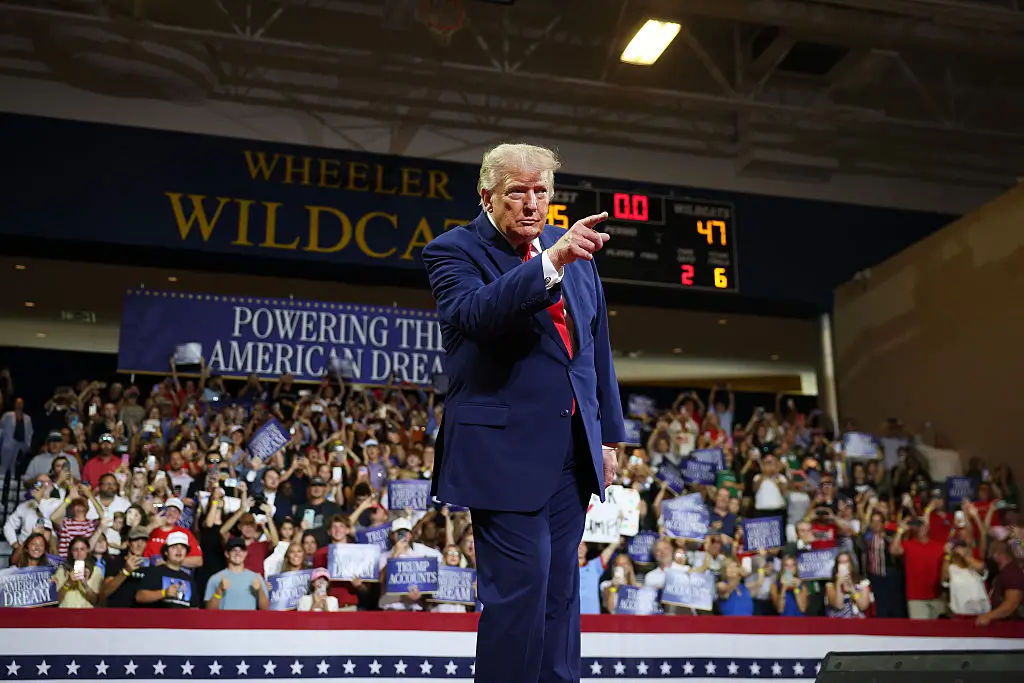
A familiar chant filled a packed Georgia high school gymnasium Wednesday as President Donald Trump stepped to the podium, setting the stage for one of the day’s most controversial moments.
As the president welcomed former Atlanta Braves manager Brian Snitker to the stage, some supporters launched into the Atlanta Braves’ signature “Tomahawk Chop,” the arm-swinging chant that has drawn criticism for decades from advocates who argue it mocks Native Americans.
Never one to shy away from racially charged controversies, Trump pumped his arm a couple times toward the crowd, urging them on, but the reaction was far from overwhelming, with only scattered voices joining the chants.
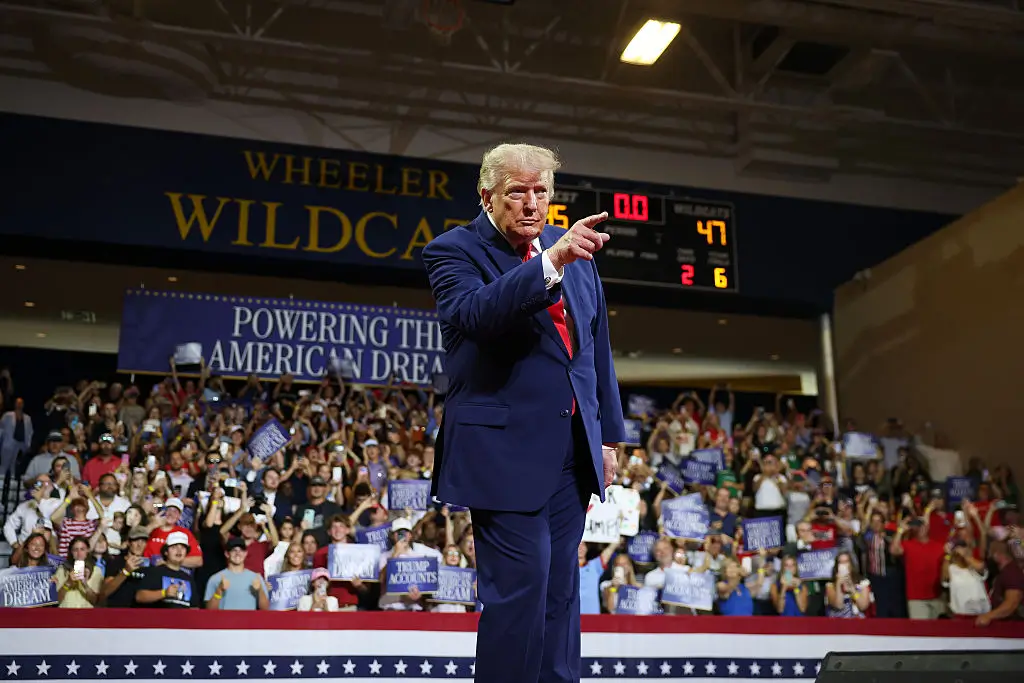
“They say you’re not allowed to do that,” Trump declared, before telling the crowd, “Do it.”
Video of the moment quickly went viral, reviving a debate that has long surrounded the Braves’ game-day tradition while adding another chapter to the president’s history of divisive rhetoric and seemingly racist social media posts.
Critics said Trump’s encouragement amounted to embracing a gesture that Native cultures have repeatedly described as racist and dehumanizing, while supporters viewed it as another example of the president rejecting what he portrays as political correctness.
View on Threads
Trump’s visit to Wheeler High School in Cobb County was intended to rally Republicans ahead of November’s midterm elections and promote new tax-advantaged investment accounts for children created under his legislative agenda. But the Tomahawk Chop moment quickly overshadowed that message online.
Use of the war chant has been controversial for decades, even as it has been adopted in various forms by other sports teams, most notably Florida State University.
Native advocacy groups have argued that the chant, arm motion and accompanying imagery reduce Indigenous people to stereotypes. While some defenders have insisted the tradition honors Native Americans, critics have repeatedly rejected that argument.
The debate intensified during the Braves’ 2021 World Series run, when Native organizations urged the club to eliminate the tradition altogether. Leaders said the chop perpetuated racist stereotypes and ignored years of objections from tribal communities.
“There’s zero rationale for the team to hold on to this any longer,” Crystal EchoHawk, founder and executive director of IllumiNative, said at the time, according to CNN. “I think it says that the franchise is very much a part of perpetuating and condoning racism full stop.”
The National Congress of American Indians likewise rejected suggestions that criticism was limited to Atlanta-area tribes.
“Meanwhile, the name ‘Braves,’ the tomahawk adorning the team’s uniform, and the ‘tomahawk chop’ that the team exhorts its fans to perform at home games are meant to depict and caricature not just one tribal community but all Native people, and that is certainly how baseball fans and Native people everywhere interpret them,” then-President Fawn Sharp said in the same report.
The Braves have faced periodic pressure over the tradition since the early 1990s.
In 2019, the organization announced it would take steps to reduce the chop after St. Louis Cardinals pitcher Ryan Helsley, a member of the Cherokee Nation, called it disrespectful. The following year, amid nationwide protests over racial justice, the team said it was reviewing the chop but ultimately stopped short of eliminating it.
Trump has publicly embraced the gesture before. During Game 4 of the 2021 World Series, then-former President Trump and former first lady Melania Trump were photographed performing the chop while attending the game in Atlanta.
Earlier this year, the White House removed a social media video shared by Trump after bipartisan criticism erupted over a clip depicting former President Barack Obama and former first lady Michelle Obama as apes.
The administration initially defended the post before later saying it had been uploaded “erroneously” by a staff member, an explanation critics questioned because the White House had left the video online for hours before taking it down.
The episode joined a long list of previous controversies.
According to CNN, Trump has reposted anti-Muslim videos from a British far-right account, shared imagery criticized as anti-Semitic, amplified posts from anti-immigration activist Katie Hopkins, defended a video in which a supporter shouted “White power,” urged four congresswomen of color to “go back” to the countries “from which they came,” and circulated AI-generated images mocking Democratic leaders using racial stereotypes.
The latest incident triggered another wave of criticism on social media, where many users said Trump’s comments were not surprising.
Some argued the moment simply reinforced their existing view of the president, with one person writing. “I hate racists.”
Others accused Trump and his allies of portraying themselves as victims whenever they are criticized over race. One commenter said: “Call out their racism then they cry like little babies.”
Some argued the episode underscored the different political standards they believe apply to Trump, with one saying: “This surprises nobody, yet not too long ago a gesture like this would sink any other politician.”
Another user suggested Trump intentionally courts controversy to inflame political tensions.
“Anything to sow division. It’s his default.”
Others voiced their frustration in unmistakable terms. “The bastard is so f—king disrespectful.”
Others summed up the incident with few words. “Racists gonna racist.”
Aside from the controversy, Trump promoted the new “Trump accounts,” tax-advantaged savings accounts available to Americans under 18, with newborns receiving an initial $1,000 federal contribution. Trump predicted the accounts could grow substantially over time, while Treasury Secretary Scott Bessent estimated they could eventually reach roughly half a million dollars by retirement age.
Trump also defended his economic agenda, argued Iran must never obtain a nuclear weapon, and endorsed a slate of Georgia Republican candidates. He praised U.S. Rep. Mike Collins for remaining in Washington to vote on pending legislation and reiterated his support for state candidates seeking offices including attorney general, lieutenant governor and secretary of state.
Outside the venue, anti-Trump demonstrators gathered behind barricades as supporters waited in long lines under the summer sun to attend the rally, underscoring the sharp political divide that continues to follow nearly every stop on the president’s campaign schedule.