
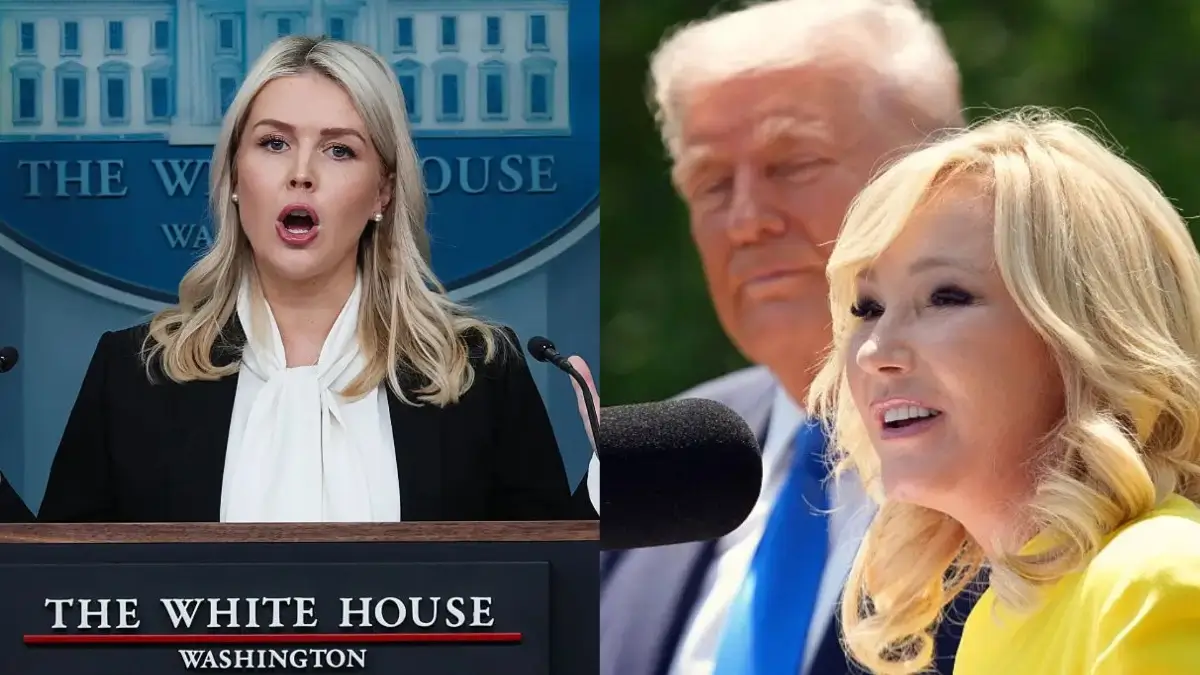
‘This Is Wild’: Karoline Leavitt Slams the Pope as Trump’s Spirtual Adviser Calls for Tithes to Israel—But Critics Hijack Her Pitch and Shut It All the Way Down
The pitch came wrapped in the language of faith but felt like a wartime collection plate for Israel amid its ongoing conflict with Iran.
Paula White, a White House spiritual adviser, went online, urging followers to hand over a tenth of their income as a religious obligation, framing the money as support for her ministry and humanitarian aid tied to Israel. But viewers saw it as part of a broader funding mission aligned with President Donald Trump’s campaign against Tehran.
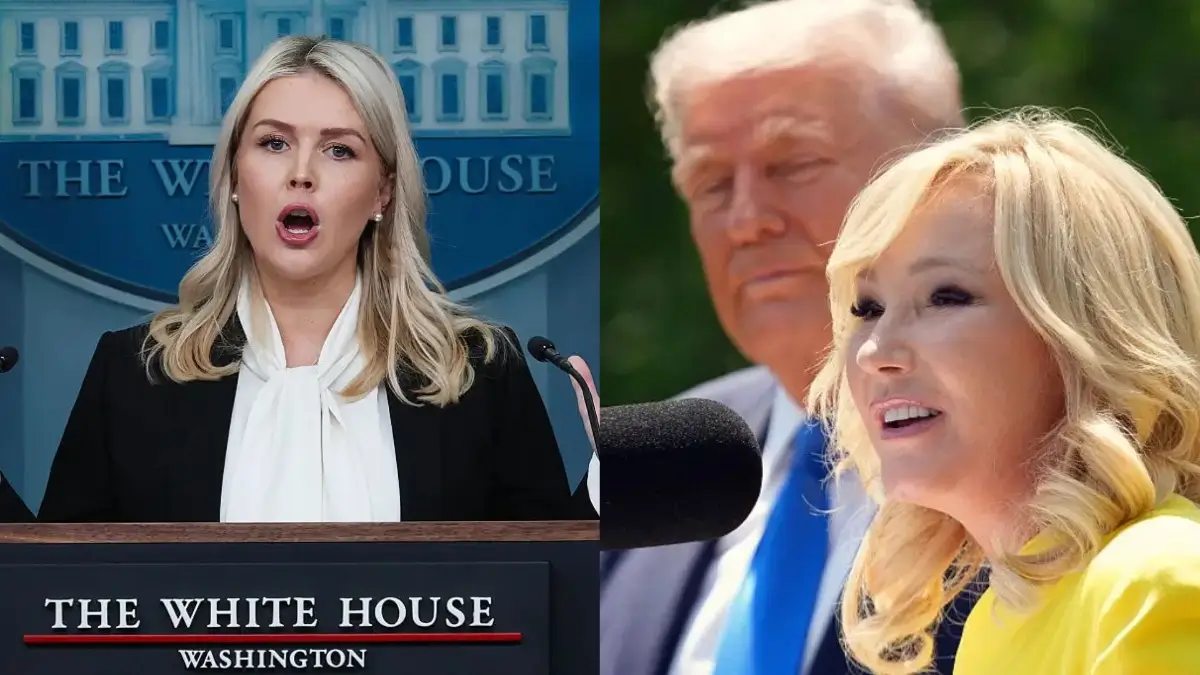
Within hours of White urging viewers to click, send, and give, critics zeroed in on the appeal and flipped it back on her, invoking the words of Pope Leo XIV to undercut the proposition.
The blowback quickly turned into a bigger fight over how religion is increasingly being used to justify the Middle East incursion.
White’s push for donations set off criticism that picked up steam after Pope Leo spoke out against warfare. As people repeated the pope’s warning that God doesn’t accept the prayers of those who wage war, the White House was forced to respond, with press secretary Karoline Leavitt defending the administration’s use of prayer.
“Our nation was a nation founded 250 years ago almost on Judeo-Christian values,” she said from the podium on Monday. “And we have seen presidents, the leaders of the department of war, and our troops go to prayer during the most turbulent times in our nations history and I don’t think there is anything wrong with our military leaders or with the president calling on the American people to pray for our service members overseas.”
White’s video, meanwhile, left little ambiguity in what she was asking for.
“Let’s receive God’s tithe in his offering. I believe that it’s so important to honor God with his tithe. That’s the first tenth of your gross income, and an offering that’s free will. And as you do, you support Paula White Ministries, and I say this, it takes money for ministry,” she told followers.
She then ran through a list of causes—helping struggling families, reaching prisoners, feeding millions, and supporting a village in Israel—while framing donations as a way to spread the gospel worldwide. After that, she pivoted to urging supporters to give right away by clicking the link or sending money through apps like Cash App, Venmo, or PayPal, casting it as an easy, immediate way to back the mission.
On social media, the reaction cut like a knife.
“Imagine your spiritual adviser telling you to Venmo another country 10% of your paycheck or you’re disobeying God,” one critic wrote on X, setting off a wave of brickbats in the comments.
Another added, “This is wild.”
A third cut deeper at the premise: “Paula White ministries thanks you for enriching her. The definition of sin as per Gospel of Mary is to confuse the material for the spiritual. Paula is one sinful lady but she doesn’t care, not while there’s still suckers out there to fleece!”
Those reactions gained force as Leo’s Palm Sunday remarks circulated online.
Speaking to tens of thousands, the pope drew a line between faith and violence. “Brothers and sisters, this is our God: Jesus, King of Peace, who rejects war, whom no one can use to justify war,” he said. “He does not listen to the prayers of those who wage war, but rejects them.” He reinforced the point with a biblical warning: “Even though you make many prayers, I will not listen: your hands are full of blood.” And he underscored the example of Jesus himself: “He did not arm himself, or defend himself, or fight any war.”
The timing only sharpened the pope’s message.
Back on March 5, a group of evangelical leaders gathered inside the Oval Office, placed hands on Trump, and prayed for protection, guidance, and strength as the Iran conflict continued, with one pastor asking for safety for troops and a return to “one nation under God.”
Last week, Defense Secretary Pete Hegseth leaned into religious language during Christian services at the Pentagon, where he prayed to have “every round find its mark” and called for “overwhelming violence of action against those who deserve no mercy,” while also quoting scripture about being trained for battle.
Now, as the U.S.-Israeli war with Iran enters its second month, Pope Leo delivered his pointed rebuke, quoting scripture that warns against prayers from those “with hands full of blood” and saying God “does not listen” to those who wage war.
Pressed to square the pope’s warning with Hegseth’s rhetoric, Leavitt dismissed the concern, leaning instead on the view from the ranks. “If you talk to many service members, they appreciate the prayers and support from the commander-in-chief and his cabinet,” she said.
But her defense triggered its own flood of criticism.
“Our nation was founded on keeping religion out of the government,” one person wrote.
Another response said, “And instead of praying for forgiveness for even thinking about taking the lives of the innocent, they have asked God for strength as they bombard them with missiles.”
Others challenged the historical framing: “She is wrong on all counts: the U.S. was founded to escape religious persecution rather than enshrine specific faiths, as evidenced by founders like James Madison’s writings on religious freedom.”
And one critique cut at the message itself: “She never stays on point. Deflection—Principle I in the MAGA playbook.”
The broader backdrop is a war that has already killed more than a dozen U.S. troops and thousands across Iran and the region. Leo has repeatedly called the violence “atrocious” and urged an immediate ceasefire, warning that even the act of prayer becomes compromised when tied to warmongers.
The religious divide is now out in the open. On one side, public displays of faith wrapped around military power—prayers for protection, victory, and strength. On the other, a direct rebuke from the head of the Catholic Church that such prayers are not just misguided but rejected outright. White’s fundraising appeal has lit another spark, but the debate it ignited has moved well beyond a single video, cutting to the core of how religion is being wielded at the highest levels of power.