
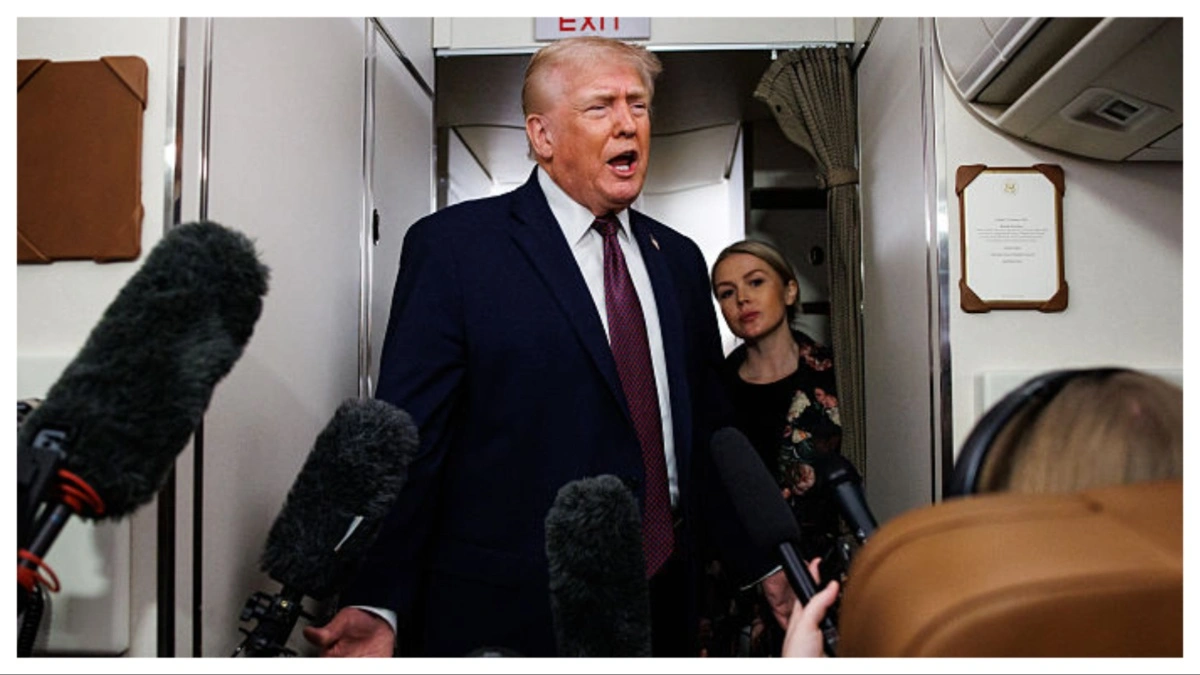
‘This Is DERANGED … Even for Him’: Karoline Leavitt Dodges War Crimes Questions — Then Trump Goes Off with an Insane Easter Rant That Blows It All Up and People Say He’s Officially Lost It
President Donald Trump is once again making life harder for his own press secretary — just days after Karoline Leavitt was cornered over whether his threats against Iran could amount to war crimes, he escalated things even further with a profane, unfiltered Easter Sunday post that sent shockwaves across social media.
The post, shared early Sunday morning, came as tensions with Iran continue to rise and included a direct threat targeting the country’s critical infrastructure with language that immediately drew backlash for both its tone and substance.

“Tuesday will be Power Plant Day, and Bridge Day, all wrapped up in one, in Iran. There will be nothing like it!!!” Trump wrote on Truth Social. “Open the F—— Strait, you crazy bastards, or you’ll be living in Hell – JUST WATCH!” He signed off the message with, “Praise be to Allah.”
The moment also spilled into cable news, where CNN’s Jake Tapper read portions of the post aloud on-air, warning viewers about the language but still drawing backlash for repeating the president’s exact words, including the expletive, while stopping short of reading the final line referencing Allah.
The reaction was immediate and intense.
“Polite language? Say it like it is — this is DERANGED language,” another added.
Others focused on a line that some felt only made the post more bizarre. “Interesting that he skipped over the equally insane ‘Praise be to Allah’ line,” one user wrote, referencing coverage of the post.
“I’ve never seen a Tweet that was more grounds for removal from office,” one person wrote.
“This is a real post … He needs to be impeached and removed,” another wrote.
Journalist Adam Mockler added, “Why is our President praising Allah on Easter morning?”
The eruption comes just days after NBC correspondent Garrett Haake put Leavitt on the spot Monday about Trump’s earlier threat to “obliterate” Iran’s power grid and energy infrastructure — a remark that has raised serious legal and ethical questions.
When pressed on whether that kind of threat could constitute a war crime, Leavitt leaned on familiar language about the president’s toughness and avoided addressing the legal implications directly.
“Look, the president has made it quite clear to the Iranian regime… that their best move is to make a deal, or else the United States armed forces has capabilities beyond their wildest imagination,” she said, sidestepping the core question.
Haake tried again, asking plainly whether those actions would amount to war crimes.
Leavitt pushed back without directly engaging. She insisted the administration would act within the law, while reaffirming that Trump intended to move forward with his objectives.
As other reporters began shouting questions, Haake made one final attempt, narrowing in on a specific target Trump had mentioned.
“Which of those objectives would destroying a desalination plant most help?” he asked.
Leavitt did not respond. Instead, she moved on.
The exchange quickly spread online, where critics framed it as evasive — but Trump’s latest post has only intensified those concerns, undercutting the very defense Leavitt had attempted to put forward.
Meanwhile, Trump’s escalating threats against civilian infrastructure in Iran are drawing warnings from human rights experts and raising legal questions the White House has yet to directly confront.
Haake had already laid out the issue in stark terms, citing Trump’s earlier post threatening to destroy “Electric Generating Plants, Oil Wells and Kharg Island (and possibly all desalinization plants!)” — targets that are generally protected under international law due to their importance to civilian life.
“Why is the president threatening what would amount to potentially a war crime with the U.S. military?” Haake asked. “And how do you square that with the administration repeatedly saying that the U.S. does not target civilians?”
Human rights organizations have echoed those concerns, warning that such rhetoric could have devastating real-world consequences.
“President Donald Trump must retract deeply irresponsible threats of acts that would unleash catastrophic harm on millions of civilians,” Amnesty International said in a statement.
“The decision to not proceed with such attacks must be based on the USA’s obligations under international humanitarian law to avoid civilian harm — not the outcome of political negotiations,” the organization added, warning that targeting essential infrastructure could deprive civilians of access to water, food, healthcare and basic living conditions.
Experts say the rhetoric itself risks lowering the bar in global conflicts. Sarah Yager, Washington director at Human Rights Watch, described what she called a dangerous trend.
“What we are seeing… is a race to the bottom in which threats against civilian infrastructure are becoming normalized,” she said, according to The New York Times.
“This kind of rhetoric doesn’t just escalate tensions irresponsibly, it signals a dangerous willingness to erode the very rules designed to protect civilians in war.”
With Trump continuing to escalate his language in real time, critics say the question facing the White House is no longer just how to defend his words — but how to keep up with them.