
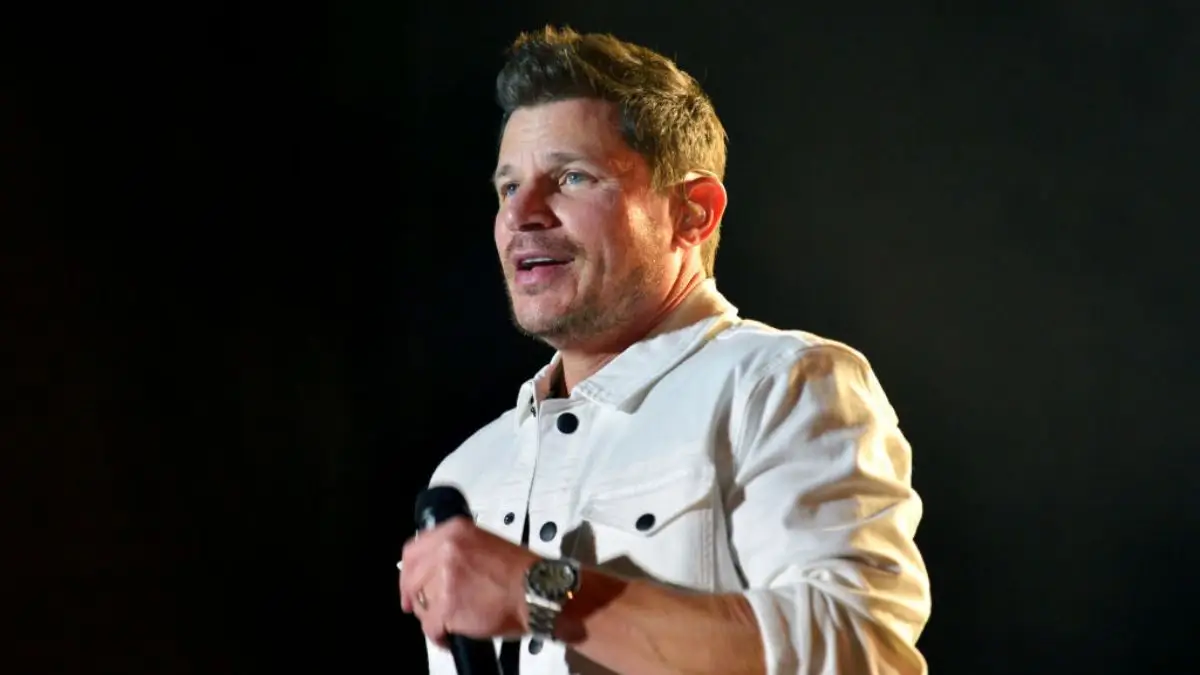
‘The Truth’: Nick Lachey Drops Bombshell That Motown Tried to Change 98 Degrees’ Sound and Image After a Popular Black Group Dominated the Charts
In the late 1990s, 98 Degrees weren’t some label-manufactured overnight sensation. They grinded for their moment and earned the attention of Motown Records on the strength of their talent.
But earning a seat at the table came with conditions — a very specific blueprint that demanded they become something they were never built to be.
The music industry has always had a different agenda, packaging artists in sounds and aesthetics that look profitable on paper but ring hollow in real life. That tension between authenticity and expectation has haunted performers for decades, particularly those walking the tightrope between pop polish and what fans call blue-eyed soul.
Now the group’s lead singer, Nick Lachey, is claiming the label wanted them to copy another chart-topping music group that was climbing the charts faster than they were.
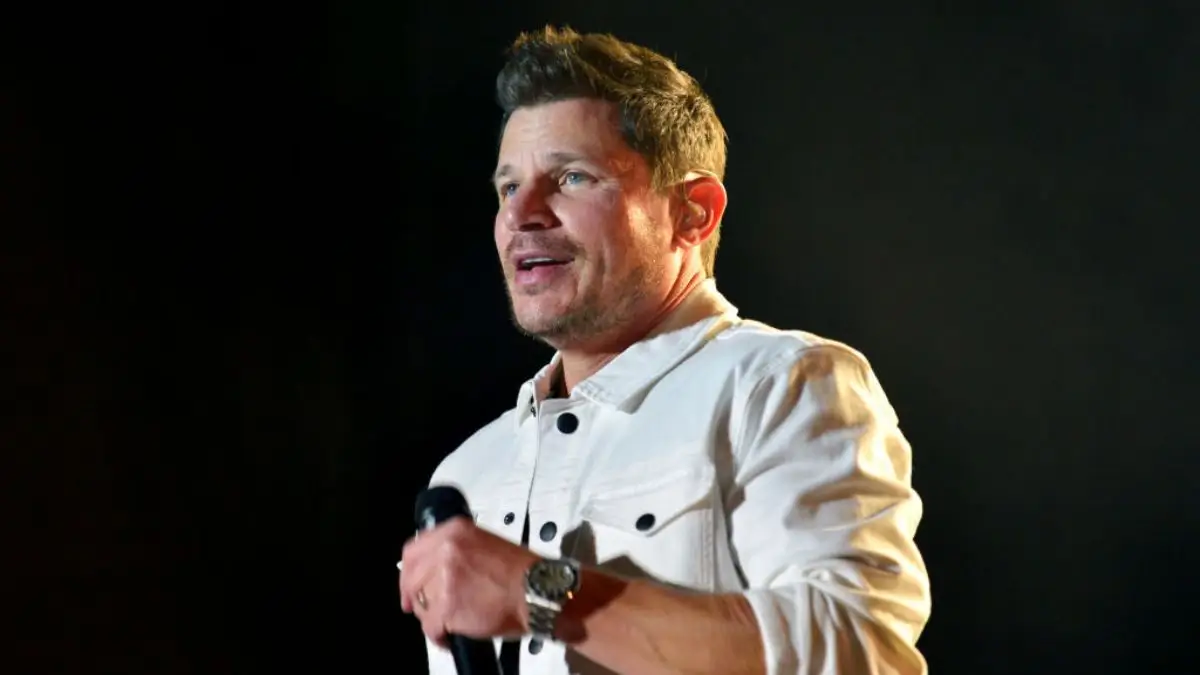
In an interview with People, Lachey recalled just how direct that guidance was.
“The president of Motown, he wanted us to be the white Jodeci. So he was trying to give us that in a crash course,” he said in a documentary, reflecting on the early days of the group’s development.
He described being sent to perform in Black churches in Harlem and traveling to work with members of Jodeci, moments that felt less like creative exploration and more like cultural immersion on fast-forward.
“Do we need a bulletproof vest? What did we just walk into?” he remembered thinking as he tried to process the unfamiliar environment.

For Lachey, the experience sparked deeper questions about identity and belonging.
“It does make you question, ‘Well, why did you sign us if you didn’t want us to be who we are?’ You’re trying to make us into something else,” he explained. Over time, the pressure to fit a mold began to weigh heavily.
Lachey admitted that the expectations “really start to mess with you mentally,” leaving him alone at home wondering, “What am I? Who am I?”
On Lipstick Alley, many reacted with a mix of disbelief and humor once the story resurfaced.
One commenter simply wrote, “Sit down!” while another said, ” A white Jodeci. They can go to hell with that one. Black groups can’t recreate Jodeci. Hell, K-Ci and Jojo couldn’t recreate Jodeci.
‘Stay’ – Jodeci. pic.twitter.com/cVCrWZZ0Cq
— RNB RADAR (@rnbradar) March 1, 2026
Someone else said, “It sounds like even he thought it was crazy. And he’d be right.”
Critics focused on his particular choice of words, as one noted, “That’s fine. But Nick provided none of that context, just “Devante needed a bulletproof vest to go to a black church in Harlem.” That’s the racist framing I’m talking about.”
Another person agreed, “That bulletproof vest part was cap. They never miss an opportunity to stereotype even when stealing from us. f–k you too, Nick. Ya flop.”
I get that this is more on Motown than Nick/the group, but let me remind folks of their debut single. Jodeci where?
(Also not hating on the song — it’s a good one, but it absolutely gives “90s pop.”) https://t.co/sxqDkHpryv pic.twitter.com/ftSm43lpzA
—
Jonathan Apollo
Some commenters said they weren’t surprised, pointing to what they believe was a pattern in the late ’90s and early 2000s where white artists were pushed to adopt a more “Black” image—referencing L.A. Reid and Pink—while arguing that Black executives played a role, adding that it’s refreshing to now hear a white artist openly admit discomfort with that approach and acknowledge it felt wrong.
Two observers said, “He’s telling the truth. There’s so many examples like Color Me Bad and how they marketed N Sync,” and “N’sync definitely went through their ‘trying to be black’ phase.”
But still others were not buying Lachey’s comparison as one said, “I can’t wait for K-Ci and JoJo to hear this s—t,” while another joked, “Not with the stiff a– dance moves they had.”
This conversation about white artists emulating Black artists is not new.
Artists like Teena Marie, Darryl Hall & John Oates, Phoebe Snow, Michael McDonald, or Amy Winehouse weren’t labeled “blue-eyed soul” without reason. Their credibility came from sincerity, not strategy, and audiences recognized that their sound wasn’t manufactured.
Today, discourse about authenticity continues, especially after rapper Jack Harlow faced backlash for saying he “got Blacker” while shaping the sound of his 2026 project, “Monica.”
“I got Blacker,” he said. “I love Black music. I love the sound of Black music. And, of course, I’m hyper-aware of the politics of today—the safer landing spot that a lot of my white contemporaries have found. It appealed to me…”
Jack Harlow speaks on leaning further into Black music on his new album Monica rather than taking the “safer route” by retreating into traditionally white sounds.
“I got Blacker… I love Black music. I love the sound of Black music. And, of course, I’m hyper-aware of the… pic.twitter.com/xZjWVKe34J
— XXL Magazine (@XXL) March 13, 2026
His comment reignited debate about how artists frame their influences and how language can reinforce stereotypes. For many listeners, the backlash went beyond one phrase, reflecting a long history of artists borrowing from Black music without understanding the culture behind it.
That pop culture rhetoric also shapes how people talk about groups like Jodeci, Boyz II Men, and New Edition vs. New Kids on the Block or The Backstreet Boys.
The Black acts never considered themselves “boy bands” in the traditional sense; despite being young men.
Labeling them alongside pop acts that followed can sometimes flatten the legacy they built, according to MIC.com, because it overlooks the originality and cultural foundation that defined their sound.
The distinction matters because it reminds audiences that Black vocal groups didn’t just influence the genre — they created it, shaping the blueprint others would later follow. If they mimicked anyone, it was the deep cultural traditions and musical roots they were raised on.
Looking back, Lachey’s reflection reads less like a complaint and more like a cautionary tale about identity in an industry driven by trends and expectations. Success may come with bright lights and platinum records, but the search for authenticity often becomes the real headline behind the music.