
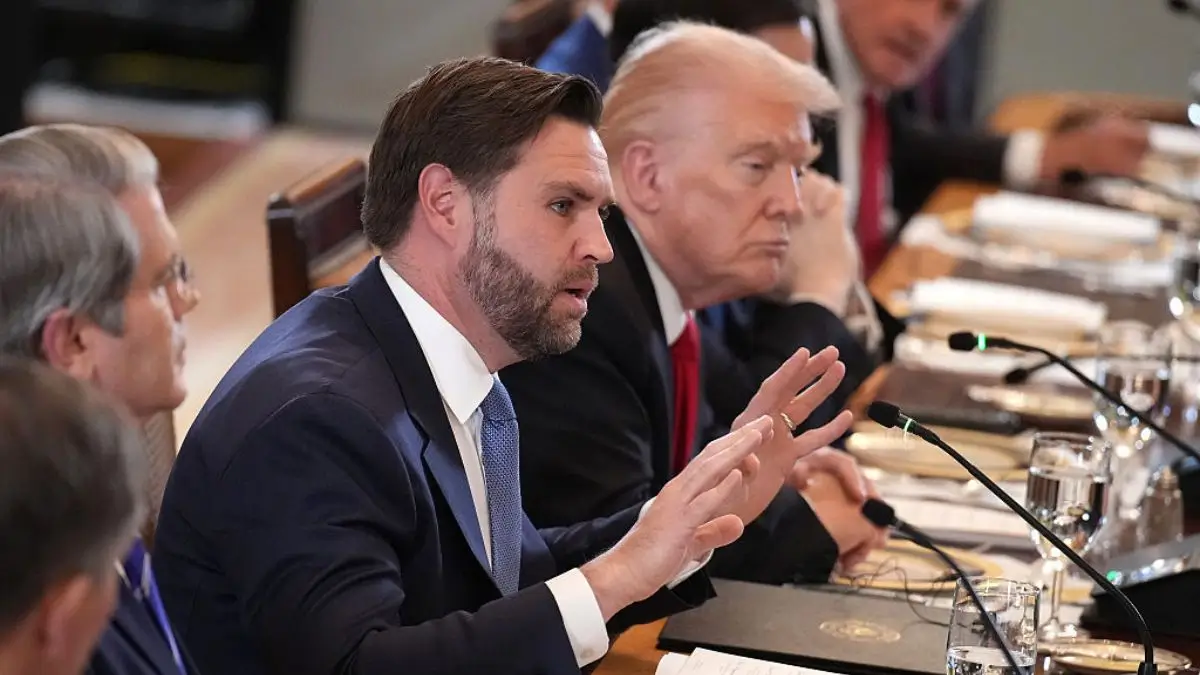
‘Seriously?!’: Trump’s Push for Loyalty Goes Too Far — Report Says Pentagon Tried to Strongarm the Vatican With U.S. Power and JD Vance Falls Apart When Confronted About It on Camera
President Donald Trump has long made it clear that loyalty isn’t optional. Inside his orbit, it’s expected, and at times enforced both directly and indirectly by the people around him who move to carry out that mandate.
But that kind of environment can create its own problems, especially when the push to align with Trump’s worldview starts spilling into places it normally wouldn’t and when those efforts go too far, it’s often someone else left to answer for it in public.
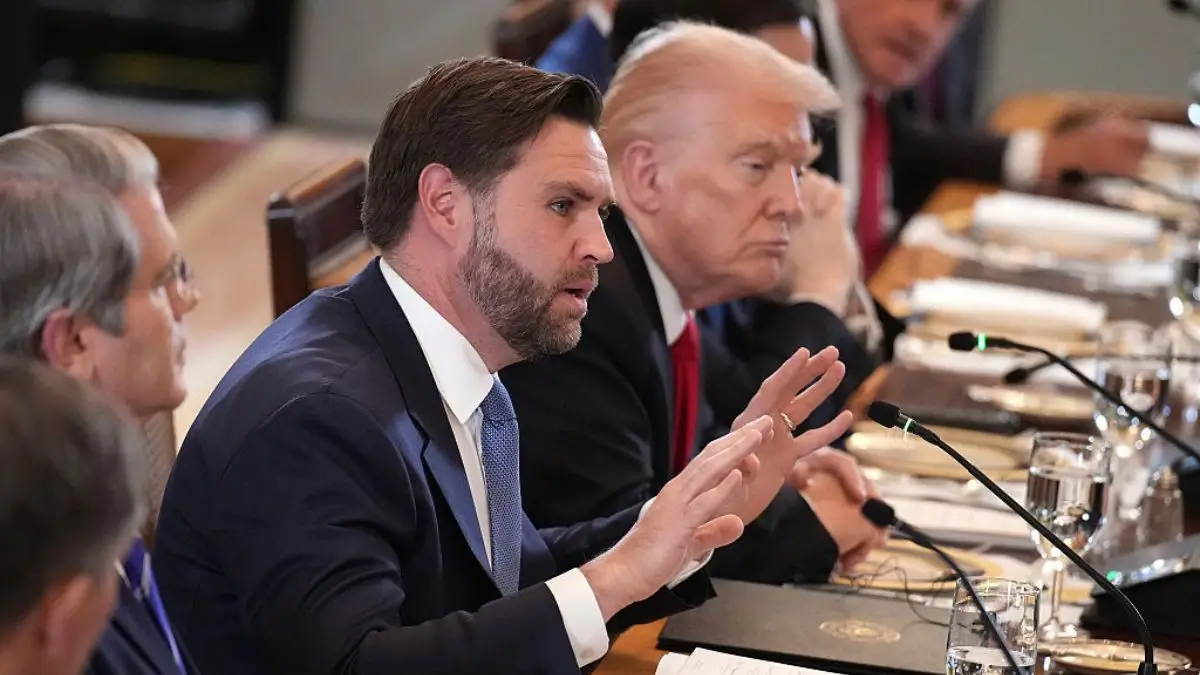
Vice President JD Vance found himself in that position on Wednesday evening when he prepared to board Air Force 2 for his return trip from Budapest, Hungary, where he spent two days supporting Prime Minister’s Viktor Orban’s reelection bid.
Faced with a question that tied together his politics, his religion, and a brewing international dispute, Vance didn’t lean in. He stalled, fumbled a name he should have known, then tried to laugh his way out — leaving the impression that either he hadn’t been paying attention or didn’t want to admit what was being alleged.
The episode loomed over a report that senior U.S. defense officials warned the Vatican to fall in line — or face the consequences — triggering a rare clash between Washington and Holy See authority.
The Free Press report claimed that Pentagon officials, including policy chief Elbridge Colby, summoned Cardinal Christophe Pierre — the Vatican’s ambassador to the United States — and delivered a blunt message about American military power and expectations for the church.
When asked directly about the report, Vance initially claimed he didn’t recognize Pierre’s name, saying, “So one, I, with no disrespect to the cardinal, I don’t know who Cardinal Christophe Pierre is …”
When reminded that Pierre is the Vatican’s ambassador, Vance tried to recover: “Oh OK, OK, I’ve met him before. Sorry. I just didn’t remember the name.”
He then distanced himself from the report altogether, adding, “I’ve never seen this reporting. I’d like to actually talk to Cardinal Christophe Pierre, and frankly to our people to figure out what actually happened. I think it’s always a bad idea to offer an opinion on stories that are unconfirmed and uncorrobated so I’m not gonna do that.”
Online, the explanation landed hard. Critics seized on the disconnect between Vance’s public identity as someone who’s built a reputation on speaking with certainty, especially when it comes to faith and power and his response in the moment.
“Pretending not to know who your critics are is the stupidest strategy,” one person wrote.
Another jabbed, “His book about converting to Catholicism has a picture of a Methodist church on the cover. Seriously”
A third comment voiced incredulity: “Let me get this straight: the Trump admin threatened the Pope and the Vatican with military force in a private meeting, and when J.D. Vance—who has a new book out soon about his conversion to Catholicism—was asked about that meeting, he didn’t know the name of the Vatican’s Ambassador to the U.S.?” “Correct!” one person answered.
The uproar is unfolding against a backdrop of escalating tension with Pope Leo XIV, who has emerged as one of the most direct moral critics of the administration’s foreign policy.
In his Easter message, the first American Pope warned that God “does not listen” to leaders who wage war and urged them to abandon the “desire to dominate others.”
The remarks followed days of increasingly pointed language condemning what he described as imperial behavior and violence.
Those statements were widely interpreted as aimed at President Donald Trump, whose administration has taken aggressive steps abroad, including military action in Iran and threats toward allied nations.
While Trump has not publicly responded to the Pope’s criticism, accounts of the January Pentagon meeting suggest the frustration was conveyed privately and forcefully.
Free Press, citing unnamed officials briefed on the meeting, reported Colby told Pierre, “The United States has the military power to do whatever it wants in the world. The Catholic Church had better take its side.”
At some point, the discussion reportedly turned to the Avignon Papacy, a period when the French crown exerted control over the Church after violence against Pope Boniface VIII. The reference, Vatican insiders said, was interpreted as a warning and a reminder of what can happen when secular power decides to bring the Church to heel.
The Defense Department has rejected that characterization, insisting the meeting was routine.
“The meeting between Pentagon and Vatican officials was a respectful and reasonable discussion. We have nothing but the highest regard and welcome continued dialogue with the Holy See,” a spokesperson said.
The White House similarly dismissed the account as exaggerated.
But the fallout suggests the Vatican took the message seriously.
Plans for a historic U.S. visit by Pope Leo — timed to coincide with the nation’s 250th anniversary — have been canceled.
Instead, the pontiff will spend July 4 on the island of Lampedusa, a symbolic destination tied to the plight of migrants crossing the Mediterranean. The shift underscores a widening divide, with Leo using his platform to emphasize humanitarian concerns in contrast to Washington’s posture.
That context makes Vance’s response more consequential than a simple verbal slip.
As a high-profile Catholic convert and a key political figure, he might have been expected to bridge the gap or at least offer clarity.
Instead, his attempt to sidestep the question — by claiming unfamiliarity, then retreating into uncertainty — left both critics and observers with the same question: if this is how the administration speaks to one of the world’s most influential religious institutions, where does it stop?