
Release As Ritual: New Orleans Bounce Is More Than A Party
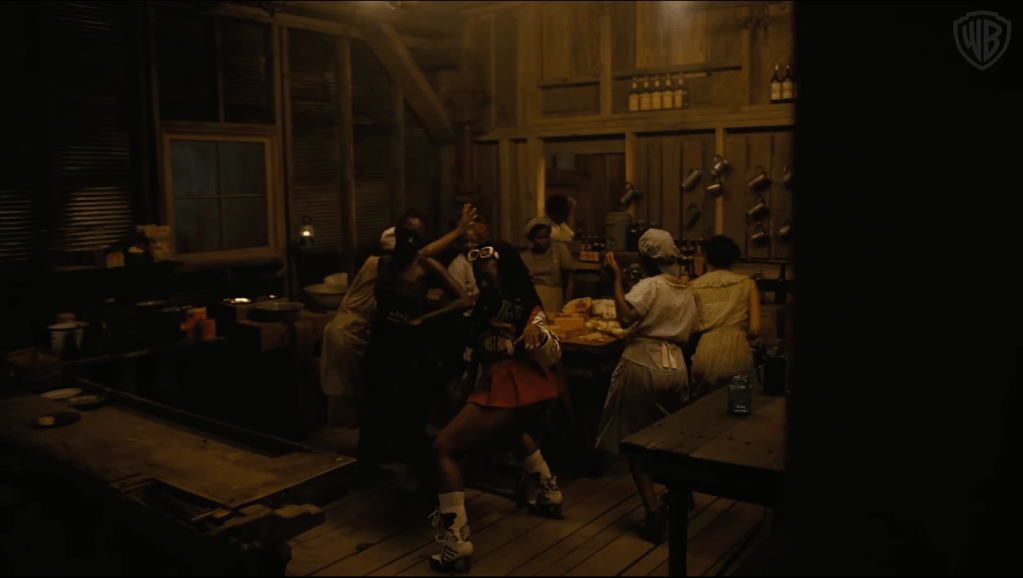
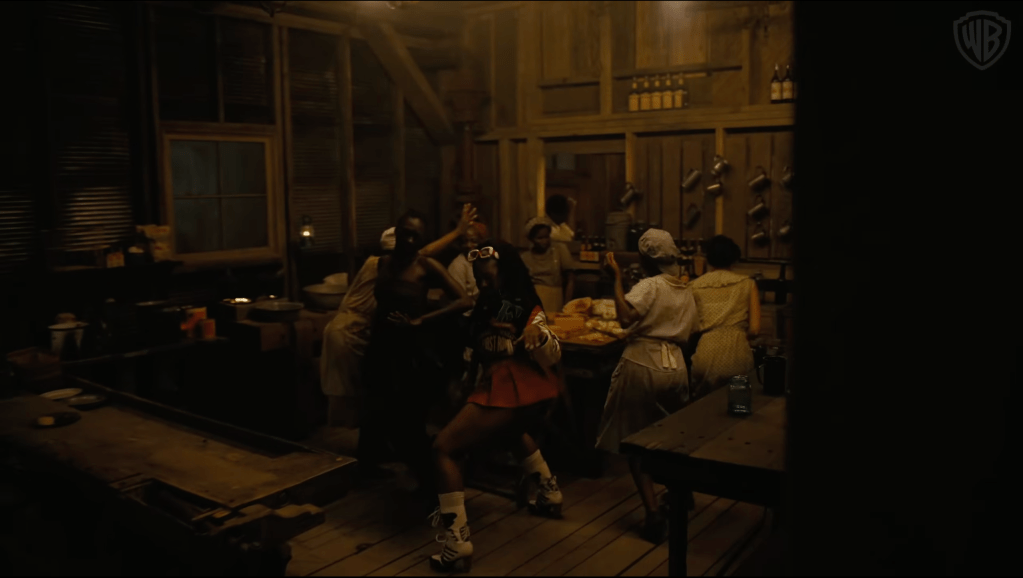
When Sinners shows New Orleans twerking inside the Juke Joint, the easy reading would be to call it sexual, profane, wild, maybe dangerous.
But that would miss the point.
What’s happening in that room is release.
A woman’s hips move with a precision that feels older than the language people use to judge it. The lower spine speaks. The pelvis remembers. The body throws something off and calls something back.
Jazz Johnson, founder of Twerk NOLA, talks about shaking, Bounce, and twerking not as spectacle, but as community, wellness, healing, and joy. In a New Orleans shakedown, she told me, “This is people’s church.” Movement can be taught, but the spirit cannot.
Big Freedia says it even simpler: “release ya wiggle.”
Release the load. Release the stress. Release what the body was never meant to carry forever.
That’s where Bounce becomes more than a party. The repetition does something. The command repeats until it stops being instruction and starts becoming spell.
Big Chief Shaka Zulu helped me hear that differently. He described music, song, and dance as “our trinity,” and when drum machine, lyric, rhythm, and movement lock in, dancers enter trance.
Skip Skipper, a great carrier of New Orleans Bounce dance, put it plainly: “Let the beat use you.” Bounce, he told me, can take you to another world. Dance became therapy for him after Katrina, a place where grief, depression, anxiety, and survival could move through the body for three or four minutes.
That same intelligence appears in the Batuku women of Cabo Verde. I was told that Batuku emerged from histories of slavery, sexual violence, and survival, with women creating a space for themselves, drumming, singing, circling, and moving the hips not for sexual display, but for cleansing, healing, and recovery. Cloth became drum. Hip became testimony. The circle became sanctuary.
In Senegal, Leumbeul carries another register of pelvic articulation, rooted in Wolof celebration and Sabar rhythm. The hips isolate, roll, thrust, and shimmer inside a call-and-response field between dancer, drummer, and community. It is joy, skill, provocation, celebration, and social energy all at once.
And then there is the Second Line.
At the Divine Ladies Social Aid and Pleasure Club parade, the street became sanctuary. The horns opened the sky. The drums moved through the pavement. People were cutting up, getting loose, getting free. It reminded me of a ceremony I was invited into in The Gambia, where the Kankurang cleared the path for boys returning from the sacred grove. Drums on one side. Dancing on the other. Mothers, aunties, grandmothers, and sisters waiting in the distance, crying and dancing them back into the world.
Walking the Second Line gave me that same feeling.
Not because New Orleans, Cabo Verde, Senegal, and The Gambia are the same.
Because the body recognized the threshold.
Bounce does not ask the body to behave.
It asks the body to tell the truth.
People getting loose.
People getting lifted.
People getting free.
SEE ALSO:
The Beat Did Not Die. It Found Another Body
‘Sinners’ Surreal Montage Connects Ancestral, Modern Black Music, Dance
Masquerade Is Not Disguise; It Is Wearable Art And Wearable Altar