
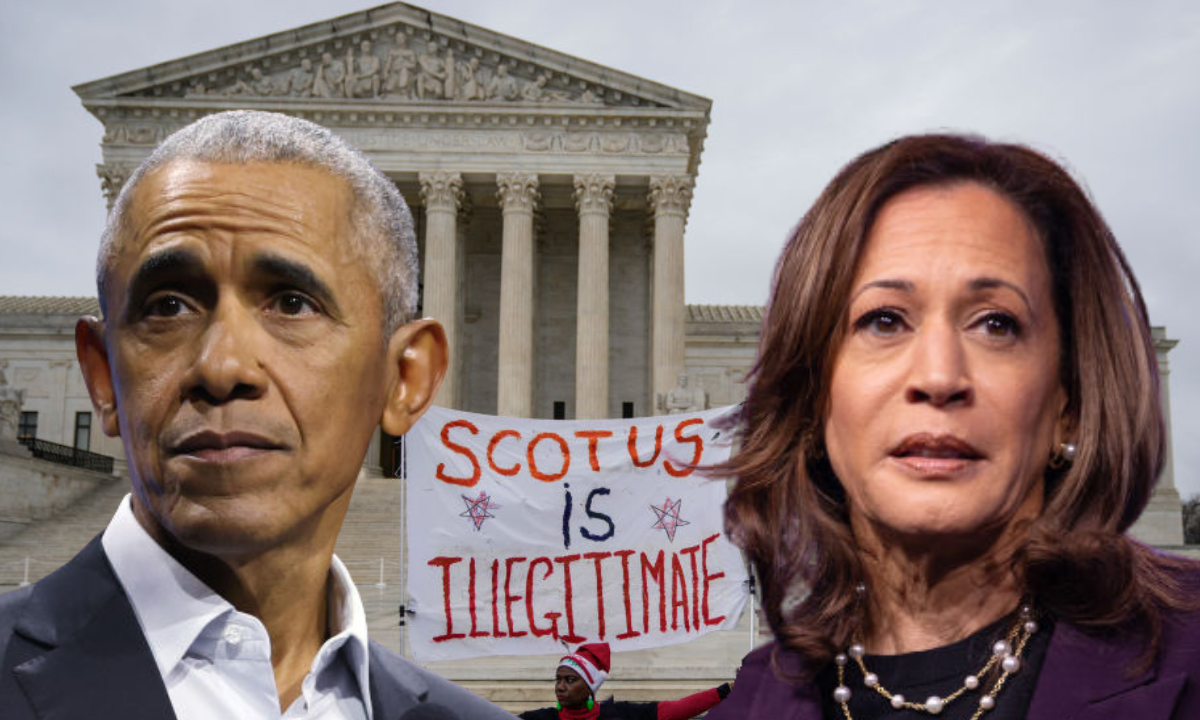
Obama, Harris react forcefully to SCOTUS ruling on Voting Rights Act
“There is no question our fight became harder today, but I know we are up for the battle,” said former Vice President Kamala Harris.
Former President Barack Obama and former Vice President Kamala Harris reacted to the Supreme Court’s consequential ruling that weakens protections for Black voters under the Voting Rights Act, setting up what could be a cascade of congressional maps that draw Black voters out of districts where their votes can be most impactful in election outcomes.
“Today’s Supreme Court decision effectively guts a key pillar of the Voting Rights Act, freeing state legislatures to gerrymander legislative districts to systematically dilute and weaken the voting power of racial minorities – so long as they do it under the guise of ‘partisanship’ rather than explicit ‘racial bias,’” Obama, America’s first Black president, said in a statement following the high court’s Wednesday ruling.
As theGrio previously reported, the 6-3 conservative majority ruled that a Louisiana congressional map violated the 14th Amendment and was racially discriminatory against a group of white voters. The court also updated Section 2 of the Voting Rights Act, passed in 1965, to help end the disenfranchisement of Black Americans, particularly in the U.S. South, where African Americans were enslaved, lynched, and racially terrorized for centuries.
The Voting Rights Act enabled Black voters to cast ballots in local, state, and federal elections, transforming American electoral democracy and fostering multiracial representation. President Obama said the Supreme Court’s ruling, essentially upending that progress, “serves as just one more example of how a majority of the current Court seems intent on abandoning its vital role in ensuring equal participation in our democracy and protecting the rights of minority groups against majority overreach.”
But, like the Voting Rights Act itself, which at the time restored rights that were stripped more than 100 years after the post-slavery Reconstruction era, Obama said, “The good news is that such setbacks can be overcome.” He added, “But that will only happen if citizens across the country who cherish our democratic ideals continue to mobilize and vote in record numbers – not just in the upcoming midterms or in high profile races, but in every election and every level.”
Kamala Harris, the 2024 Democratic presidential nominee, said the SCOTUS ruling “turns back the clock on the foundational promise of equality and fairness in our election systems.”
“Section 2 of the Voting Rights Act was one of the last remaining federal protections for Black and brown voters against maps deliberately drawn to dilute their political power. That protection has been stripped away,” said America’s first Black and female vice president. “It is an outrage. But it is not a surprise. It is part of an agenda that conservatives set in place decades ago to steal power from everyday people and then cling to that power for generations.”
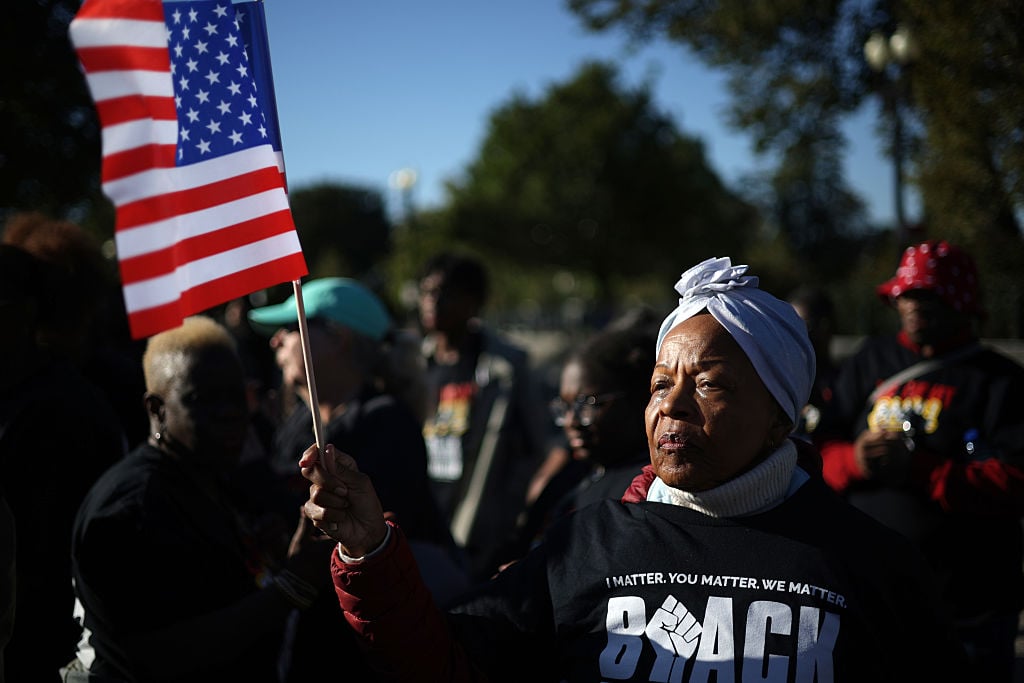
The Supreme Court’s ruling, which has reeled the civil rights community and Black community leaders, comes as Republicans across the country have moved to redraw congressional maps to give their party a political advantage over Democrats in elections. They have done so at the order of President Donald Trump, who set off a nationwide redistricting battle when he demanded that Texas Republicans redraw their congressional map in an unusual mid-decade redistricting effort. The objective is to ensure Trump’s party keeps control of one or both chambers of Congress.
In response to Trump’s clarion call, Democrats have fought back by drawing partisan maps of their own in states like California and Virginia. However, the difference with maps drawn by Republicans is that many of them, according to advocates and legal experts, intentionally target Black and Hispanic voters, who are high-propensity Democratic voters. However, proving the intent of racial discrimination is difficult.
Janai Nelson, a civil rights attorney who argued the Louisiana case on behalf of Black voters before the Supreme Court, told CNN, “It has left the American electorate vulnerable to racial discrimination that will run as rampant as partisan gerrymandering has in overtaking our democracy, and that has all been at the invitation of the Supreme Court.”
When asked about the Wednesday ruling, President Trump gleefully celebrated the prospect of Republicans adding more seats to Congress as a result of the Supreme Court decision.
“That’s good…that’s the kind of ruling I like,” said Trump, who didn’t know the particulars of the case and asked reporters to fill him in.
“Would you consider it a win for [Republicans]?” he asked a reporter, who gave him the affirmative. “I love it. This is very good. We can end this news conference right now.”
Harris said the court’s decision isn’t just motivated by politics but is “designed to give an upper hand to Donald Trump’s Republican Party, which faces the threat of losing the upcoming midterm elections.”
“We must pay attention to what happens next. The fight now returns to the states. Legislatures — particularly those in the South — will rush to redraw districts before voting for the midterms begins in just a few months,” the former vice president warned. “Already, Louisiana and Florida are planning to redraw their maps, and we should not be surprised if others rapidly follow suit ahead of the midterms and 2028. Their politically-motivated power grab is meant to protect elected Republicans from any consequences for their failure to make groceries, gas, health care, or housing more affordable for you and your family.”
She added, “They want to cheat and choose their voters, instead of the voters deciding who they choose. The mission before us is to restore the power of the people. There is no question our fight became harder today, but I know we are up for the battle.”