
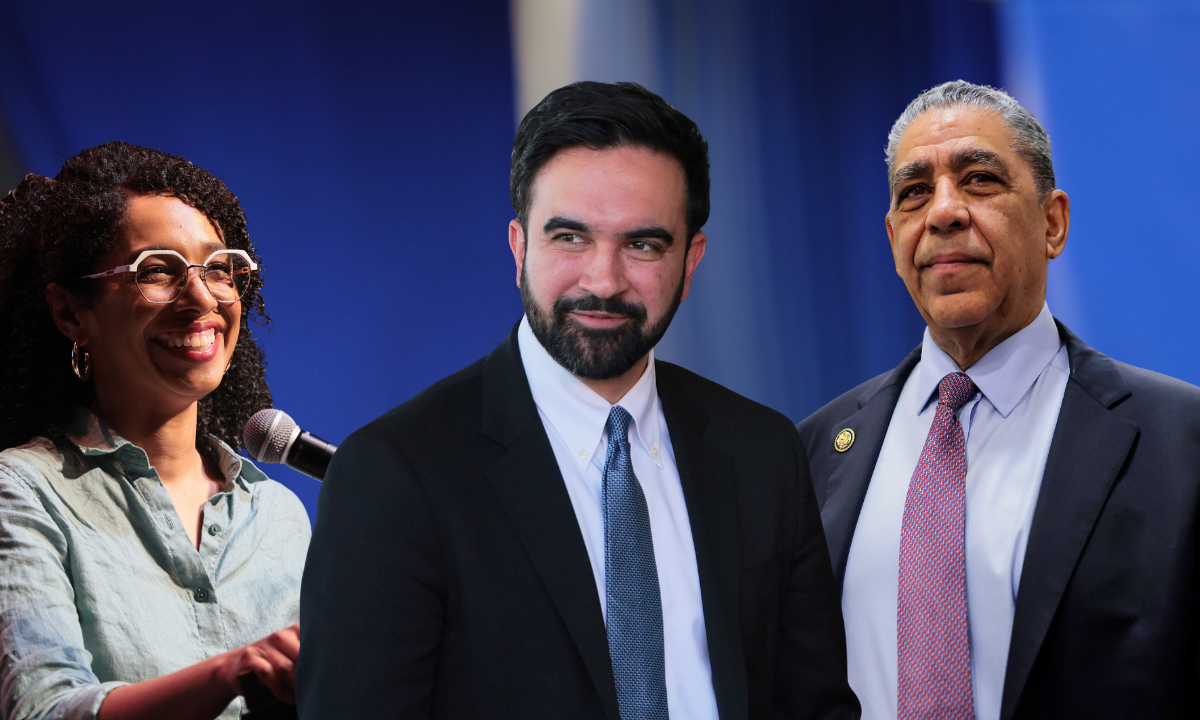
NYC Mayor Zohran Mamdani calls out anti-Black narratives in Espaillat vs. Chevalier race
theGrio,com
NYC mayor Mamadani condemned efforts to use “Haitian” as a slur against Rep. Espaillat’s challenger, Darializa Avila Chevalier.
Ahead of the New York City primaries on June 23, Mayor Zohran Mamdani condemned the anti-Black narratives that affiliates of Rep. Adriano Espaillat’s campaign have allegedly deployed against his congressional opponent, Darializa Avila Chevalier, in the race to represent NY-13.
“I understand that in our city, there will be a variety of opinions when it comes to which candidate to support and which district to be involved in. One thing I do want to make clear that I find unacceptable in our city is the attempt to use the term ‘Haitian’ as a slur,” Mamdani said in a press conference. “The trafficking and anti-Black sentiment and narratives that we have seen specifically in NY-13 when it comes to Darializa Avila Chevalier is something that I cannot stand here and say is in line with the values of our city.”
What happened?
As reported by City & State, Rusking Pimentel, a former senior adviser for Rep. Adriano Espaillat, who is on unpaid leave, made racist comments about Chevalier in the Spanish-language media. He accused the 32-year-old candidate of working with Mayor Mamdani to replace Dominicans in Washington Heights with Muslims and Haitians.
“Mamdani, who is also Muslim, his goal is to change the demography of Washington Heights so that Washington Heights will no longer be a bastion of the Dominican community, but rather becomes a bastion of the Haitian Muslim community allied to him,” Pimentel said in Spanish on the “Entre Líneas” podcast. “And for Darializa Chevalier, who is the candidate running against Adriano, Washington Heights cannot continue to be Dominican,” he added. “For them, Washington Heights must follow the same pattern in Brooklyn. That is because since Haitians are converting to Islam in high numbers, they must be moved to the Dominican district.”
In a separate interview with the YouTube channel “Las Exclusivas de José Peguero,” Pimentel called Chevalier’s Dominican identity into question, saying: “She came from Florida, a young woman that identifies as an Afro-Latina, and she says that supposedly she has Dominican parents, and that now says she wants the opportunity to represent this community.”
And in the days leading up to election day, social media users have flooded Chevalier’s comment sections with comments accusing her of being Haitian. In addition to Mayor Mamdani, other New York City officials, like council member Chi Ossé, assembly member Phara Souffrant Forrest, have called out anti-Haitian rhetoric.
Avila Chevaliar released a statement on Monday evening addressing the wave of hate she has received and the attempt to use “Haitian” as a slur.
“In the final days of this campaign, I have been hit with attacks that use ‘Haitian’ as a slur,” she said in a video posted to her official Instagram. “A coordinated wave of Islamophobia. Lies about my identity, my faith, and my family. … The smear campaign against me is not politics. That’s racism dressed up and unleashed by my opponent because he has nothing else left.”
Though Espillat did come forward condemning the discourse questioning Chevalier’s heritage, affirming that “she’s Dominican,” the nuance of this conversation transcends the NY-13 race. Tensions between Haiti and the Dominican Republic, which share a border on the island of Hispaniola, have persisted for centuries. After Haiti gained its independence in 1804, the first free Black republic occupied Santo Domingo in 1822, with the hope of uniting the island. This led to a 22-year occupation, until Dominicans gained their independence in a war against Haitian colonialism. In the 1930’s, Dominican dictator Rafael Trujillo led Dominican troops to commit a six-day-long genocide of Haitians, killing over 20,000 people. Through the years, tension between both sides of the island has permeated and, in some cases, has unfortunately been passed on from generation to generation.
So as New Yorkers head to the polls, Mamdani notes: “Let the arguments that are made for who deserves whose vote be on the basis of the race itself, not on the race of the candidates, or on what communities they are alleged to belong to.”