
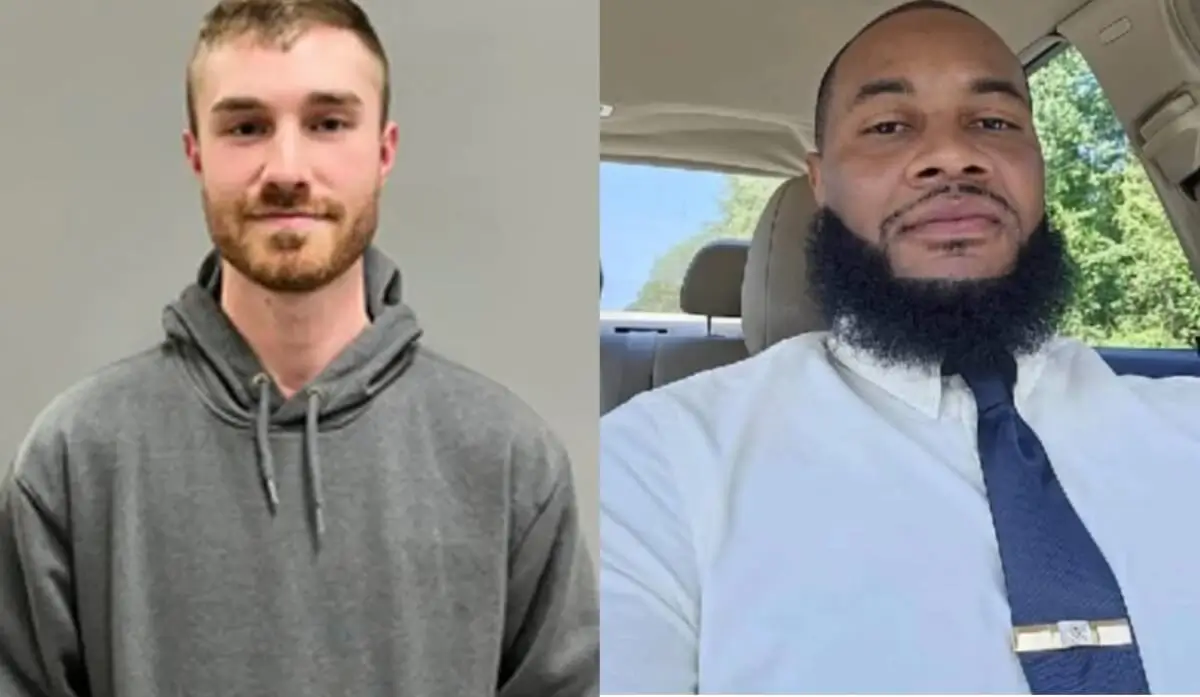
‘Not Entitled!’: Judge Strikes Down Immunity Claim from Alabama Cop Charged with Murder of Black Man In Botched Repo and He Must Answer to More Than Criminal Charges
A federal judge dismissed a wrongful death lawsuit against an Alabama city and three of its former police officers, but preserved claims against one cop and denied his bid for qualified immunity in a 2023 shooting death case.
Former police officer Mac Bailey Marquette, 25, was charged with murder in the fatal shooting of 39-year-old Steve Perkins during a botched repossession attempt in Decatur, Alabama, on Sept. 29, 2023.
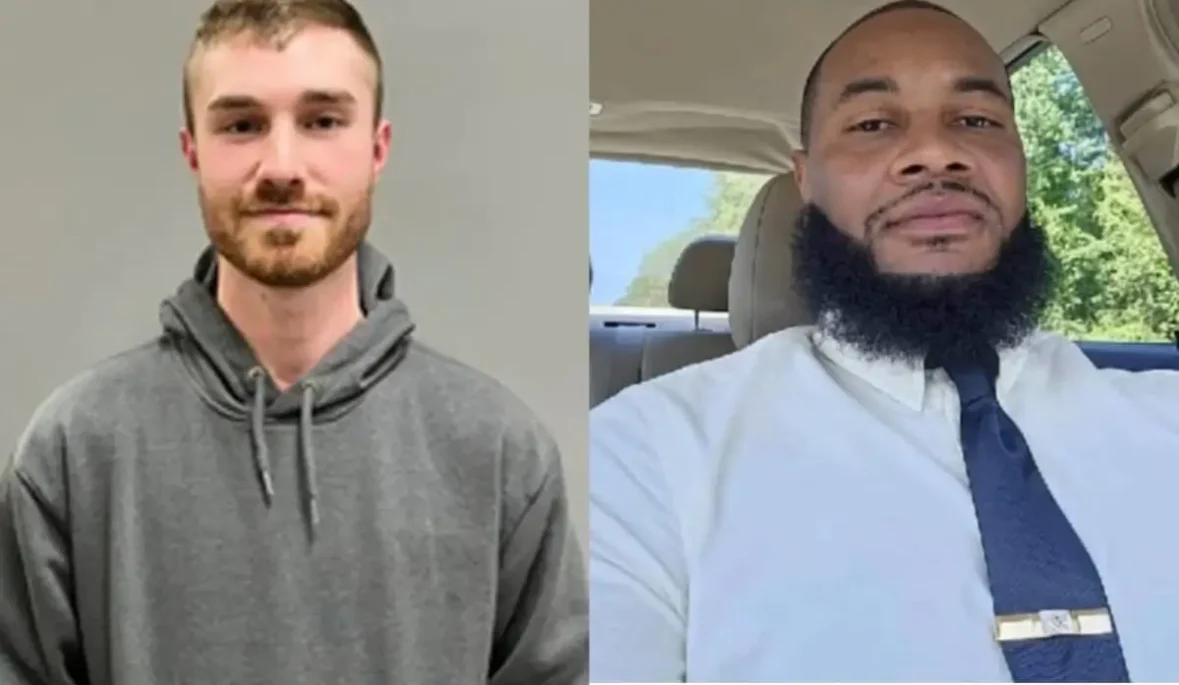
Marquette and three other Decatur officers — Joey Williams, Vance Summers, and Christopher Mukaddam — were called to Perkins’ home early that morning after a tow truck driver identified as Caleb Combs attempted to repossess Perkins’ truck. Combs called 911 and claimed Perkins came outside and pointed a gun at him.
Combs sought to retry the seizure and requested police to back him up in case things went sideways.
Body camera footage played in court reportedly showed Perkins walking outside as Combs began hitching his truck. The officers were hiding nearby. Marquette and one of his partners were standing by the side of Perkins’ home.
The video showed Perkins pointing a handgun equipped with a tactical flashlight at Combs. When Marquette rounds the corner of the home to confront Perkins, Perkins points the gun at him. Marquette shouts, “Police, get on the ground!” then immediately fires 17 rounds at Perkins. The 39-year-old father of two later died from his wounds at Huntsville Hospital.
Marquette and two other officers at the scene were fired. The fourth was suspended.
Marquette, Williams, Summers, Mukkadam, and the City of Decatur were all named defendants in a lawsuit filed by Perkins’ family alleging excessive force, wrongful death, and unconstitutional policing practices.
On March 27, U.S. District Judge Corey Maze dismissed all civil claims against Mukaddam, Williams, Summers and the city, but left Marquette as the sole remaining defendant.
Maze ruled that Marquette must show he was acting within the scope of his discretionary authority to use deadly force, The Decatur Daily reported.
“In short, Officer Marquette is not entitled to qualified immunity because, based on Perkins’ pleaded facts, Mr. Perkins was neither trying to leave the scene nor posing a serious threat of physical harm to others when Officer Marquette used deadly force,” the court ruled.
As for the other officers at the scene, the court ruled that they are entitled to immunity, stating that though they are constitutionally required “to intervene in the use of excessive force when they have the ability to intervene,” the wrongful death complaint did not clarify when and how they could have intervened in the shooting.
“Perkins pleads no facts that would establish that the non-shooting officers knew or should have known that Officer Marquette would shoot Perkins before Officer Marquette shot Perkins,” the court said.
Perkins’ family was disappointed by the court’s ruling, asserting that every party involved should be held accountable.
“I totally disagree,” Perkins’ brother, Nick Perkins, said. “I think they knew what they were going to do. I think there was a plan in place. That alone should be enough to hold them accountable.”
In the years since the fatal shooting, Marquette has sought immunity from criminal prosecution. His trial has been delayed several times since 2024 due to his qualified immunity requests and appeals.
Each of his bids failed in two lower courts.
The matter is now being weighed by the Alabama Supreme Court, which has heard arguments but has yet to rule on Marquette’s request.
If the Alabama Supreme Court rules in Marquette’s favor, his case won’t go to trial. If not, a jury will decide whether Marquette is criminally liable for Perkins’ death.
His trial is currently set for Sept. 21.
Attorney Lee Merritt, who represents Perkins’ family, said the family hopes the case will go to trial, stating that the criminal case could very well impact the civil case against Marquette.
“If Mac Bailey Marquette is found guilty of murder, then we can establish that he’s guilty as a matter of law in the federal claims,” Merritt told WHNT. “But we can argue that and ask the court to apply that verdict to our civil case.”
Merritt added that after years of delays, reaching a conclusion in these cases would give the family and Decatur community the chance to finally grieve.
“The delay has delayed the civil case and has delayed the family’s opportunity to grieve,” Merritt said. “When there is an ongoing civil action, when there’s ongoing criminal cases, and families and communities are organized for justice, the Decatur community hasn’t had the opportunity since Steve’s death, to properly mourn him or put policies in place, to make sure it doesn’t happen again, and to grow as a community.”