
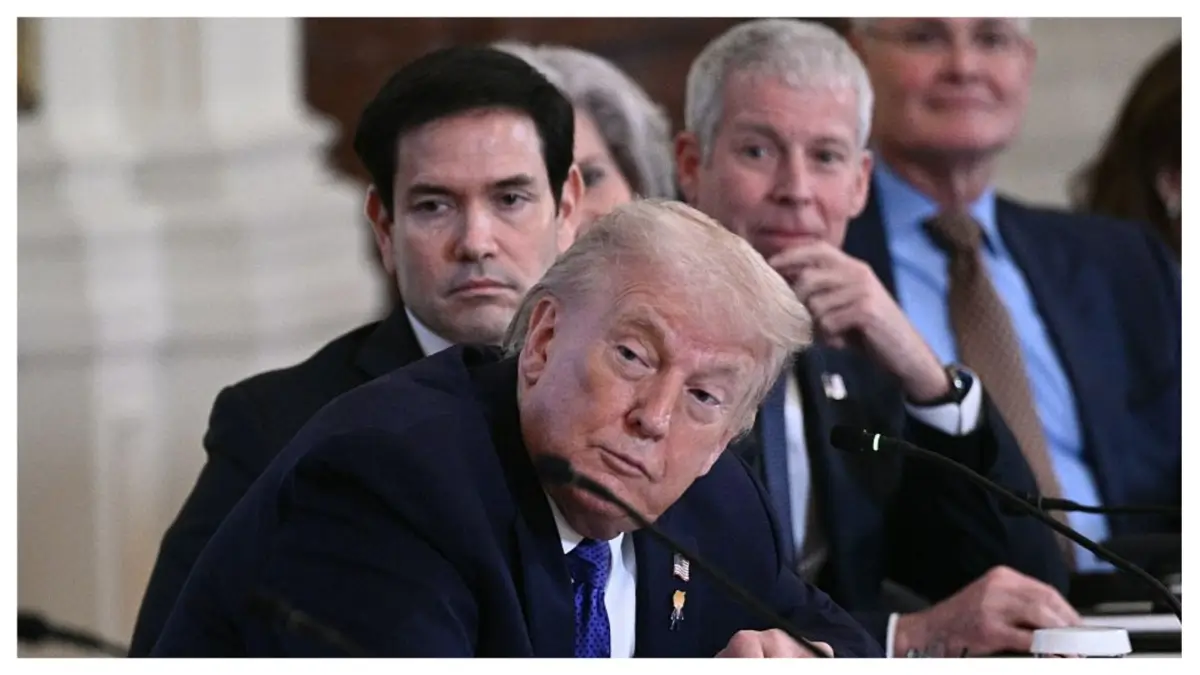
‘In Way Over His Head’: Fox News Host Embarrasses Trump on White House Lawn, Forcing Him to Abruptly Walk Off Over Iran Question as Rubio Stands By
President Donald Trump continues to promote a positive narrative, insisting the war with Iran is effectively over and asking Americans to take him at his word despite the fact that Israel continued targeting Iranian infrastructure with airstrikes as the week began.
When a Fox News reporter asked Trump to explain his claims that the war in Iran had already been won, the commander in chief repeated his assertion of total military dominance.
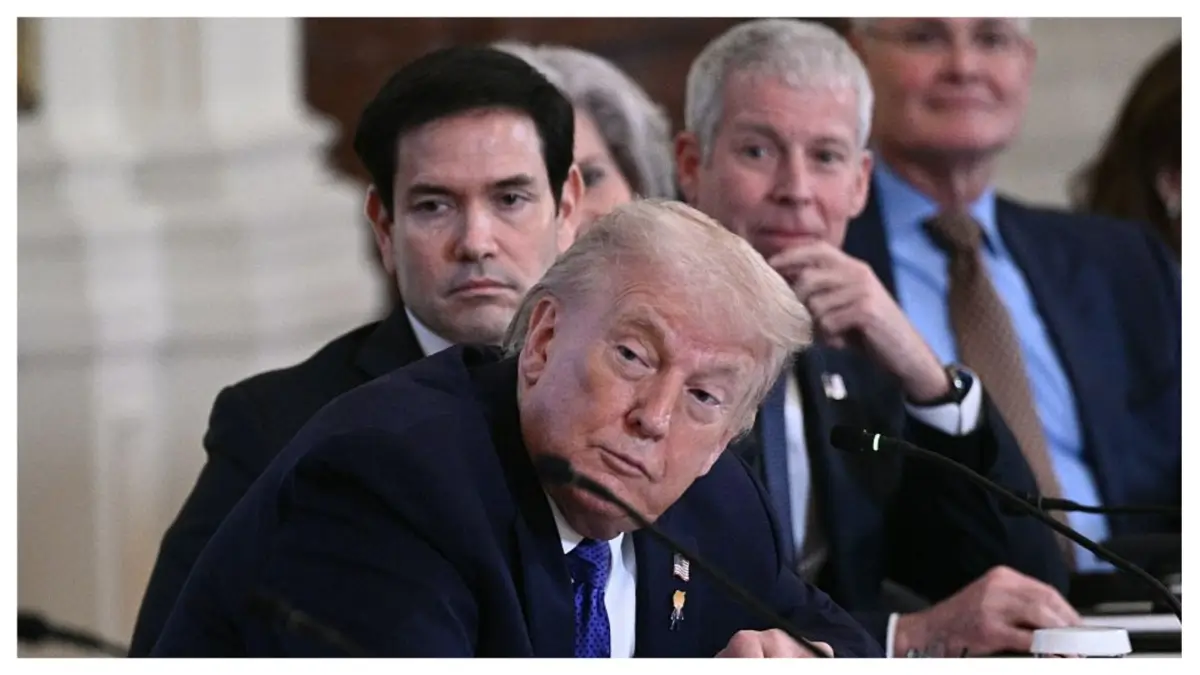
But when the follow-up came — asking how long the conflict would actually continue — Trump turned away mid-question and walked off, leaving the gap between his over-confidence and the reality hanging in the air.
The brief exchange captured the central tension now surrounding Trump’s handling of the conflict: bold claims of victory colliding with a war that is still unfolding, expanding, and raising new risks by the day.
Trump’s insistence that the fight is effectively over coincided with mounting questions about what the endgame actually looks like — and whether anyone in charge is willing or able to spell it out.
When asked directly last Friday on the White House lawn what he meant when said the war was militarily won in Iran, Trump replied, “Oh, I think we won. … From a military standpoint, they are finished.”
Viewers reacted with disbelief. Chris Mattias asked, “Why even ask Donald questions, he lies. Every answer is a lie.”
Another critic on X added, “If the war is truly ‘won’, the public would expect a clear timeline for de-escalation. If the war is not over, then the administration owes the country a candid assessment of what comes next.”
A third observer pointed to the disconnect between Trump’s confidence and the avoidance that followed. “Donald Trump declaring victory while avoiding the timeline question raises eyebrows. Saying ‘we won’ but not clarifying the endgame leaves uncertainty. Moments like this create more questions than answers. The situation clearly isn’t as simple as it’s being presented.”
Paul Rasieleski said bluntly, “Translation: I have no f’g idea what I’m doing, and I’m in way over my head.”
The backlash has only ramped up as Trump continues to claim total victory, arguing that U.S. forces had dismantled Iran’s military capabilities. “We’ve knocked out their navy, their air force, we’ve knocked out their anti-aircraft, we’ve knocked out everything. We’re roaming free.”
Trump then tried to downplay the disruption caused by Iran’s missile and drone attacks — that have effectively choked off the Strait of Hormuz, a key artery for global trade — framing it as little more than a nuisance.
“From a military standpoint, all they’re doing is clogging up the Strait,” he said, although the Iranians are in fact selectively allowing some ships to pass the waterway.
Yet the question still looming over the war: if it’s over, why does it keep escalating, especially when events on the ground suggest anything but a finished fight.
Iran has continued launching missiles in response to U.S. and Israeli attacks, including an attack on two communities near Israel’s main nuclear research center after the Iranian Natanz nuclear site was struck and an attempted strike on the joint U.S.-U.K. base at Diego Garcia over the weekend, while Israeli officials said, “The war is not close to ending.”
The stakes rose dramatically last week when Trump issued a 48-hour ultimatum demanding Iran reopen the Strait of Hormuz, a critical global shipping route, or face the destruction of its energy infrastructure.
By Monday, however, Trump eased off his ultimatum, announcing a temporary pause in planned strikes while pointing to what he described as progress in talks with Iran — though he offered no details or independent confirmation that such negotiations were actually taking place.
“I AM PLEASED TO REPORT THAT THE UNITED STATES, AND THE COUNTRY OF IRAN, HAVE HAD, OVER THE LAST TWO DAYS, VERY GOOD AND PRODUCTIVE CONVERSATIONS REGARDING A COMPLETE AND TOTAL RESOLUTION OF OUR HOSTILITIES IN THE MIDDLE EAST. BASED ON THE TENOR AND TONE OF THESE IN DEPTH, DETAILED, AND CONSTRUCTIVE CONVERSATIONS, I HAVE INSTRUCTED THE DEPT OF WAR TO POSTPONE ANY AND ALL MILITARY STRIKES AGAINST IRANIAN POWER PLANTS AND ENERGY INFRASTRUCTURE FOR A FIVE DAY PERIOD.”
Meanwhile, Iranian state media flatly denied any contact had taken place, casting doubt on Trump’s claims and raising fresh questions about which version of events is accurate.
So far, disruption to the strait has rippled through the global economy, driving up food and fuel costs far beyond the Middle East.
Regional governments are bracing for wider fallout after Iran warned it still has the capability to strike energy targets across the region if U.S. threats are carried out. At the same time, Israeli officials confirmed additional havoc, including Iranian strikes targeting areas near key infrastructure.
The U.S. State Department has warned Americans worldwide to exercise “increased caution,” citing the risk that groups aligned with Iran could target U.S. interests abroad. Diplomatic facilities have already faced threats, and officials say the danger could spread well beyond the immediate conflict zone.
Inside the administration, explanations for the war have also shifted.
Earlier this month, Marco Rubio was forced to backtrack after Donald Trump contradicted his explanation for the strikes, sharply denying that U.S. involvement was driven by Israel even as his earlier remarks pointed to an “imminent threat” tied to how Iran might respond if attacked — adding to confusion over the administration’s shifting rationale for the war.