
In ‘Score,’ Kennedy Ryan writes a world where Black women’s mental health is taken seriously
OPINION: “Score” highlights the importance of accessible, culturally competent mental health care for Black women while telling a story full of love, joy, and complexity.
Editor’s note: The following article is an op-ed, and the views expressed are the author’s own. Read more opinions on theGrio.
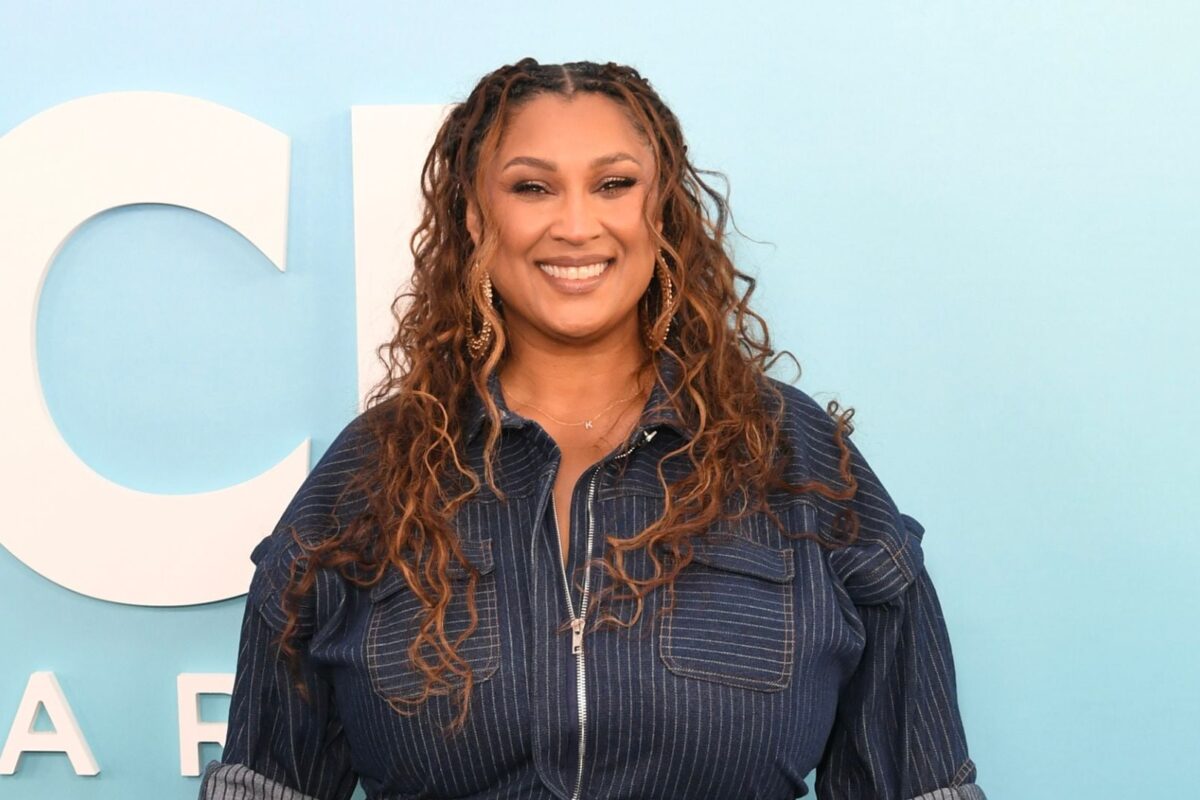
Last week, I watched as author Kennedy Ryan stood before an excited audience at her book tour stop in Washington, D.C., and said something that stopped the room: “I get to write a world where things end well for us.” She was talking about her readers. Many of whom are Black women, like me.
With Mental Health Awareness Month coming to a close, as a developmental scientist I can’t think of a better time to talk about what Ryan has done in “Score,” the second installment in her Hollywood Renaissance series officially released last Tuesday on May 19. This book is a rare and necessary portrait of a young Black woman living at the intersection of emerging adulthood and mental illness, shining a light on an issue that is often overlooked in the romance genre – and in the real world.
The protagonist, Verity, has her first manic episode while she is a student at a fictional HBCU, and that detail is not incidental. According to data from the National Institute of Mental Health, 75 percent of bipolar disorder cases emerge before age 25, with the mean age of onset for college students sitting at approximately 18.5 years. The transition to college, with its academic pressure, disrupted sleep, financial stress, and social upheaval can trigger first episodes in those already predisposed.
The backdrop matters even more when we zoom in on Black college students and women specifically. Research consistently shows that Black and Latinx students face the greatest financial barriers to mental health care, and that stigma remains a powerful force keeping young Black women from seeking help. More than half of Black college students reported clinically significant symptoms of at least one mental health condition, yet only 30 percent reported receiving treatment. Among Black college women, adherence to what researchers call the “Superwoman Schema”, the internalized pressure to appear strong, self-sufficient, and unbothered, can further delay or prevent care.
Ryan understood all of this. She has said that “Score” was “one of the hardest books she’s ever written,” precisely because she refused to get it wrong. She interviewed people with bipolar diagnoses, their families, their partners, and their clinicians. The result is a portrayal of Verity’s experience that is complex, humanizing and nuanced. What makes “Score” extraordinary is how thoroughly Ryan renders the fullness of her life around her diagnosis, paralleling the lived experiences for so many who are suffering in the shadows
Verity is a whole woman. Her friendships are real people who love her even when they don’t always get it right. Her family is present. Though imperfect, they are trying. Her love story with Monk is among the most emotionally layered second-chance romances in the genre. And her mental health journey is woven through all of it without ever being reduced to a plot device or a tragedy to overcome.
Ryan shows what holistic care actually looks like in practice: professional treatment, yes — but also the role of community, partnership, and the slow, non-linear work of learning to trust people with the most vulnerable parts of yourself. In my work advising colleges and universities on addressing the mental health needs of students of color, I have seen firsthand how critical a holistic approach truly is during the transition to college. It takes a village, and that village extends well beyond the campus counseling center. It includes educating faculty, staff, peers, and families on what to look for and what to do, long before a young person reaches a crisis point. Waiting for a crisis as an entry point to care means that a young person is losing critical time and pieces of themselves that are hard to recover.
Following along as Verity continues to develop into adulthood and integrates her diagnosis into her sense of self, friendships, and later into her relationship with Monk is one of the most moving arcs in recent popular fiction. She comes into full knowledge of herself, and everyone in her life is better for it.
This matters because mainstream fiction, particularly mainstream romance, has rarely given Black women with mental illness this kind of careful, celebratory attention. When Black women appear in narratives about mental health at all, they are often flattened into cautionary tales or stripped of desire, ambition, and joy. Ryan does something different. She writes Verity as someone whose diagnosis shapes her world but does not define her worth.
If “Score” moved you, let it move you to action. Mental Health Awareness Month is a moment to go beyond the aesthetic and ask what we are actually doing as friends, as family members, as communities to support the young, Black women in our lives who may be struggling.
Check in on your people. Challenge the stigma in your own households. Advocate for accessible, culturally competent mental health care in your communities and on your campuses. And if you or someone you love needs support, the 988 Suicide and Crisis Lifeline (call or text 988) and the National Alliance on Mental Illness helpline (1-800-950-NAMI) are places to start.
Kennedy Ryan wrote a world where things end well for us. Now let’s build it.

Ashley Stewart, PhD is a developmental scientist and a Public Voices Fellow of The Op-Ed Project in Partnership with the National Black Child Development Institute.