
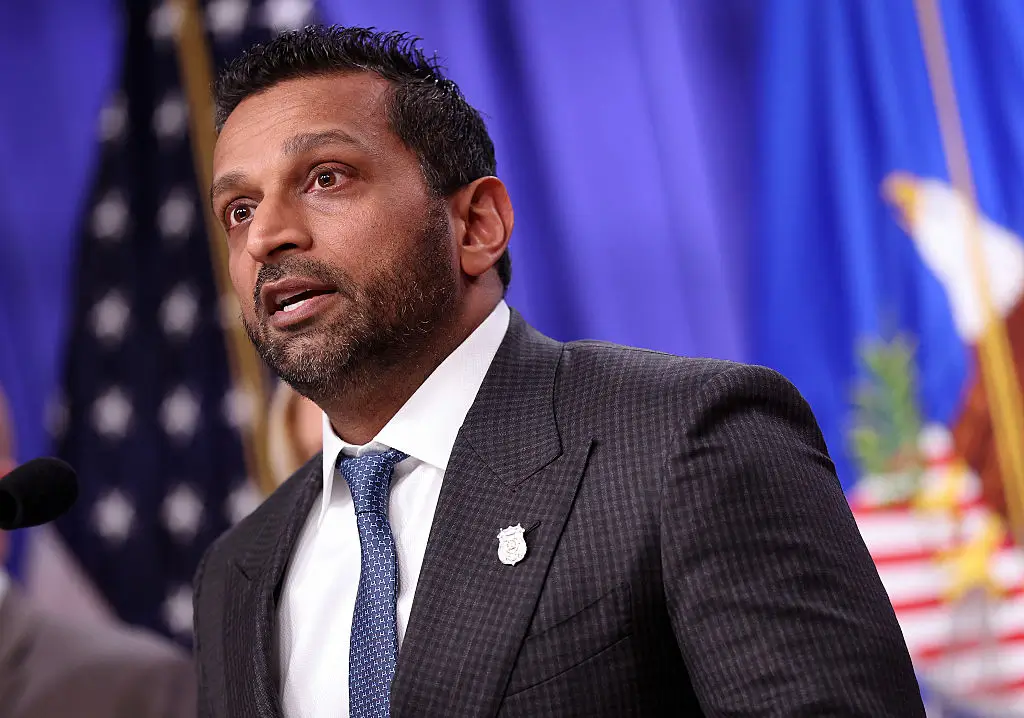
‘I Dare You’: Kash Patel Tried to Bury a Reporter with a Lawsuit, Then Allegedly Turned the FBI Loose on Her — She Doubled Down Anyway
After publishing a story that described FBI Director Kash Patel as drinking heavily and behaving erratically, a reporter for The Atlantic was hit with a defamation lawsuit.
Then came another shocker: word that federal agents were examining Sarah Fitzpatrick’s piece as part of a leak investigation within the agency.
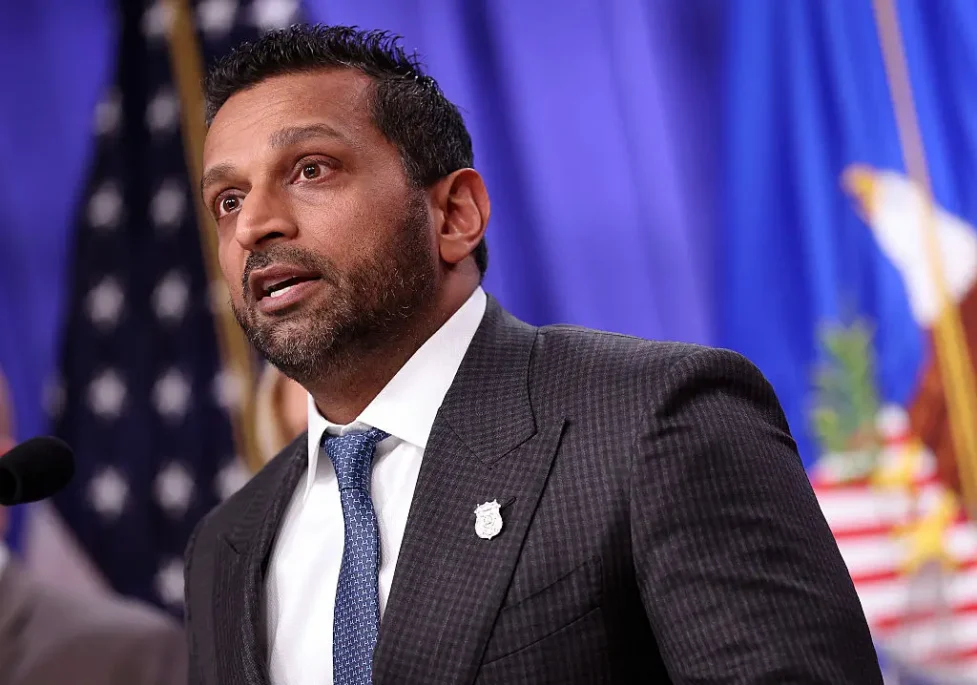
Instead of backing off, Fitzpatrick published another account in recent days, detailing Patel’s personalized bourbon stash, including bottles of Woodford Reserve engraved with “Kash Patel FBI Director” alongside an FBI shield, one of which The Atlantic obtained.
Beyond that, critics point to a pattern around Patel that reflects an approach to power rooted in confrontation, image-building, and escalation whenever he is challenged with facts.
The clash now centers on what happens when the head of the FBI, an agency bound by strict rules about investigations and political neutrality, responds to unfavorable coverage by turning the machinery of law enforcement toward journalists.
Patel denies wrongdoing and disputed the reporting, but the sequence of his $250 million action, followed by an internal probe, has triggered alarm among press advocates and even some within the bureau, who see it as a test of how far Patel can go in policing his critics.
According to people familiar with the situation, the FBI opened what is known as an “insider threat” investigation after Fitzpatrick’s article appeared. That alone raised eyebrows. Such probes are typically used to track down leaks of classified information, not to scrutinize reporting based on anonymous sources describing workplace misconduct. The agents involved are said to be part of a unit in Huntsville, Alabama, according to MS NOW.
The reporting at the center of the dispute paints an unflattering picture. Fitzpatrick cited two dozen sources who described Patel’s alcohol use as excessive and his behavior as unpredictable.
She wrote that he was “known to drink to the point of intoxication,” and in some instances his security detail had difficulty waking him in the morning.
Patel quickly sued, arguing the claims were false and defamatory. The publication stood by the story and said additional corroboration had surfaced after it ran.
The possibility of a leak investigation targeting a reporter cut against long-standing Justice Department practice.
Historically, investigators have treated journalists as witnesses, not subjects, and only pursued their records under strict conditions. Those guardrails were strengthened during the Biden administration, when Attorney General Merrick Garland restricted prosecutors from seizing reporters’ data except in rare cases. That policy was rolled back in 2025 under Attorney General Pam Bondi, lowering the threshold but still framing such steps as a last resort.
One source described the situation for internal investigators in stark terms. “They know they are not supposed to do this,” adding, “But if they don’t go forward, they could lose their jobs. You’re damned if you do and damned if you don’t.”
An FBI spokesperson denied that any such investigation exists. “This is completely false. No such investigation like this exists and the reporter you mention is not being investigated at all,” the spokesperson said, adding that media outlets often “play the victim via investigations that do not exist.”
Meanwhile, Fitzpatrick’s editors signaled they are preparing for a fight. “If true, this would be an outrageous, illegal, and dangerous attack on the free press and the First Amendment,” said editor-in-chief Jeffrey Goldberg. “We will defend Sarah and all of our reporters who are subjected to government harassment simply for pursuing the truth.”
The standoff fits into a broader pattern that has followed Patel into the director’s office. Even before this episode, he had built a reputation as a combative figure who embraces publicity in ways past FBI leaders avoided. Accounts from current and former officials describe a workplace unsettled by his leadership style, with concerns about blurred lines between personal branding and official duties.
That tension has spilled into public view in unusual ways.
A report by Fitzpatrick published on Wednesday described Patel distributing personalized bourbon bottles engraved with his name and title, a practice that some agents said clashed with the bureau’s strict culture around alcohol. Others pointed to internal unease about decision-making and priorities, particularly as experienced personnel depart and new controversies surface.
Against that backdrop, the reaction to Fitzpatrick’s reporting has only intensified scrutiny.
Social media lit up with praise for her refusal to retreat. “She’s exposing the drunk that Patel is,” one wrote on a viral thread.
Another user framed her follow-up reporting as defiance: “Sarah Fitzpatrick is thinking, Oh..You didn’t like the first article. Here is another one.”
Criticism of Patel often came wrapped in farce, where the jokes practically wrote themselves.
“Kash Patel, the Founder of MADA: Make America Drunk Again,” one post read, while another dubbed the agency the “Federal Bureau of Intoxication.”
Some users argued the optics alone undermined his denials: “If you’re trying to convince the public that you’re not an alcoholic, maybe having your own bourbon brand isn’t the way to go…”
Others had knives out: “Hard to fight the alcoholic accusations when your business card is a f—king bottle of whiskey.”
Not all reactions were negative. Conservative commenters dismissed the controversy as overblown and politically motivated. “Wow. Kash has a bourbon collection. That’s Pulitzer kind of reporting. You’re an embarrassment and the Atlantic is trash. This sh-t cracks me up! Keep up the Pulitzer comedy!” one wrote.
Another added, “She published a bullsh-t story & uncovered something that wasn’t a secret & the left calls her a genius. This is why democrats have to steal elections.”
The outcome of Patel’s lawsuit remains unresolved, and it is still unclear what steps, if any, investigators have taken regarding Fitzpatrick. But the episode is already raising questions about how a powerful agency handles criticism, and what happens when a journalist refuses to back down.