
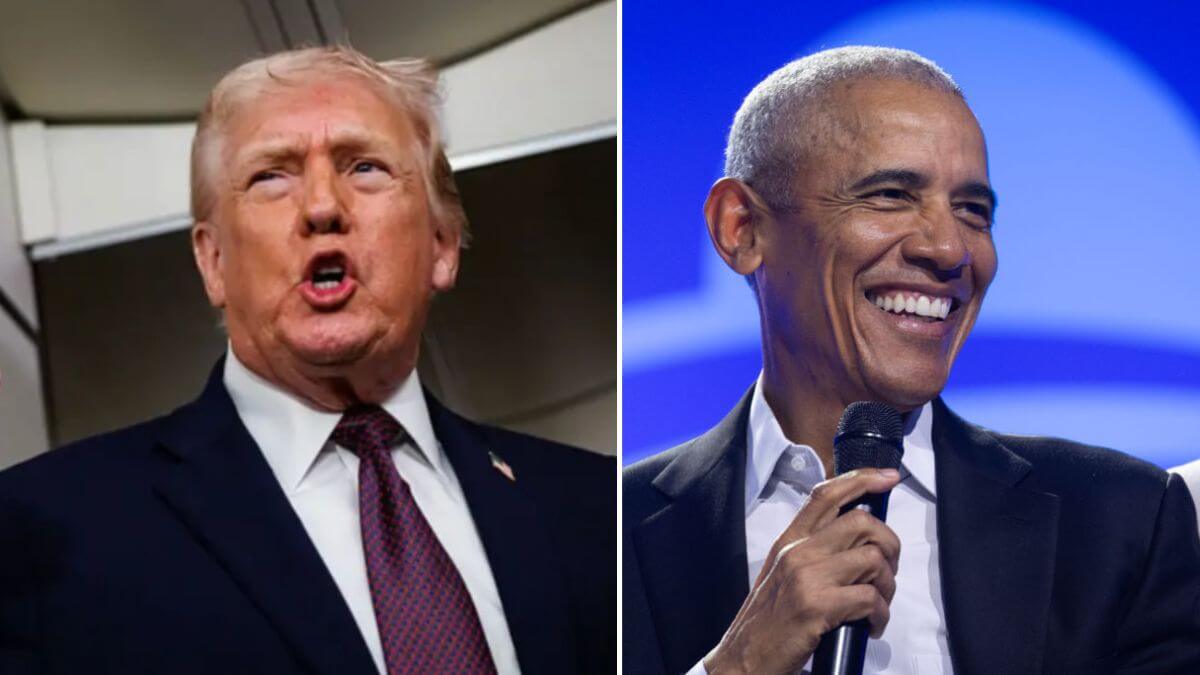
‘Hit the Nail on the Head’: Obama Drops the Hammer on Trump’s Iran Victory Lap, Calls Him Stupid on Live Television and Smiled the Whole Time
For years, the debate over Iran has followed a familiar script in Washington.
Some lawmakers argue that pressure, threats, and military force are the only language Tehran understands. Others insist that even bitter adversaries can be pushed toward compromise if diplomacy is given enough room to work.
On Sunday, as President Donald Trump celebrated a newly announced agreement with Iran and declared himself the architect of a breakthrough, former President Barack Obama stepped back into that debate and delivered a pointed reminder of where things actually stand.
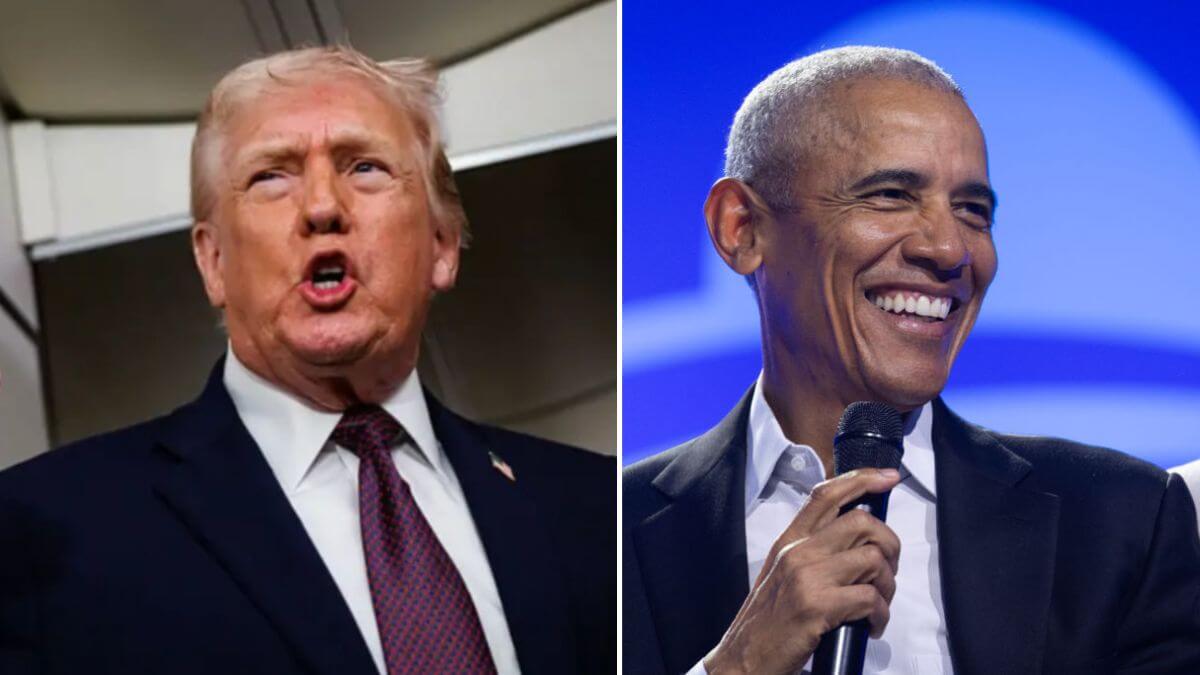
Obama used a nationally televised interview to argue that the deal Trump is now pursuing appears strikingly similar to the agreement Trump abandoned in his first term, turning the president’s victory lap into a renewed debate over who was right about Iran all along.
In an exclusive interview with ABC News, host Robin Roberts asked Obama, “You spent a lot of time wrestling with the threat of a nuclear Iran. How do you think things are being handled right now there?”
Obama responded by questioning whether the emerging agreement represented any meaningful improvement over the nuclear deal negotiated during his administration.
“It is doubtful that any agreement that arises is going to be significantly different or a significant improvement from the deal that we had in the first place and had worked for a long stretch of time before we, the United States, pulled out of it,” Obama said.
The former president said he hoped for an end to the fighting but argued that the latest developments reinforced a broader lesson about the limits of military force.
“So I’m hopeful that bombing stops and ordinary people are no longer suffering as a consequence of the war,” Obama continued. “I think, in retrospect, it’s a reminder that on a lot of difficult foreign policy problems, the notion that we can just bully our way or bomb our way to solutions may sometimes seem appealing.”
View on Threads
Obama Defends Diplomacy as Iran Agreement Takes Shape
“But the fact of the matter is that taking the time to explore diplomacy and exhaust the possibilities of coming up with deals that don’t solve 100 percent of the problem but solve 80-90 percent of the problem while avoiding the necessity of going to war. You think we would have learned that lesson by now, but it seems like every so often we have to learn that lesson again.”
Supporters quickly spread reactions to Obama’s comments across social media and argued that current events had vindicated the former president’s warnings.
One commenter wrote, “Despite any haters and what they think. History will look back favorably on Obama. And Trump knows it will not be the same for him.”
Another supporter praised Obama’s defense of diplomacy, writing, “Teach man, because we have some ignorant people in government right now! Your deal with Iran was a solid one, and now even the naysayers back then are acknowledging it now!”
Others seized on Obama’s argument that the current negotiations may ultimately resemble the agreement Trump withdrew from years ago.
“Obama really hit the nail on the head here,” one user noted. “Any ‘deal’ that Trump comes up with will be worse than the one we were already in. We’ve spent over a hundred billion for the war, and that’s not even including the BILLIONS in concessions Trump is about to give up!”
Obama’s remarks landed just hours after Trump announced that the United States and Iran had reached an agreement intended to end a conflict that has rattled global markets, threatened energy supplies and fueled fears of a broader regional war.
“The Deal with the Islamic Republic of Iran is now complete,” Trump wrote on social media Sunday.
Trump said the agreement will reopen the Strait of Hormuz this coming Friday when both sides formally sign the initial accord. He suggested the delay was necessary for “purposes of mine removal,” adding that he had already authorized the “immediate” end of the U.S. naval blockade on Iranian ports.
Trump Announces Iran Deal and Strait of Hormuz Reopening
Then, on Monday, Vice President JD Vance announced that negotiators had signed the deal virtually on Sunday.
Iran’s Supreme National Security Council also confirmed that negotiators finalized a memorandum of understanding after what it described as “months of long and difficult negotiations.”
Iranian officials said the agreement includes an immediate halt to military operations on all fronts, including Lebanon, and paves the way for broader peace talks following a signing ceremony expected in Geneva. Pakistan and Qatar were credited with helping mediate the deal.
The agreement leaves significant questions unanswered, particularly regarding Israel, which was not a party to the talks. Israeli security leaders have made clear that Israel will not honor the agreement.
“Trump’s agreement does not bind us. Israel is not subordinate to the United States. We are an independent and sovereign country,” National Security Minister Itamar Ben-Gvir said in a statement Monday. Israeli media reported that Trump and Prime Minister Benjamin Netanyahu spoke by phone shortly before the deal was announced.
Earlier, Trump urged both Israel and Hezbollah to avoid actions that could jeopardize the negotiations after Israeli strikes hit what the Israelis claimed was a Hezbollah stronghold near Beirut on Sunday. The Iranian-backed militant group has been fighting Israel in a parallel conflict that has complicated peace efforts.
Despite the uncertainty surrounding the final terms, Trump portrayed the agreement as a major geopolitical achievement. In an interview with The New York Times, he said the deal would ensure the Strait of Hormuz remains “permanently toll-free” and claimed he had protected Israel from nuclear destruction. He also warned that military action could resume if future nuclear negotiations fail.
Republicans and Democrats Split Over Trump’s Iran Agreement
Vance echoed the administration’s optimism, saying the agreement could “fundamentally transform the Middle East for the next 50 years” if Iran complies with its commitments.
Speaking to Fox News, Vance said the arrangement would ensure Tehran “will never have a nuclear weapon,” adding that administration officials were still determining who would attend Friday’s signing ceremony in Geneva, where Trump arrived Monday ahead of the G7 summit.
“I certainly plan to be there, but it’s possible the president himself could be there,” Vance said.
Political leaders were otherwise divided along familiar lines. House Democratic leader Hakeem Jeffries accused Trump of “recklessly” dismantling the Obama-era agreement and helping create the conditions that led to war.
Some Republicans praised the president’s negotiating strategy, with Sen. Tim Scott calling Trump the “Dealmaker in Chief.”
Some Republicans remained unconvinced.
Sen. Lindsey Graham, one of Trump’s strongest advocates for military action against Iran, welcomed the reopening of the Strait of Hormuz but questioned whether both sides shared the same understanding of the agreement.
“I am somewhat concerned that Iran’s view of the agreement seems different than what the American negotiating team is claiming,” Graham wrote.
“Congratulations to all in getting us to this point,” he added. “Time will tell.”