
Eddie Glaude has a warning for America’s 250th: ‘Freedom snatching’ never stopped
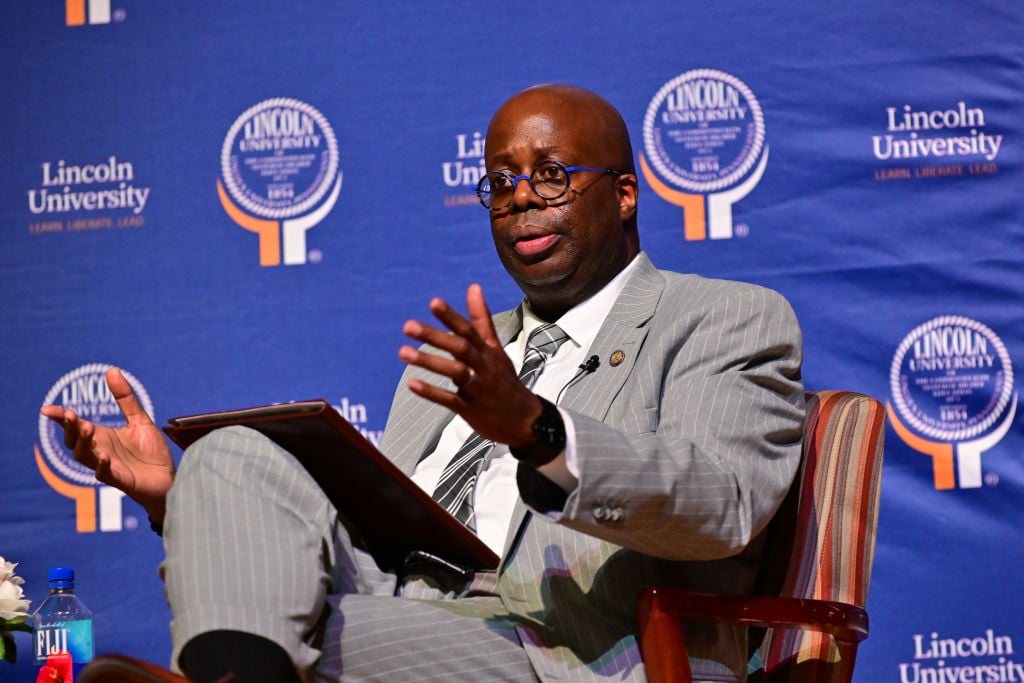
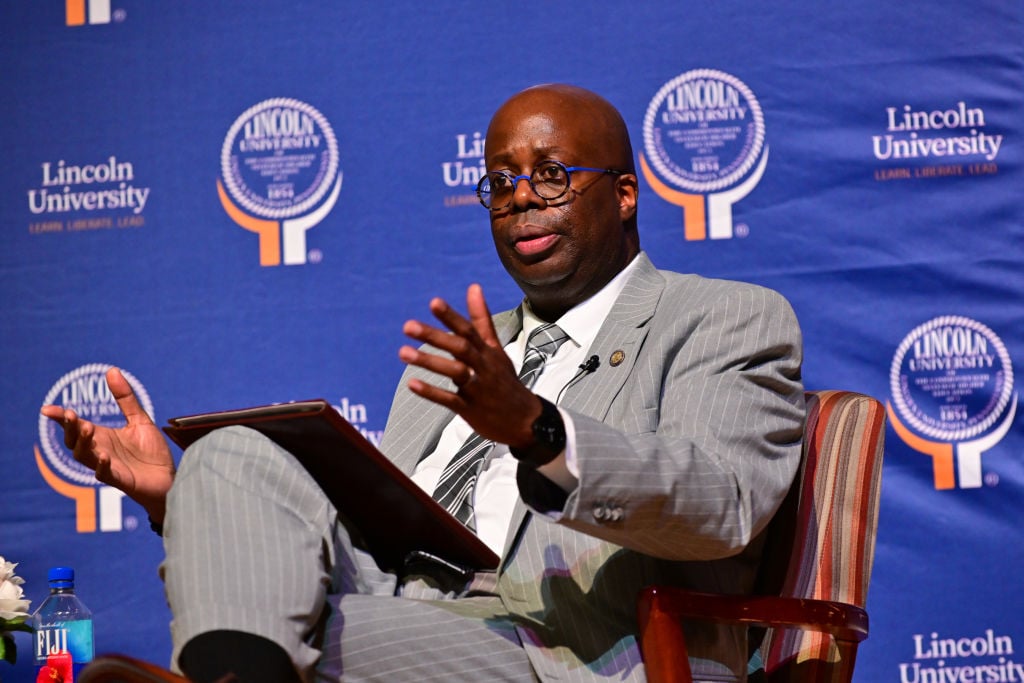
Princeton professor Eddie Glaude Jr. tells theGrio the story of Moses Gordon and warns that America’s cycle of “freedom snatching” has continued for 250 years.
As the United States approaches its 250th birthday, Princeton professor and New York Times bestselling author Dr. Eddie S. Glaude Jr. is urging Black Americans to see the moment clearly. And he’s using one devastating story from the past to make his point.
Speaking with theGrio’s Natasha S. Alford about his new book, “America, U.S.A.: How Race Shadows the Nation’s Anniversaries,” Glaude recounted the life of Moses Gordon, a man he discovered while researching some of the earliest petitions Black men submitted to Congress.
Glaude told theGrio that Gordon was manumitted in 1776 by his Quaker slave master, who viewed slavery as a sin and believed in the revolutionary principles then sweeping the colonies. But the colony of North Carolina passed a statute declaring his freedom invalid. Two years later, Gordon was captured and re-enslaved, sold to a Brigadier General who had fought in the Revolutionary War.
Gordon eventually escaped to Philadelphia, where he lived for roughly a decade as a free Black man, finding love and raising children. Yet under the fugitive slave provisions of the era, including the Fugitive Slave Act of 1793, the law considered him a thief for having stolen himself.
As Glaude explained in the theGrio interview, slave catchers found Gordon ten years into his free life and shackled him to return him to North Carolina. Rather than face enslavement again, Gordon drowned himself, a death documented by a Quaker at the time.
“That’s freedom snatching,” Glaude said. “They give it, they take it away, you take it, they take it away.” He described the story as a “telescoped rendering” of the cycle Black Americans have endured across the nation’s entire history.
Glaude, who told Alford he wrote the book in nine months while his mother battled cancer, said he felt almost “possessed” once he began writing. His message for the present moment was unambiguous.
“This isn’t 1965. This is 2026,” he said during the interview, calling on Black Americans to bring their capital, resources and brilliance to the current fight rather than losing focus to internet distractions and algorithms.
“Every time white America has lost its mind over the course of the history of the country over these 250 years, our task has been to make sure that our babies get to the other side.”