
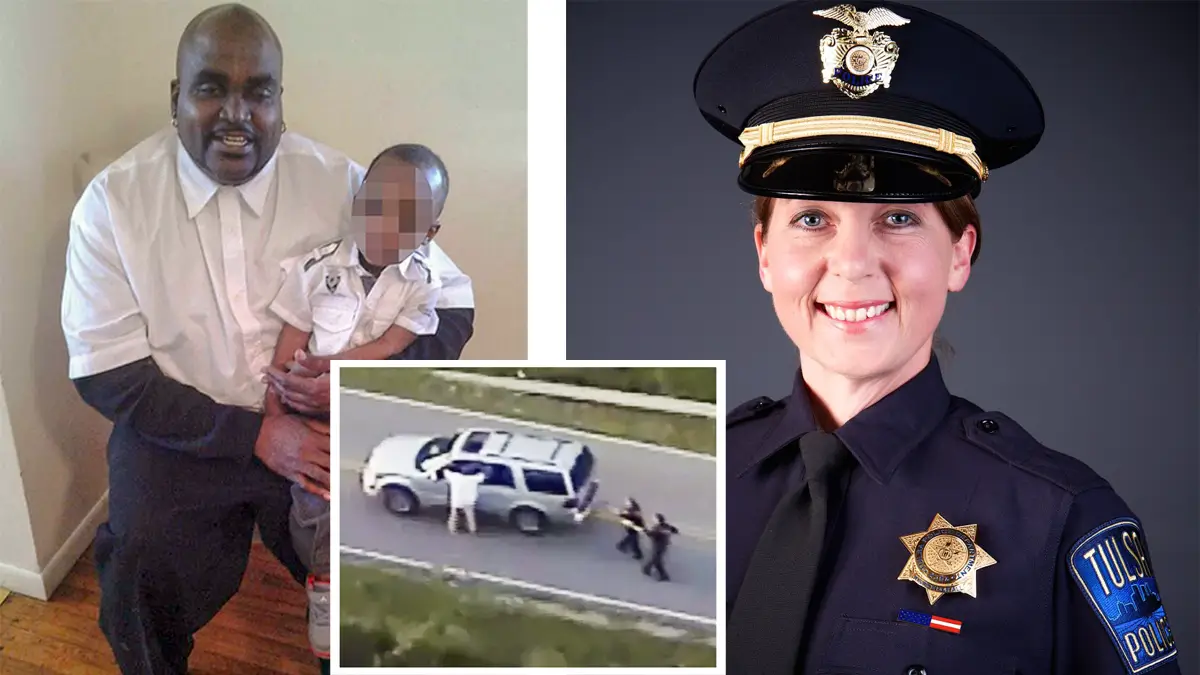
‘Did Everything He Was Supposed to Do’: Federal Court Strips Immunity from Cop Who Killed Unarmed Black Man, Terence Crutcher, While His Hands Were in the Air
It’s been nearly 10 years since an Oklahoma cop shot and killed an unarmed Black man named Terence Crutcher, who had his empty hands in the air — and Crutcher’s family has yet to receive justice.
But a recent court decision at the appellate level may change that.
A decision from the 10th Circuit Court of Appeals, published Monday, stripped qualified immunity from former Tulsa police officer Betty Shelby, who shot and killed Crutcher on Sept. 16, 2016, after coming across the 40‑year‑old father of four on a street where he was experiencing car trouble.
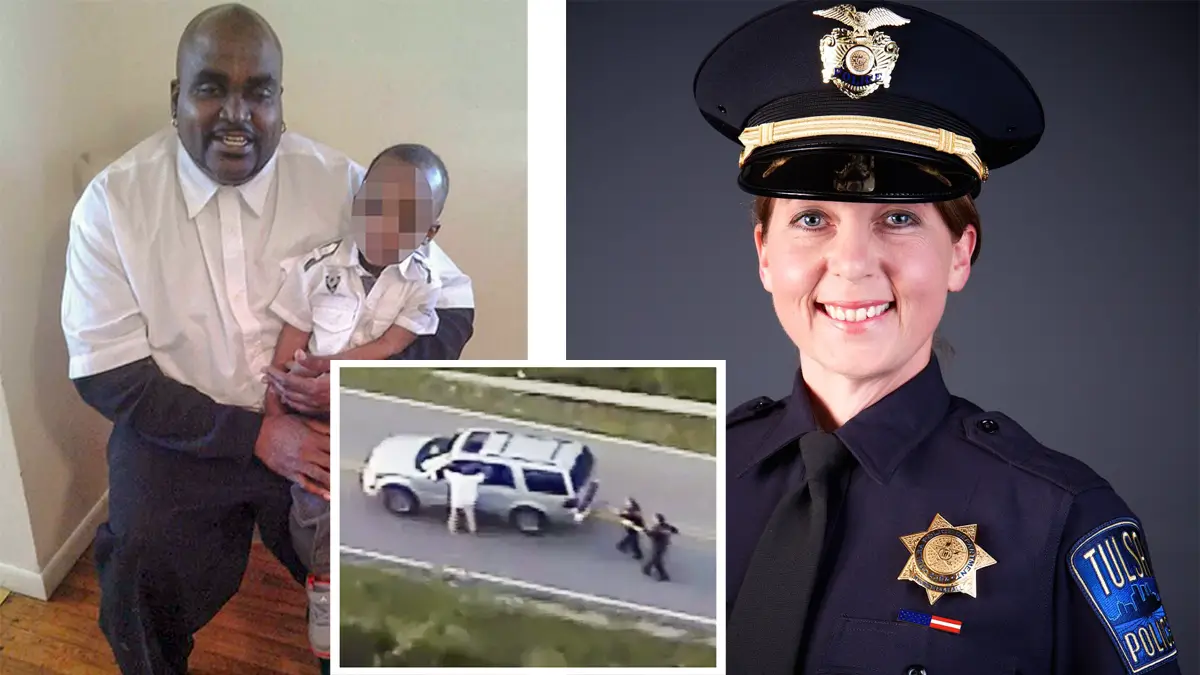
That means the civil rights lawsuit filed by Crutcher’s family in 2017 — which had been dismissed in 2024 at the district court level — goes back before the district court, where it will likely move toward a jury trial unless a settlement is reached beforehand.
“This is not full victory or full justice, this is a correction,” attorney Damario Solomon‑Simmons of Solomon Simmons Law, one of two law firms representing Crutcher’s estate, said during a press conference on Tuesday.
“The 10th Circuit validated what we’ve been saying since the first day that we saw what happened to Terence — that he was shot as an unarmed individual who was complying and walking away from Betty Shelby,” he said.
“He did not have a weapon. She said put his hands up. He put his hands up. He did everything he was supposed to do and then he was shot and killed,” the attorney continued.
Karin Portlock of Gibson Dunn, the second law firm representing the estate, said, “We all deserve to be free from unjustified police violence,” in a press release.
“The law has long been established—an officer cannot shoot an unarmed and non-threatening individual—and excessive force will not be tolerated.”
Watch video of the shooting below.
The shooting
It was about 7:30 p.m. when Shelby was driving to a domestic violence call and spotted Crutcher walking on the side of the road, later saying “[h]e had a distant look on his face and appeared zombie[-]like,” according to the opinion.
She continued driving and came across Crutcher’s SUV a few hundred feet away, parked in the middle of the road with the engine running.
Shelby said she stopped to investigate when Crutcher came walking back toward his car with his hands in his pockets. She claimed he would place his hands in the air and then back into his pockets, making her fear for her life, which is when she called for backup.
However, Shelby did not activate either her body camera or her dashcam, so her claims about the initial encounter cannot be confirmed through video evidence.
The video evidence that recorded the shooting begins roughly 90 seconds after the initial interaction, when a second cop, Officer Tyler Turnbough, pulled up with his dash cam recording; a police helicopter then arrived and recorded from above.
Turnbough’s dashcam video shows him pulling up to the scene with Crutcher holding his hands in the air, walking away from Shelby, who was walking behind him with her gun drawn.
Turnbough, however, pulled out his Taser, apparently concluding that Crutcher was not a deadly threat; he fired his Taser almost simultaneously with Shelby’s shot.
And the cops in the helicopter above, who described Crutcher as a “bad dude,” also predicted he would be Tasered since he was “not following commands,” making no mention of him being a deadly threat.
Shelby claimed she opened fire because Crutcher began reaching into the window of his SUV, making her believe he was reaching for a gun, but that is not clear from the video. It was later determined that the driver’s window was mostly rolled up.
Shelby was charged with first‑degree manslaughter a few days later but was acquitted by a jury in May 2017. She later resigned from the Tulsa Police Department and, in 2018, was hired as a deputy for the Rogers County Sheriff’s Office in Oklahoma, where she taught police firearms and “critical incident” courses, sparking protests.
The U.S. Department of Justice also launched a civil‑rights investigation into the shooting but announced in 2019 that it would not pursue federal charges against her.
‘Shelby’s use of force was unreasonable.’
Crutcher’s estate filed the federal civil‑rights lawsuit a month after her acquittal against both the city of Tulsa and Shelby, but the claims were dismissed in 2024 by U.S. District Judge Eric Melgren, who granted qualified immunity to Shelby, ruling that the lawsuit did not make a “compelling argument” that she had violated clearly established law when she killed Crutcher.
The estate appealed, and the appellate court reversed the decision to grant qualified immunity to Shelby but affirmed the decision to dismiss claims against the City.
The 10th Circuit Court of Appeals stated the district court “failed to view the facts in a light most favorable to the Estate and erred in analyzing clearly established law by defining the right at issue too narrowly.”
The panel also acknowledged that Crutcher had his hands in the air and that the SUV’s driver’s window was mostly rolled up, making it difficult to reach into the car for a weapon. It further stated that video from the helicopter contradicted Shelby’s narrative that he was repeatedly not showing his hands.
“Shelby says he made ‘continuous hand movements to his pockets,’ but the helicopter video— which captured the critical seconds leading up to the shooting as Crutcher approached the SUV — suggests otherwise,” the appellate decision states. “Shelby shot Crutcher while he was standing with his hands up, unarmed, next to the mostly rolled‑up driver’s side window, no weapon within reach.”
The appellate court also ruled that the district court failed to properly apply the three Graham factors that courts use to determine whether police force is “objectively reasonable”: the severity of the crime, whether there was an immediate threat to officers or others, and whether the person was actively resisting or attempting to flee.
In this case, the “severity of the crime” was limited to suspected intoxication and obstruction; the video shows Crutcher was not threatening the officers, and he was not actively resisting or fleeing — facts the court said all cut against deadly force under Graham v. Connor.
“Here, all three Graham factors point in the same direction: that Shelby’s use of force was unreasonable,” the opinion states.
And that is what Crutcher’s family has been arguing all along.
“For nearly a decade, we have carried both truth and grief in the same hands,” the family said in a statement.
“Today reminds us that persistence matters. Even when justice feels far away, it is still worth fighting for.”
“Our beloved Terence had his hands up. He was unarmed. He needed help, but instead he was killed,” the family continued.
“We will not stop until there is full accountability.”
Watch the press conference below.