
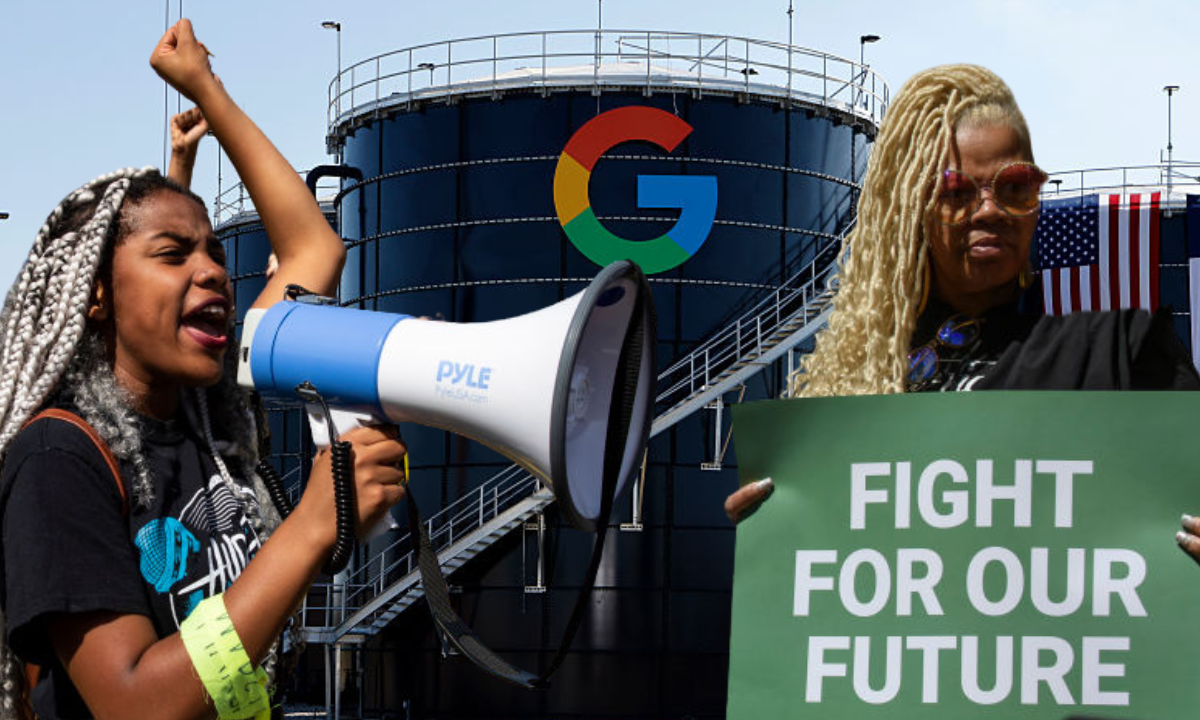
Big Tech data centers are the new frontier in environmental fight to protect Black communities
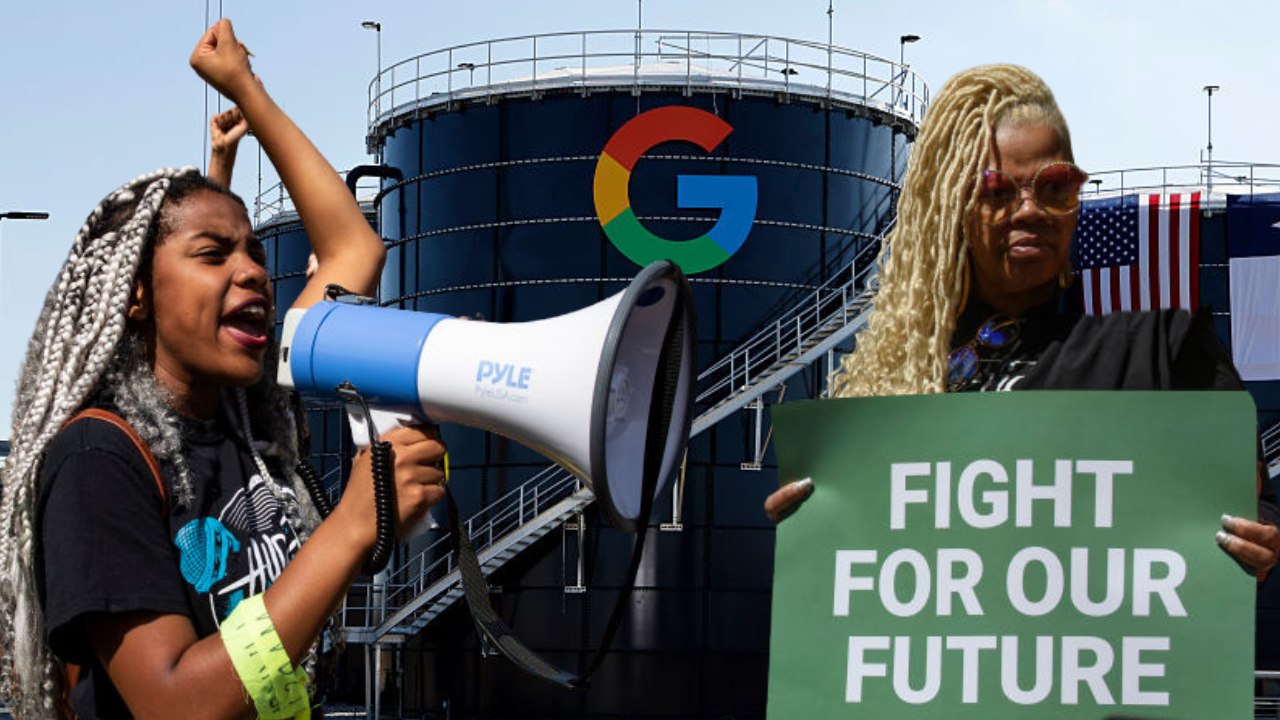
Deregulations enacted by the Trump administration and the explosion of AI technology are putting Black Americans, particularly in the South, in harm’s way.
For decades, Black Americans have been on the frontlines of the climate and environmental justice movement. And while efforts have been made to address the health and environmental harms to Black communities in recent years, deregulations enacted by the Trump administration and the explosion of AI technology are putting them in harm’s way.
The latest frontier in the fight against environmental injustice and its impact on Black communities has undoubtedly been data centers that are seemingly being deliberately erected in Black and poor communities across the country.
Since President Donald Trump reentered the White House in January 2025, tech executives have invested billions of dollars to scale the AI industry. The top five “hyperscalers,” Amazon, Alphabet, Meta, Microsoft and Oracle, have committed up to $690 billion for 2026 alone, which is double the investments of 2025.
“Three-quarters of that goes straight into data centers and AI hardware,” says A. Prince Albert III, executive director of The Culture Keepers Circle and an adjunct professor of law at Georgetown University Law Center.
“Data centers now drive the largest surge in American electricity and water demand in a generation,” he tells theGrio. “Big Tech is siting them in Black and poor communities, raising utility bills, polluting the air, and draining watersheds. Federal rollbacks have removed the brakes. If we let this pattern set, the AI economy will be built on sacrifice zones and a planet too hot to live on.”
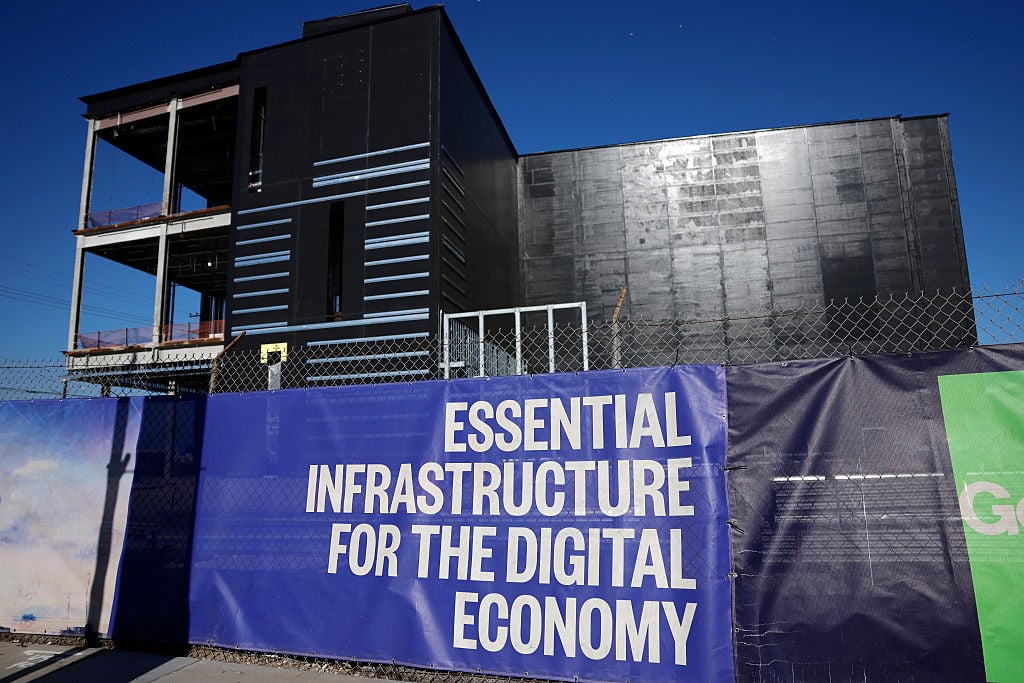
Albert, a human rights advocate and tech policy expert, tells theGrio, “Every AI chat conversation, AI-generated image, every movie we stream, Instagram reel, TikTok scroll, YouTube video, Spotify song, Zoom call, email reply, online order, etc., all run through these massive data centers.”
He added, “The cloud that runs our workplaces, schools, hospitals, and government agencies lives inside these data centers. The demand curve has no ceiling in sight.”
Big Tech has especially focused its data center expansions in the South, where Albert notes Black Americans are 75% more likely to live near hazardous waste.
“In Boxtown, Memphis, xAI’s Colossus runs 33 methane turbines in a 90% Black neighborhood where cancer risk sits four times the national average, and peak nitrogen dioxide rose 79% after opening,” says Albert.
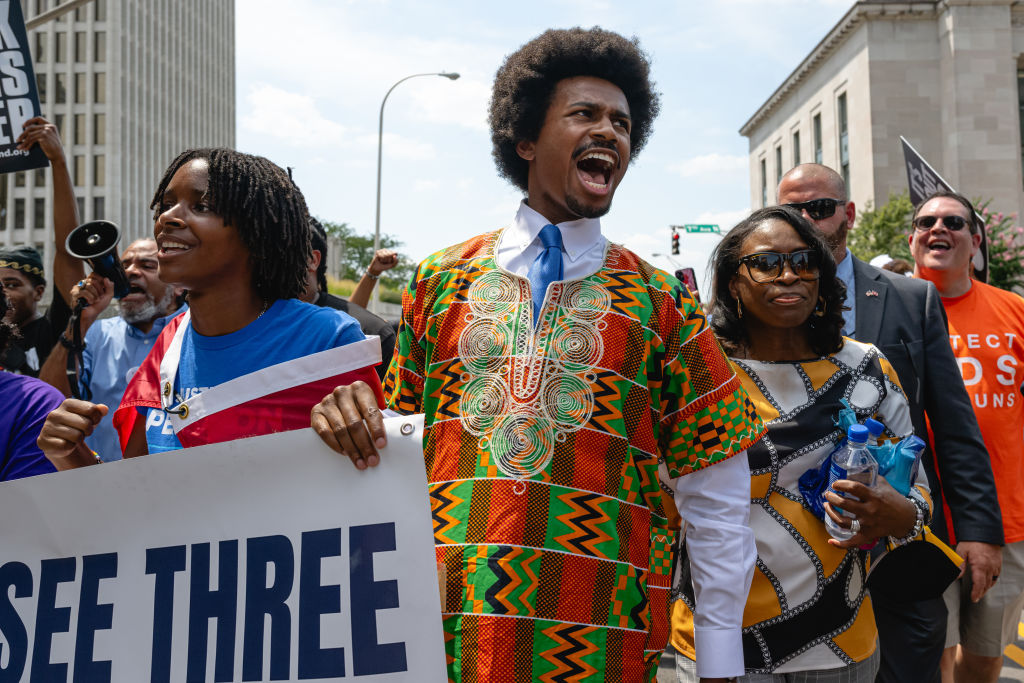
Tennessee State Rep. Justin Pearson has been leading the fight in Memphis against xAI, demanding that the Elon Musk-owned company shut down its data center. The 31-year-old lawmaker has cited illegal, unpermitted operation and pollution risks to the predominantly Black community and, like other Democrats, is calling for a nationwide moratorium on the development of new data centers.
“Our communities shouldn’t be suffering and dying so that [tech companies’] computer, or a large language model, LLM, operates,” says Pearson, who made the fight against data centers a top focus of his campaign challenging U.S. Rep. Steve Cohen in a Democratic primary for Tennessee’s 9th Congressional District.
Pearson tells theGrio that he would like to introduce legislation requiring tech companies to stop burning fossil fuels, which are harming residents’ health and the environment.
“These AI data centers are using fossil fuels to power themselves, and they do need to bring their own energy that doesn’t impact the grid. I would have legislation that says you have to bring your own renewable energy. We need to force these companies to use renewable energy in their processes,” he explains.
Pearson says there should also be regulations on where companies build data centers; as in Memphis, they are being sited in communities “already overburdened.”
“How do we make sure that that’s more equitably distributed? If AI is so necessary for the good of humankind, why can’t it be across other communities, not just the poorest, not the Blackest, not the most Latino or indigenous communities?”
The Tennessee lawmaker says there also needs to be Community Benefit Agreements with corporations, explaining, “A lot of communities don’t want them, and if you were forcing them to be in those neighborhoods, what benefits are the community getting? Financially, educationally, technologically?”
Rep. Pearson also called out an uncomfortable irony: “They’re supposed to be the most brilliant technology in the world, but they’re in communities that don’t have access to broadband.”
While speaking to theGrio over the phone, Pearson noted Memphis’ “telecommunication struggles,” noting, “I’m surprised my phone hasn’t cut off talking to you. Our signal is horrible down here.”
He continued, “Our telecommunication struggles down here, and yet we have some of the most expensive, billions of dollars worth of technology in our neighborhoods that does not work. And so there’s something that’s misaligned in our country right now, where you’re having places that are still being deprived of technological resources as ground zero for AI data centers and companies, and their exploitation.”
The negative effects of data centers in Black communities can also be seen in South Carolina’s Lowcountry, says Albert, who shares, “Developers routed an 859-acre, thousand-megawatt campus into the Gullah/Geechee Cultural Heritage Area after a white-majority Georgia county rejected it.”
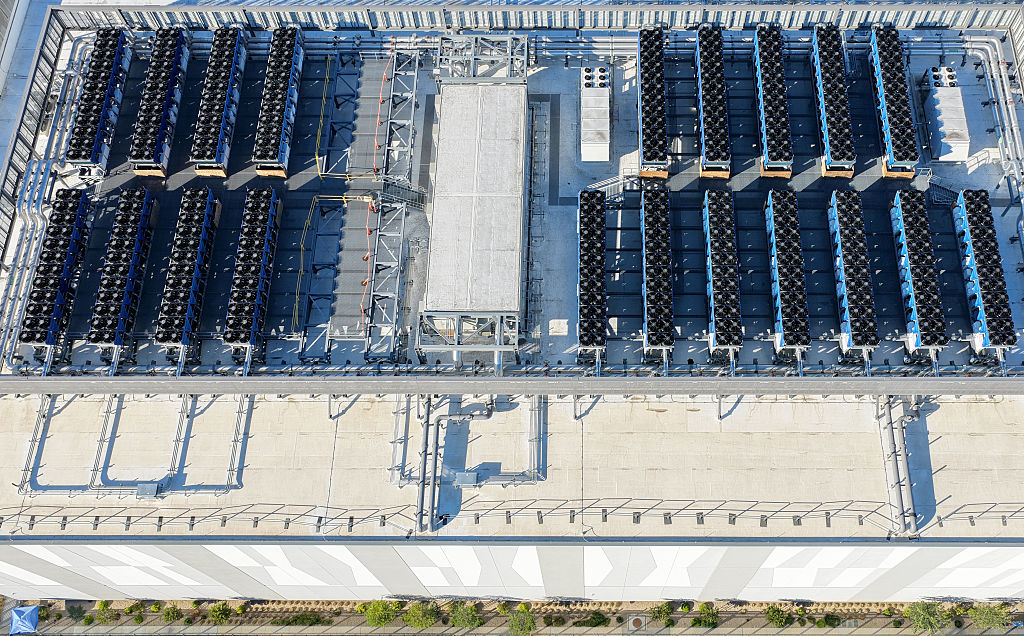
Data centers in communities are also costly. In Virginia, energy bills are expected to rise to an average of $381 a month by 2045. Virginia’s energy company, Dominion, is essentially subsidizing Big Tech companies Amazon and Meta, says Albert.
The Georgetown professor says the Trump administration’s deregulations have not helped. For example, President Trump’s Executive Order 14318 fast-tracks federal permits for data center infrastructure, and the White House Council on Environmental Quality (CEQ) rescinded regulations implementing the National Environmental Policy Act (NEPA). Additionally, the U.S. Department of Justice has pulled environmental justice guidelines.
While the future of AI and the harms of data centers are bleak, communities and advocacy groups are fighting back. Last week, the NAACP sued xAI for “illegally operating” 27 gas turbines without an air permit in Southaven, Mississippi, to power its Colossus 2 data center, which powers the company’s chatbot, Grok.
The nation’s oldest civil rights group for Black Americans said the company’s power plant is located near homes, schools, and churches, and creates “added health risks for families” and violates the Clean Air Act.
“A data center should not be a potential death sentence for a community’s health. By looking to evade clear air laws to operate dirty turbines that emit pollution and known carcinogens, these companies are following a shameful, familiar pattern: asking Black and frontline communities to bear the toxic brunt of ‘innovation,’” said Abre’ Conner, NAACP director of Environmental and Climate Justice.
Conner continued, “As we shared since xAI started operating in Memphis, our homes, churches, and playgrounds will not be sacrifice zones for Big Tech’s convenience. The NAACP stands firm that true progress cannot be built by ignoring community health and our environment. Our right to clean air is not up for negotiation, especially when companies prove expediency not people is their priority.”
Albert says that while the public should “enjoy” the benefits of AI technology, like ChatGPT, these technologies should be used with “ever-greener technologies” and “not at the expense of our long-term health and safety.”
He added, “Policymakers are choosing otherwise.”