
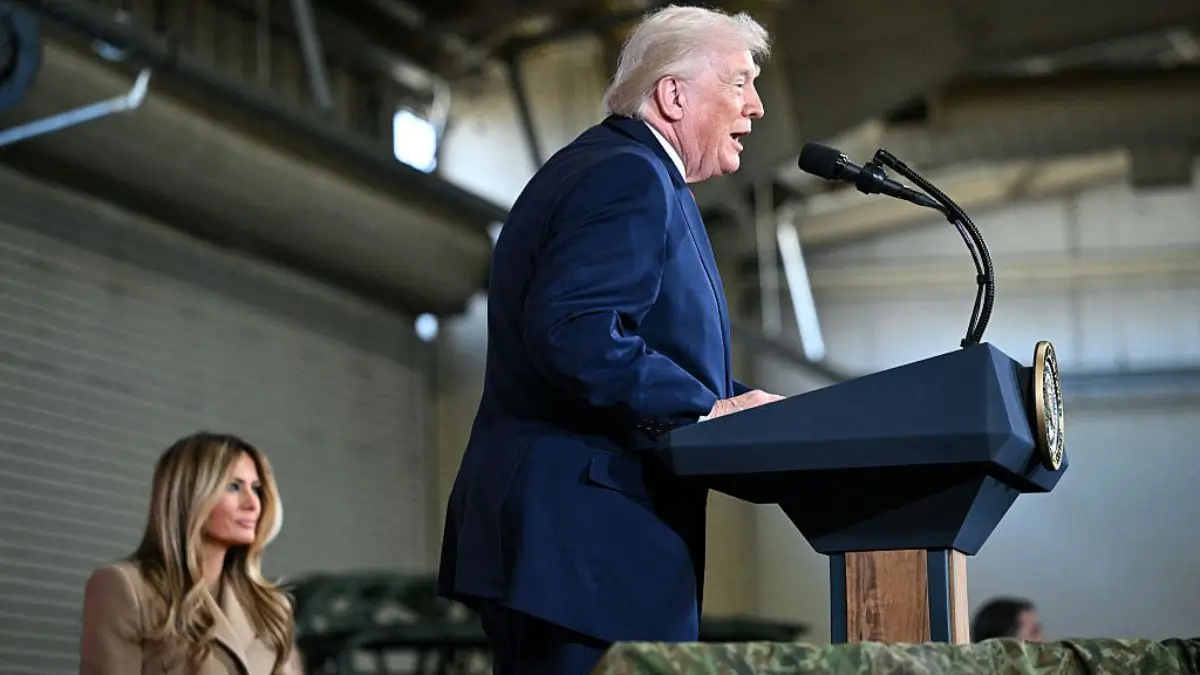
‘Behavior of a Low-IQ 8-Year-Old’: Donald Trump Goes on the Attack, But Sets His Own Trap Reopening One of His Most Infamous Scandals in the Same Breath
President Donald Trump’s habit of deflecting criticism and turning the spotlight on his rivals appeared to unravel Sunday when, seated across from Norah O’Donnell on 60 Minutes, he was forced to confront a moment where his own name surfaced in a gunman’s manifesto.
A post-crisis interview following a frightening breach at the White House Correspondents’ Dinner quickly exposed a familiar pattern: when the conversation edges toward allegations tied to his past, Trump doesn’t just deny it, he detonates, often widening the scope of the controversy he’s trying to contain.
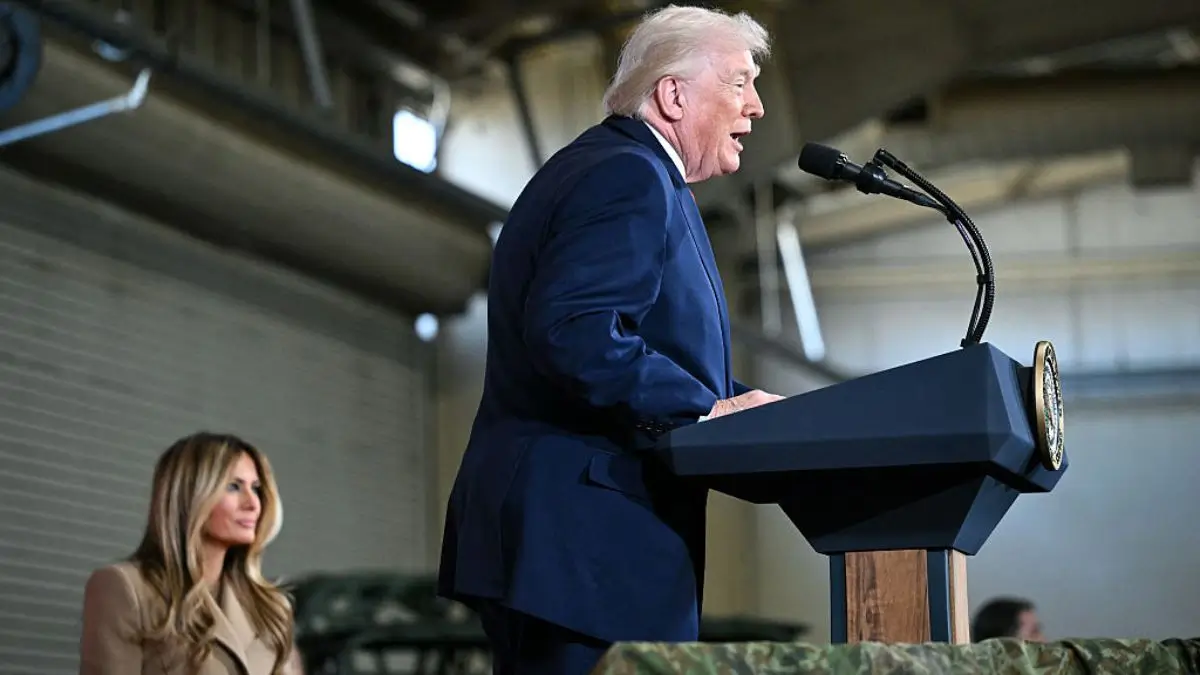
What began as a discussion about political violence revived questions about his history, including renewed attention to his past association with Jeffrey Epstein, even though Epstein was never mentioned in the manifesto itself.
The confrontation unfolded during a White House interview less than a day after a man identified as Cole Tomas Allen allegedly attempted to storm the Correspondents’ Dinner, armed with multiple weapons and driven by a manifesto outlining his intent to target administration officials. The incident had briefly created a moment of shared alarm between Trump and the press corps, an unusual overlap for a president who has long cast journalists as adversaries.
But that moment didn’t last.
When O’Donnell read a line from the manifesto,“I am no longer willing to permit a pedophile, rapist, and traitor to coat my hands with his crimes,” Trump had a meltdown.
“I was waiting for you to read that because I knew you would, because you’re horrible people. Horrible people,” Trump said. “Yeah, he did write that. I’m not a rapist. I didn’t rape anybody.”
O’Donnell deadpanned, “Oh, do you think he was referring to you?”
Trump didn’t engage the question directly. Instead, he escalated.
“I’m not a pedophile.”
The exchange marked a sharp turn from his earlier, more measured tone and underscored how quickly the conversation had become personal. Trump went further, bristling at what he interpreted as an implied connection to Epstein.
“You read that crap from some sick person,” he said. “I got associated with stuff that has nothing to do with me. I was totally exonerated.”
His reaction, delivered without Epstein ever being mentioned, pulled the issue back into public view, amplifying his connection, rather than closing the door.
O’Donnell had initially asked whether the frightening breach at the dinner might shift Trump’s relationship with the press. His first answer was indirect, leaning into a familiar grievance about media bias and its overlap with Democratic politics.
“Look, for whatever reason, we disagree on a lot of subjects. We talk about crime. I’m very strong on crime. It seems like the press isn’t. It’s not so much the press. It’s the press plus the Democrats because they’re almost one and the same. It’s the craziest thing,” Trump said.
But his reaction moments later provided a clearer answer than his words.
“You should be ashamed of yourself for reading that, because I’m not any of those things,” Trump said. “You shouldn’t be reading that on ‘60 Minutes.’ You’re a disgrace,” he told O’Donnell.
View on Threads
Saturday night’s shooting incident remains under investigation. Authorities say Allen, 31, approached a security checkpoint outside the Washington Hilton armed with a shotgun, handgun, and knives. His writings suggest he intended to target administration officials “prioritized from highest-ranking to lowest,” while claiming he hoped to minimize casualties.
His tone in the manifesto veered between calculated and detached. “Hello everybody!” he wrote. “So I may have given a lot of people a surprise today.” He also wrote, “I apologize to my parents for saying I had an interview without specifying it was for ‘Most Wanted,’” and referred to potential injuries as “self-inflicted status.”
Investigators say his family alerted police after receiving alarming messages, and authorities later recovered additional writings from his home and hotel room. His sister told investigators he had a pattern of using “radical” rhetoric and talking about taking action to address perceived societal problems.
The manifesto itself did not name Trump, but its language — combined with Trump’s immediate and forceful denial — shifted the public conversation.
Online, reactions quickly split between criticism of Trump’s response and frustration with how the interview unfolded.
“Most adults recognize the behavior of a low-IQ eight-year-old who thinks he can get out of trouble by lying, right?” one commenter asked.
Others brought up Trump’s legal case involving an alleged sexual assault on a female author in the ’90s.
“‘I’m not a rapist, I didn’t rape anyone.’ E. Jean Carroll begs to differ.”
Others said O’Donnell missed an opportunity to turn the tables on Trump.
“She should have walked out. That would have been the best segment ever.”
Others framed the exchange as a broader reflection of rhetorical breakdowns in political discourse, echoing a line often attributed to Socrates:
“When the debate is lost, insults become the loser’s tool.”
Meanwhile, former congresswoman Marjorie Taylor Greene questioned why the manifesto was released so quickly, arguing that publicizing such documents risks encouraging copycat attacks.
“Why does every shooter have a manifesto? Most shooter’s manifestos remain classified so they don’t inspire more would be shooter’s,” she wrote on X. “Why did they release Cole Allen’s manifesto almost immediately?”