
‘Balls!’: Trump Gets Hit with the Question Everyone’s Been Waiting for, Tries to Shrug It Off Like Nothing, But He Can’t Hide He’s Completely Thrown Off in Real Time
Reporters covering President Donald Trump at the White House have taken heat over the past year for backing away from tough questions, often met with aggression, deflection, or outright dismissal.
Many correspondents have gone soft mid-exchange and retreated from follow-ups, wary of becoming the next target. But as the war with Iran drags on and Trump’s rhetoric grows more volatile, the dynamic shifted Monday when one intrepid reporter pushed past the usual bluster and forced a more uncomfortable line of questioning.

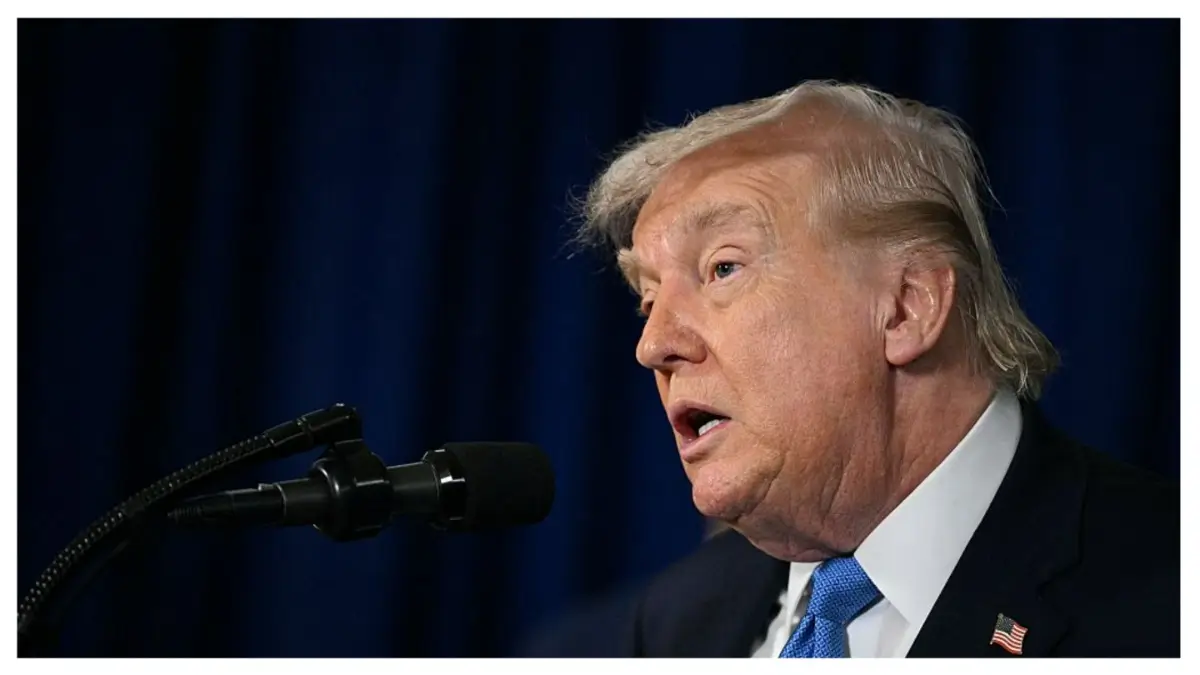
After brushing off criticism for his unhinged social media post on Easter Sunday, Trump was met with a sharp question about his own mental state — an exchange that quickly spread online and amplified concerns about whether he remained fit to hold office.
One journalist put it plainly: “Yesterday on your Truth Social, You called the Iranians ‘crazy bastards.’”
Trump, for once, didn’t dodge. “True,” he replied, prompting an immediate follow-up.
“What is your response to critics who say that,” the reporter started out, but Trump abruptly cut him off: “I don’t care about critics.”
The reporter didn’t let up, even as it was clear Trump wasn’t in the mood.
View on Threads
“What is your response to critics who say that it is your mental health that should perhaps be examined as this war continues?” the reporter continued.
Trump appeared caught off guard before offering a response that drifted away from a real answer.
“Well, I haven’t heard that. But if that’s the case you’re gonna have to have more people like me, because our country was being ripped off, on trade, on mil … on everything, for many years until I came along. So if that’s the case, you’re gonna have to have more people,” Trump said.
The brief exchange quickly ricocheted across social media, where reactions split between praise for the question and alarm at the answer. Some users framed the moment as overdue accountability. “Finally, a reporter with balls! More of this, please!” one person wrote.
Others argued that Trump’s response reinforced the criticism rather than deflected it. “His answer doesn’t help disprove the point that he’s completely gaga.”
Another added, “Trump proved reporters question right with his mental response.”
The viral moment didn’t emerge in a vacuum. It followed a weekend in which Trump escalated his rhetoric toward Iran, posting a profanity-laced demand for the country to reopen the Strait of Hormuz — a vital global corridor — while threatening to target infrastructure. The administration has set repeated deadlines for Iran to act, with the latest looming at 8 p.m. Eastern Time Tuesday, even as Tehran signals it will only reopen the passage under new terms tied to war damages and long-term security guarantees.
Inside Washington, the reaction has been unusually sharp, including from figures who once stood firmly behind Trump.
Marjorie Taylor Greene, a longtime ally turned critic, accused the president of losing control. On X, she wrote that members of the administration should “beg forgiveness from God” and intervene in what she described as Trump’s “madness,” adding, “I know all of you and him and he has gone insane, and all of you are complicit.”
On Easter morning, this is what President Trump posted.
Everyone in his administration that claims to be a Christian needs to fall on their knees and beg forgiveness from God and stop worshipping the President and intervene in Trump’s madness.
I know all of you and him and he… pic.twitter.com/DgR74YjPQf— Former Congresswoman Marjorie Taylor Greene
(@FmrRepMTG) April 5, 2026
Democratic leaders have gone further, framing Trump’s language as dangerous in the context of an ongoing war. Senate Minority Leader Chuck Schumer said Trump’s posts resembled those of “an unhinged madman,” warning that such rhetoric risks alienating allies and escalating conflict. Vermont Sen. Bernie Sanders called the remarks “dangerous and mentally unbalanced,” urging Congress to act to end the war.
Others have raised constitutional concerns. Sen. Chris Murphy said he would be consulting lawyers about the 25th Amendment if he were in Trump’s Cabinet, calling the president’s behavior “completely, utterly unhinged.” Democratic Rep. Ro Khanna of California argued Trump’s focus on threats distracts from the reality that U.S. troops remain under fire, pushing for an immediate ceasefire and negotiations.
Even more measured voices have warned about the risks of tone. Virginia Sen. Tim Kaine described Trump’s language as “embarrassing and juvenile,” cautioning that it could endanger American service members.
The backdrop to all of this is a war that has not unfolded as Trump predicted. Despite claims that Iran’s capabilities had been neutralized, recent events — including a high-risk mission to recover downed U.S. airmen — underscore that Tehran retains the ability to strike back. Rep. Jake Auchincloss called the conflict a strategic failure, noting Iran’s leverage over the strait remains intact.
Meanwhile, the human toll continues to climb, with thousands killed across the region and millions displaced as Israel, America’s partner in the aggression against Iran, simultaneously carries out a ground invasion of its northern neighbor, Lebanon. Against that reality, Trump’s rhetoric — and moments like the exchange with reporters — carry more weight than typical political theater.
For a president who has long treated criticism as fuel, the latest backlash presents a different kind of test. The war abroad is no longer just a stage for tough talk; it’s a grinding conflict with consequences that can’t be waved off. And as the questions grow sharper, so do the stakes of how he answers them.