
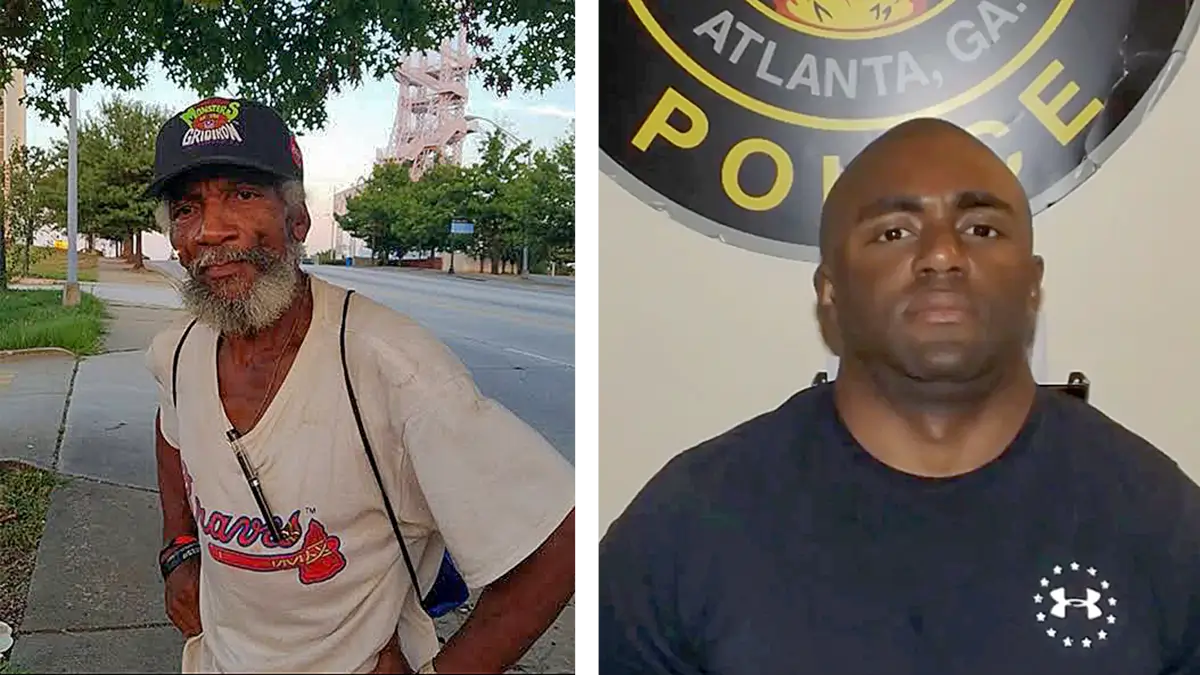
Atlanta Cop’s Paycheck Will be Garnished Every Month Until He Pays $21 Million in Damages for Paralyzing Unarmed, Elderly Black Man
It took eight years, but an Atlanta cop who tased a panhandling homeless man, leaving him paralyzed from the neck down before he died five years later, must now pay $21 million in damages.
Atlanta Police Officer Jon Grubbs is expected to pay $700 a month, through wage garnishment or liens, to the estate of Jerry Blasingame, who was 65 when Grubbs tased him in 2018.
At that rate, it would take roughly 2,500 years to pay off the entire judgment.
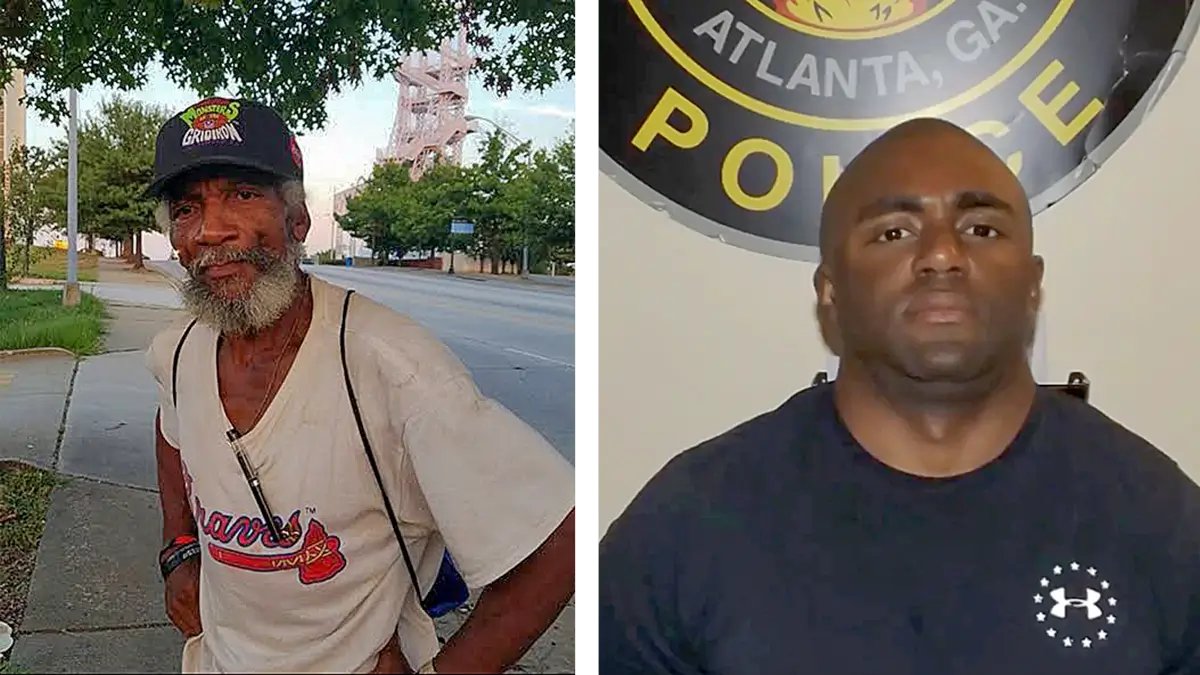
And at this point, it is not even clear which surviving family members will ultimately receive the money, because the estate is being managed by a court‑appointed guardian.
Grubbs, who earned about $92,000 in 2024, brings home roughly $5,500 a month after taxes, so he is likely paying about 13 percent of his take‑home pay to Blasingame’s estate. If he loses his income, the judgment can still be enforced against his assets through liens and other collection tools.
Judgment Falls on Officer
The city of Atlanta was cleared of liability for damages because the courts ruled the police department was not legally liable under federal municipal‑liability standards for its training and policies on Taser use.
So Grubbs, who fought hard to get the lawsuit dismissed on qualified immunity grounds, is now expected to pay the $21 million judgment.
Qualified immunity is a legal shield that protects government officials, including police, from being personally sued for money damages unless they violated a clearly established constitutional right — and it has allowed many cops to escape civil liability over the years.
But in this case, the courts concluded that tasering an unarmed man in the back on a steep embankment was clearly unconstitutional.
“In sum, the Fourth Amendment violation here – deployment of a taser against a non‑violent, non‑dangerous, and unarmed suspect fleeing down a steep embankment – was one of obvious clarity,” the Eleventh Circuit wrote in its March 2026 opinion.
The Tasering
The incident took place on July 10, 2018, after police confronted Blasingame for panhandling at the roadside of an Interstate 20 on‑ramp, asking drivers for spare change from their cars.
Grubbs was in the passenger seat of a patrol car driven by his partner when he stepped out to confront Blasingame.
Blasingame took off running, and Grubbs began chasing him. After about 45 seconds, and without giving a verbal warning, Grubbs fired his Taser into Blasingame’s back, causing him to fall down a steep embankment.
Blasingame then struck his head on a concrete platform around a utility box, crushing his skull and damaging his spinal cord, and was paralyzed from the neck down.
About a month later, while Blasingame was still in the hospital, Grubbs visited his room to issue him two misdemeanor citations: pedestrian solicitation on a roadway and obstruction of a law‑enforcement officer.
Grubbs, meanwhile, was cited internally for failing to have his body‑worn camera activated during the encounter, but he remains on the force and is listed as an officer in good standing.
Initial media reports in 2019 interviewed a woman named Letitia Knox and identified her as Blasingame’s daughter, but her name does not appear in the federal civil‑rights case filings that followed.
Instead, the court appointed a man named Keith Edwards as Blasingame’s legal guardian and conservator once Blasingame was incapacitated, giving Edwards authority to manage Blasingame’s affairs and bring the civil‑rights lawsuit on his behalf.
As court‑appointed guardian and later representative of Blasingame’s estate, Edwards is responsible for collecting any money from the judgment, paying the estate’s debts and costs, and then distributing what remains to the family members or other heirs recognized by the probate court.
Blasingame died on Sept. 7, 2023, after living more than five years as a quadriplegic.
The Appeals
Blasingame’s guardian initially filed the lawsuit in May 2019, and the case went to trial in August 2022. A federal jury awarded $100 million: $60 million to be paid by the city of Atlanta and $40 million to be paid by Grubbs.
The $40 million against Grubbs was split evenly between compensatory and punitive damages – $20 million to reimburse Blasingame for the harm he suffered, and $20 million to punish Grubbs and deter similar conduct in the future.
But U.S. District Judge Steve C. Jones vacated the city’s portion, freeing Atlanta from any damages, and reduced Grubbs’s share to $21 million – leaving $20 million in compensatory damages and $1 million in punitive damages.
Both sides appealed: Grubbs challenged the judgment against him by invoking qualified immunity; Edwards challenged the reduction in damages and the ruling that cleared the city.
The Eleventh Circuit rejected Grubbs’s qualified‑immunity arguments, holding that he had violated a clearly established Fourth Amendment right, and it affirmed the reduced $21 million judgment Jones had entered.
“Mr. Blasingame was at the top of a 30‑foot decline with a slope of 30 to 40 degrees and with dangers – a highway and a concrete structure – below,” the appellate court wrote.
“Specifically, Mr. Blasingame was running down a steep embankment when Officer Grubbs tased him in the back.”
“Although Officer Grubbs argues that a reasonable officer could not see the steep embankment and danger from his perspective, this assertion is contrary to other evidence adduced at trial,” the opinion concluded.