
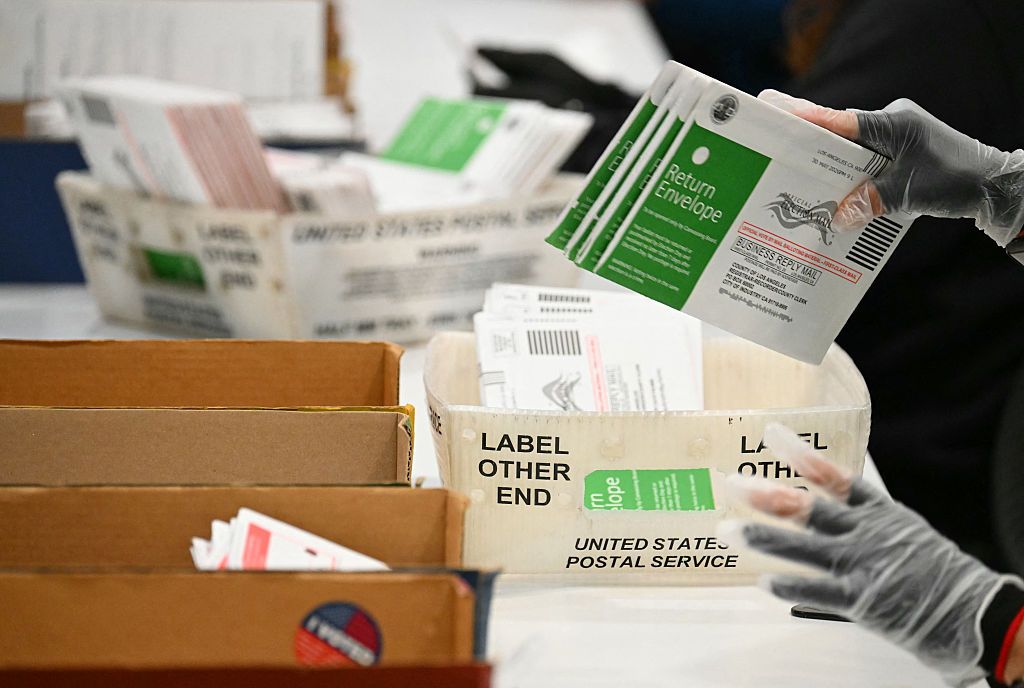
Appeals Court Upholds Block On Trump’s Mail-In Voting Executive Order
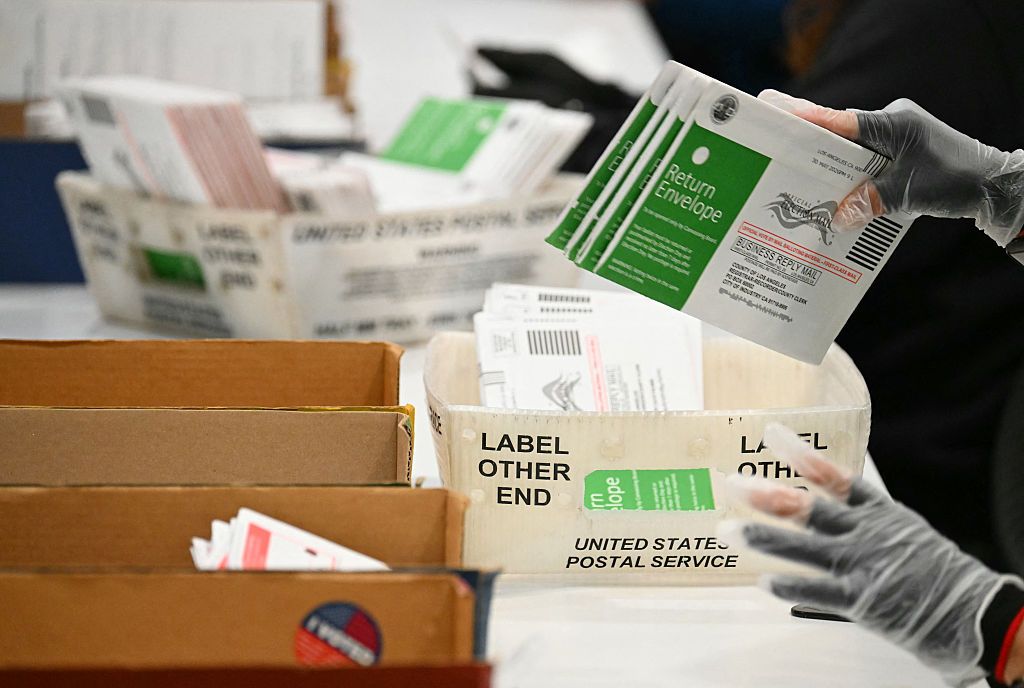
On Saturday, an appeals court upheld a block on President Donald Trump’s executive order placing restrictions on mail-in voting.
According to the New York Times, the U.S. Court of Appeals for the First Circuit wrote that Trump’s executive order “directs unprecedented levels of involvement by federal officials in how states administer elections.” The three-judge panel found that if the order took effect ahead of this November’s midterm elections, “it would sow confusion and threaten disenfranchisement of many eligible voters.”
Attorneys for the Trump administration have tried to argue that the lawsuit was premature because the executive order has yet to be implemented. They undercut their own argument by acknowledging that the Trump administration had already moved forward with implementing the changes presented in the executive order. Judge Joshua D. Dunlap, a Trump appointee, said the case was “unusual” but agreed that the executive order would cause “concrete injury” to legal voting.
The Constitution is pretty clear in placing control of election laws with Congress and the states, but when has Trump ever cared about constitutional law?
Trump has spent the last six years trying to rewrite history over his 2020 election loss, claiming that the election was stolen from him through fraudulent, mail-in ballots. Does he have any concrete evidence for this? Of course not! Yet that hasn’t stopped the Trump administration from using voter fraud as a pretense for sowing distrust in our election laws.
Trump has continually pressured Congress to pass the unpopular SAVE America Act, which would impose restrictions on mail-in voting and require people to show proof of citizenship every time they register to vote.
As a result of that bill stalling out in Congress, Trump decided to take matters into his own hands and issued an executive order earlier this year that placed restrictions on mail-in voting and required states to send sensitive voter information to the federal government. Unsurprisingly, Trump has run into significant legal pushback as a result of these efforts. Several lawsuits have been filed against the executive order, resulting in most parts of the order being blocked.
From the New York Times:
The ruling comes after more than 20 Democratic attorneys general challenged an executive order Mr. Trump signed in March targeting mail voting. The order called on the Department of Homeland Security to compile state-by-state lists of citizens to help determine voter eligibility, and called on the Postal Service to verify voters based on the lists provided by the states.
In June, the Postal Service complied with the order, releasing a proposed rule consistent with many of Mr. Trump’s demands.
The ruling by Judge Gustavo A. Gelpí and Judge Julie Rikelman, both Biden appointees, upheld a federal judge’s order in June striking down key components of Mr. Trump’s directive and calling them “unlawful, null and void.”
You would think that court after court telling Trump his attacks on mail-in voting are illegal would make him stop, but when has Trump ever learned from failure?
The Trump administration has signaled that it may challenge the ruling before the Supreme Court. While the court’s conservative majority has tried to fashion itself as constitutionalists, they have consistently ruled in favor of giving more power to the executive branch. A recent Supreme Court ruling allowed Mississippi to continue a grace period for mail-in ballots, so who knows, maybe the current court will actually do right by U.S. citizens for once.
SEE ALSO:
New Postal Service Rule Would Withhold Mail-In Ballots
Federal Judge Sides With NAACP In Mail-In Voting Lawsuit
Supreme Court Upholds Mississippi Law Allowing Late Mail-In Ballots
Supreme Court Weighs Grace Period Restriction On Mail-In Voting