
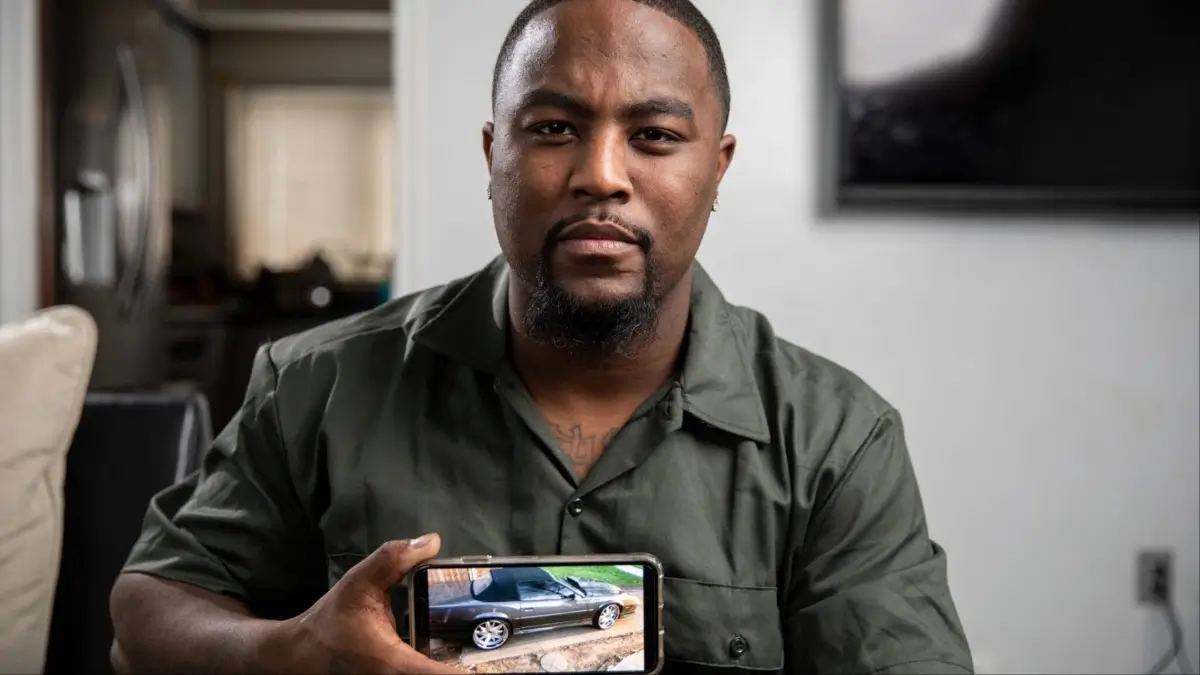
A Michigan County Seized a Man’s Car and $2,280 In Cash, But Didn’t Charge Him with a Crime. After He Fought Back, Prosecutor Tried to Jail Him Twice. Now That Official Must Face Him In Court
The Michigan Court of Appeals ruled that a county prosecutor must face a federal lawsuit filed by a man whose attorneys say was unjustifiably charged with criminal offenses twice for challenging a civil forfeiture case.
Robert Reeves, a 32-year-old construction worker and car repairman, partnered with the Institute of Justice to bring a complaint against a Wayne County counsel and prosecutor — Davidde Stella and Dennis Doherty, respectively.
According to the suit, in July 2019, Reeves went to a job site to meet with a friend who asked him if he knew how to operate a skid steer. Afterward, he went to a gas station where he was stopped by police who questioned him about some stolen rental equipment from Home Depot.

Reeves was detained, and his car, cellphones, and $2,280 he had on hand were seized by officers. He was jailed for several hours and then released with no charges. However, authorities did not relinquish Reeves’ property and never filed a forfeiture complaint or scheduled a post-seizure hearing, according to the complaint.
Robert’s attempts to retrieve his property failed for months.
It wasn’t until he joined a federal class action lawsuit filed by the Institute for Justice in Februaru 2020 against Wayne County, alleging its vehicle forfeiture program was unconstitutional, that county officials finally surrendered his car and sent him a check for the amount of cash seized in July 2019.
A month later, Wayne County prosecutors charged Reeves with felony receipt or concealment of stolen property. Reeves later learned that the seizure of his property was connected to an investigation by the Michigan State Police task force into a string of rental equipment thefts from Home Depot stores.
The task force did send an arrest warrant request to the Wayne County prosecutor’s office in September 2019, but the office never acted on it, according to the complaint. Doherty then allegedly contacted the task force in February 2020, received a new warrant request calling for Reeves’ arrest, and recommended the task force file the request.
Reeves was arrested in May 2020, but due to complications and delays from the COVID-19 pandemic, his preliminary hearing was delayed until February 2021. At the hearing, the judge dismissed his charges due to insufficient evidence.
Two weeks after the charges were dismissed, the Wayne County prosecutor’s office refiled them again and Reeves had to appear before the same judge in January 2022, who dismissed the charges once again, the suit states.
Reeves’ complaint alleges that the prosecutors abused the criminal process and pursued prosecution against him twice in retaliation for his participation in a class-action suit. The suit seeks damages for the violation of Reeves’ constitutional rights.
In June 2023, the defendants filed a motion for summary judgment to resolve the case without a trial on the grounds of governmental immunity and failure to state a claim. The trial court partly granted the motion, dismissing Reeves’ claims against Stella based on absolute prosecutorial immunity and ruling that the complaint failed to state a viable cause of action.
The court did not grant a summary judgment and allowed Reeves and his attorneys to amend their complaint to better specify the torts listed in the suit.
On June 9, the Michigan Court of Appeals ruled that Doherty was not entitled to prosecutorial immunity protections and must face the suit.
Civil Forfeiture Abuse Cases Across the U.S.
People in other areas of the country have also launched legal battles against their local law enforcement departments, challenging civil asset forfeiture abuse.
A Mississippi man sued authorities in Harris County, Texas, after they pulled him over in May 2019, searched his truck, and seized more than $40,000 of his life savings that he planned to use to expand his trucking business. Deputies alleged the money was connected to drugs, but the man was never charged with a crime.
Local police in Rochester, New York, raided a woman’s apartment because they suspected her then-boyfriend was dealing drugs. They seized $8,040, alleging it was connected to an illegal drug operation, but never charged her with an offense. Her boyfriend was also acquitted of the charges he faced.